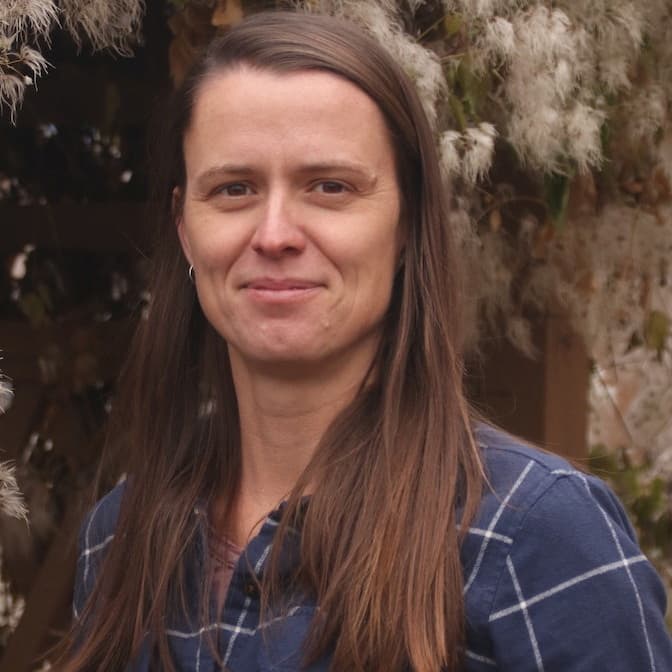
Alana Clason is a forest ecologist and Research Associate with the Bulkley Valley Research Centre (BVRC) on Gitdumden clan territory of the Wet’suwet’en Nation in Smithers, BC. Alana collaborates with universities, governments, industry, and non-profit partners in a variety of applied research across western Canada studying the impacts, resilience and recovery of forests to disturbance. Alana links field-based research with ecological modeling approaches to understand and support the management of BC forests. Her current projects focus on the response of forest carbon, fuels, and wildlife habitat to disturbances such as fire and forest management, as well as research and restoration of endangered whitebark pine ecosystems.
UBC Forestry & Environmental Stewardship congratulates Dr. Taraneh Sowlati for being awarded the 2025 Canadian Operational Research Society (CORS) Equity, Diversity, and Inclusion (EDI) Excellence Award and Event Fund.
With support from the CORS EDI Event Fund, Dr. Sowlati organized a half-day hybrid event hosted by the Faculty of Forestry & Environmental Stewardship on April 3, 2025, titled “EDI in Teaching, Research, and Modelling.”
About the Award:
The CORS EDI Excellence Award recognizes individuals, teams, or initiatives that have demonstrated exceptional commitment and leadership in advancing equity, diversity, and inclusion within the CORS community. The award celebrates meaningful efforts to foster a more inclusive, respectful, and equitable environment for all.
UBC Faculty of Forestry & Environmental Stewardship initiative is strengthening lines of communication between communities, academics and policymakers.
Forestry community extension is making a comeback in British Columbia. The approach clears a path for open lines of communication between academics and broader society to facilitate forest and natural resources initiatives in and with communities.
The concept of community extension originated in the United States in 1862 with the creation of land grant universities. Linking agricultural universities and research stations, by the second decade of the 20th Century, it had grown into a Cooperative Extension System partnership between state land grant universities and local governments. Extension work benefitted farmers, communities and environmental management through greater information sharing, educational pathways and collaboration. It also helped build a network of community forests in the US, kickstarting community-grown solutions and innovations in forest management.
UBC Forestry & Environmental Stewardship is looking to establish a similar system here in BC, reinvigorating the extension work spearheaded in the province by the FORREX Forest Research Extension Partnership in the late 1990s. In 2023, UBC Forestry & Environmental Stewardship launched the Community Knowledge Extension Office to build closer connections to community forests, says Deb DeLong (BSF’85; MSc(Forestry)’05), Community Extension Officer: “facilitating community engagement, knowledge exchange and the translation of research into practice.”
“Forest practitioners in BC are excited to see the return of a dedicated Extension Office to open up communication pathways and opportunities to engage in forestry, as was the case with FORREX.”
Made possible thanks to a generous donation to UBC Forestry & Environmental Stewardship, the Community Knowledge Extension Office’s first year of operations laid the groundwork for ratcheting up programming and community outreach. UBC Forestry & Environmental Stewardship graduate students were introduced to opportunities to engage in community forestry, with 10 students participating in the BC Community Forest Association’s annual general meeting in Kamloops, BC, in June 2023.
Deb DeLong, UBC Forestry & Environmental Stewardship Community Extension Officer
Established in April 2009, the Cheakamus Community Forest near Whistler, BC, borders the northern portion of Daisy Lake, shown here. A joint partnership of the Lil’wat and Squamish First Nations, and the Resort Municipality of Whistler, this over-33,000-hectare community forest takes an eco-based and holistic approach to forest management and operations.
“A big win from our first year was establishing a UBC Forestry & Environmental Stewardship presence in communities,” notes Dominik Roeser, Assoc. Dean of Research Forests and Community Outreach. “From here, we will build out our knowledge extension networks.”
There are presently 61 Community Forest Agreements in BC, according to the BC Community Forest Association, many of which are located on First Nations lands. The Extension Office has co-signed cooperation agreements with several community forests and First Nations so far, including the Osoyoos Indian Band, West Boundary Community Forest, Westbank First Nation (Ntityix) and Cheakamus Community Forest. These agreements build a two-way knowledge exchange bridge between communities, community forests and UBC Forestry & Environmental Stewardship.
Work through the Extension Office will amplify the landscape-level plans that UBC Forestry & Environmental Stewardship Master of Sustainable Forest Management (MSFM) students completed with the Osoyoos Indian Band. Work through the Extension Office connected the Cheakamus Community Forest with MSFM student Anna Zarina, who investigated additional valueadded opportunities to expand forest revenues. Additionally, the Extension Office co-launched a comprehensive prescribed fire monitoring program with the Westbank Community Forest (Ntityix), with the potential to inform future practises.
“The Extension Office is a hub for communities to access resources and information that might otherwise be out of reach due to budgetary and staffing constraints,” states Deb. “The challenge is that it can take years to build critical mass.”
An added advantage of working with the Extension Office is the access it affords to a variety of academic institutions, grassroots organizations, levels of government and other community and research forests, such as UBC Faculty of Forestry & Environmental Stewardship Malcolm Knapp and Alex Fraser research forests. The knowledge exchange lines of communication opened up through community extension are integral to spurring innovation and expanding expertise throughout the province, notes Dominik.
“We have initiated conversations with the provincial government on key issues, and continue to provide valuable input to such groups as the commercial thinning steering and research groups, and to members of the Silviculture Innovation Program at the Bulkley Valley Research Centre,” says Dominik.
Dominik Roeser, UBC Forestry & Environmental Stewardship Assoc. Dean of Research Forests and Community Outreach
“Through these connections and our community extension partners, we can share knowledge from the field and academia to inform decision-making and shape forestry in the province.”
The next phase of the program will involve further ramping up awareness of extension work and filling Community Extension Officer positions. Planned Community Extension Officers with the newly created UBC Centre for Wildfire Coexistence will connect with wildfire-prone communities, responding to community needs and co-creating wildfire resilience strategies. The program will also continue attracting UBC Forestry & Environmental Stewardship students, and co-signing agreements with First Nations and community forests. Coming soon will be a suite of Micro-Certificates on community forestry and community knowledge extension offered through UBC Forestry & Environmental Stewardship.
See examples of Community Knowledge Exchange Office activities here
This article was originally published in Branchlines Magazine. Read the magazine here.
Axel Ewashko (BSc(Forestry)’24) graduated in the first class of UBC Faculty of Forestry & Environmental Stewardship Bioeconomy Sciences and Technology (BEST) undergraduate program, which launched in fall 2020. Born and raised in Fort McMurray, AB, Axel spent many hours of his youth in and around his family’s sawmill, started by his grandparents and later run by his father and uncle. Axel came to the BEST program (minoring in commerce) with an interest in chemistry and sustainability, and worked for over four years as a Research Assistant in Prof. Emeritus Jack Saddler’s Bioconversion Lab while completing his studies. Axel presently works as a CAD Technician with Western Archrib, a premium mass timber construction company.
What drew you to the BEST program?
I was drawn to the BEST program for its mix of sciences, sustainability studies and climate action. I wanted a degree that covered a lot of bases, giving me a good foundation in several areas. Additionally, minoring in Commerce exposed me to other subjects, such as accounting, marketing and management. My goal was ultimately to take my sustainability background into something business-related. I wasn’t 100% sure where I’d end up in my career, so I wanted to ensure that I was well-rounded to keep as many doors open as possible.
What was a challenge you faced and how did you overcome it?
I wanted to get the most out of my experience at UBC Forestry & Environmental Stewardship by balancing my training schedule on the varsity rowing team with my academic studies. Taking all of this on filled up my days, but it also resulted in many successes, and taught me how to prioritize tasks in my schedule and master time-management.
What were some of your main responsibilities as a Research Assistant in now Prof. Emeritus Jack Saddler’s Bioconversion Lab?
We were researching mechanical and chemical pretreatments of pulp and different types of wood fibres for the production of biofuels and bioproducts. Our goal was to find a pre-treatment process that increased the recovery of sugars during enzymatic hydrolysis: when water is used together with enzymes to cleave bonds in the cellulose molecules. We used different types of enzyme loadings to test which were best at converting cellulose compounds in wood pulp or fibre into sugars that could be fermented into biofuels. This experience gave me the opportunity to work alongside Prof. Saddler, along with master’s and PhD students, in the lab. I was also able to present the findings of my work to Prof. Saddler and other members of the BioProducts Institute. It gave me a really good sense of what lab-based research entails.
Tell me about your present role as a CAD Technician with Western Archrib.
I’ve had a longstanding interest in sustainable structures, such as those that use mass timber. Through an elective in UBC Faculty of Forestry & Environmental Stewardship Wood Products Processing program, I learned computer modeling using AutoCAD and SolidWorks two-dimensional (2D) and three-dimensional (3D) design software, which were prerequisites for my role with Western Archrib. As a CAD Technician, I draw 2D and 3D images of the glulam beams and steel connections that the company supplies. The 2D and 3D images I help generate are then used to create custom beams for the project. I think of the structures we build as architectural masterpieces, some with custom beams in excess of 100 feet long and six feet wide.
What’s next for you?
I’m currently working remotely for Western Archrib from Duncan, BC, as I transition onto Canada’s national rowing team. I plan to continue working in the mass timber industry and with Western Archrib as I pursue racing for Canada at the Los Angeles 2028 Olympics.
This article was originally published in Branchlines Magazine. Read the magazine here.
A former member of the UBC men’s rowing team, Axel now competes with the Canadian men’s rowing team. Photo courtesy of Kevin Light.
The deadline for abstract submission is July 15, 2025.
The forum will be conducted in English.
The Third International Young Scientist Forum for Climate Change with the broader theme of Sustainable Development through Bamboo Resources is a five-day hybrid event organized by the Faculty of Forestry & Environmental Stewardship at the University of British Columbia (UBC), Zhejiang A&F University (ZAFU), and International Bamboo and Rattan Organization (INBAR), co-organized by International Center for Bamboo and Rattan (ICBR), China-Canada Joint Laboratory for Bamboo & Rattan Science and Technology, Sichuan Agricultural University, Jiangxi Academy of Forestry, Asia Pacific Forestry Education Coordination Mechanism (APFECM), Nanjing Forestry University, Southwest Forestry University, and IUFRO Division 5.11.05 – Bamboo and Rattan.
The event will explore innovative bamboo-based solutions to combat climate change, covering a range of topics in the following 4 sessions:
Theme I: The Bamboo as a Substitute for Plastic Initiative Theme II: Carbon Sequestration and Climate Mitigation Theme III: Technological Advancements and Innovations Theme IV: Livelihoods, Community Development, and the Global Bioeconomy
This forum invites young scientists—graduate students, postdocs, and early-career faculty—to share research, collaborate, and explore bamboo’s role in climate action. Poster submissions are welcome, and a special issue of Advances in Bamboo Science will highlight forum contributions.
Embark on an exploratory, fact-finding mission through UBC’s Malcolm Knapp Research Forest (MKRF). Trek to the locations marked on your Explorer Map to find the information you’ll need to answer a series of skill-testing questions. The more questions you answer, the more chances you’ll have to win prizes!
Visit MKRF near Maple Ridge and use your ‘Explorer Map’ to find QR codes.
Learn about the research forest, answer skill-testing questions and submit your finds.
A keen eye will take you far. Interpretive signage throughout the area will empower you with the knowledge you need.
The more questions you answer, the greater your chance to win an exclusive grand prize and other great prizes.
Anyone can participate. Get set to embark on your trek now!
Mission Map & Key Locations
Fancy yourself an adventure? This map will lead you to all classified locations where forest secrets are waiting to be unlocked. Pro tip: More correct answers = More chances to win!
The more you explore, the greater your chances to win one of five amazing prizes! Every correct answer equals an entry into our grand prize draw, which will take place on July 2.
Grand Prize: Full tuition for one UBC Faculty of Forestry & Environmental Stewardship Online Micro-Certificate (17 available programs to choose from)
When: Saturday, June 7, 2025 Time: Forestry Alumni & Friends: 1:30-3 pm Where:Malcolm Knapp Research Forest – Maple Ridge Cost: $20 per person with discount code (must be 19+)
Visit the Malcolm Knapp Research Forest for a drink under the forest canopy. Chef/Sommelier Robin Kort’s summer foraged wild harvest will be extracted into syrups, tonics and bitters to make an immersive forest cocktail menu. Registration will include one cocktail of your choice and a walk through the forest with Hélène Marcoux, Manager of the MKRF to identify the edibles we encounter and to share her vast knowledge of the area.
Cocktail Bar Menu
Wild Gin & Tonic
Savage Rye Sour
Tinto de Verano
Magnolia Shrub & Soda – non-alc or spiked
*Foraged ingredients will be added to these base cocktails depending on what the season offers, from wild flowers to aromatic leaves and roots.
Andrea Lyall’s leadership abilities have made her an asset in co-developing economic opportunities with First Nations.
Andrea Lyall (BSF’01, PhD(Forestry)’23) is a Natural Resources Consultant with her own company, Dzunukwa Resources Management, in North Vancouver, BC. Andrea grew up in Victoria, often spending summers in northern Vancouver Island and the adjacent mainland on the mid-coast of BC.
“We went up there to visit with my mom’s family, for ceremony and for potlaches,” recalls Andrea, who is of mixed heritage and a Kwakwa̱ ka̱’wakw Nation member.
The lush greenery of the area captivated Andrea’s imagination. After high school, she joined her brother tree planting, traveling by truck and helicopter in Kingcome Inlet, about a 1.5-hour motorboat ride from Port McNeill. Still deciding on her career path, Andrea happened upon a flyer advertising UBC Faculty of Forestry & Environmental Stewardship academic streams. The science component of the programs caught her eye, along with the opportunity to become a Registered Professional Forester, which she received in 2006 following the successful completion of a Bachelor of Science in Forestry in Forest Resources Management.
Andrea’s early career covered the gamut, from forest industry positions to roles in economic development and with First Nations Governments.
“After gaining experience in forestry on the First Nations side, I realized that there was a disconnect between what community members wanted and what was happening in industrial forestry. I heard recurring questions from Indigenous communities that I wanted to answer.”
“The challenges can be binary and diametrically opposed,” she adds. “While forestry practices can bring a lot of wealth to Indigenous communities, they too often come with negative impacts on traditional food sources, such as fewer salmon in rivers, and too few economic advantages to outweigh the costs to communities and the environment.”
Finding answers to these questions drew Andrea back to UBC Forestry & Environmental Stewardship, where she completed a PhD and worked for a time as a First Nations Coordinator/Sessional Lecturer. Her PhD thesis, “Kwakwa̱ ka̱’wakw People, Forests Relationships: The Forests are Our Cupboards, the Ocean is Our Refrigerator,” received a UBC Forestry & Environmental Stewardship Best Doctoral Dissertation award and the prestigious UBC Dissertation Prize for Social Sciences and Humanities.
This work explored Indigenous People’s relationship with the forest, taking Andrea to Indigenous communities where she spoke with community members about their traditional and contemporary uses of the land and waters.
As an inaugural UBC Public Scholar, Andrea also received additional support to share findings from her research with Indigenous communities. A milestone from this time is the two-day conference, Awakening the Spirit: Indigenous Culture and Language Revitalization through Land, Water and Sky, that Andrea and three other Indigenous women — Jo-ann Archibald, Shelly Johnson and Corrina Sparrow — co-launched in 2017. Hosting 200 participants from across Canada, the United States, Europe and New Zealand, the conference featured engaging talks on culture and language revitalization, as well as opportunities to forge provincial, national, international and academic partnerships.
“Part of my work is trying to increase the benefits of forests for the people who live in them,” says Andrea, whose present consulting role harnesses her leadership and relationship-building strengths.
“Working alongside First Nations communities on economic development and negotiations, we’re creating wealth and job opportunities, as well as protecting valuable forest areas from being logged,” Andrea notes. “It’s about building self-determination through decision-making with and for First Nations communities.”
This article was originally published in Branchlines Magazine. Read the magazine here.
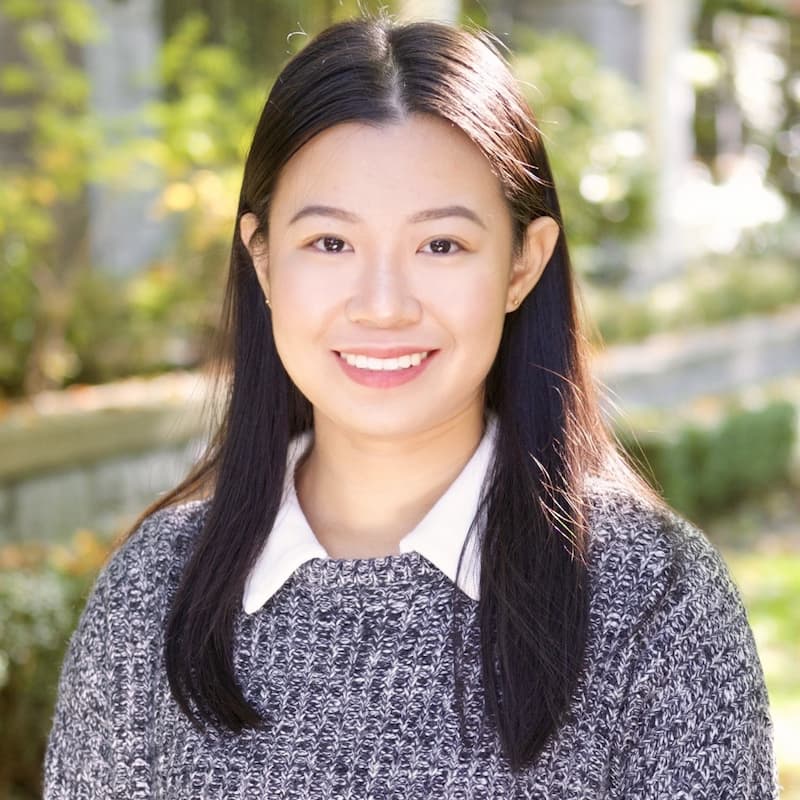
Elisa plays a key coordinating role within the Master of Urban Forestry Leadership (MUFL) program at UBC. She manages daily program operations and offers ongoing support to both students and the instructional team. Her connection to UBC’s Urban Forestry program began in 2018, and has supported the MUFL program since 2022.
Previously, Elisa worked with the Collaborative for Advanced Landscape Planning (CALP), where she coordinated local engagement initiatives focused on climate action and urban greening—such as the Oak Bay Coolkit and a climate education resource guide developed in partnership with the Vancouver School Board.
Her recent research explores the landscape of urban forestry education across Canada, with particular attention to the competencies emphasized in different programs. With experience in both teaching and applied research, Elisa is interested in supporting students engaged in community-based projects related to climate change mitigation and adaptation, helping bridge knowledge and practice through place-based, participatory approaches.
Take part in a hands-on beading workshop at the Malcolm Knapp Research Forest with Cheyenne Cunningham, a skilled artist from the Katzie First Nation. Learn how to transform salmon bones into unique earrings using traditional, sustainable methods. As you craft, Cheyenne will cook salmon to share, teach cultural stories, and introduce words from the hən̓q̓əmin̓əm̓ language. This workshop is open to all skill levels and offers a meaningful way to explore Indigenous art and culture. All materials and light refreshments are included.
About Cheyenne Cunningham
ʔa∙ nə siʔəm̓ nə siyey̓ə Cheyenne θə nə skʷix, təli cən ʔəƛ̓ q̓íc̓əy̓ Hello, my relatives and friends, my name is Cheyenne, I am from Katzie First Nation. I am Coast Salish on my dad’s side and English on my mother’s side. My proposed research explores Katzie First Nation and territorial place names that have been identified in Suttles (1955) Katzie Ethnographic Notes. I seek to document and analyze Indigenous linguistic and relational knowledge embedded with geographic/physical landscapes and revealed through community engagement with the land and place (i.e., stories, cultural practices, such as harvesting knowledge and stewardship activities).