Farmed Animal Research Co-op at Ministry of Agriculture and Food in Victoria, BC
During this work term I worked for the Ministry of Agriculture and Food in the Corporate Policies and Priorities Branch. Throughout this experience I’ve been able to work with a diverse group of people with all different backgrounds in education and experiences on a project under the Ministry. I’ve been able pick up skills in writing briefing notes, researching, organizing meetings and communicating effectively.
Co-op has definitely been the highlight of my university experience as it has provided me with opportunities to network and gain on the job skills that wouldn’t otherwise me available to me. I really cherished this co-op experience working with the Ministry and look forward to my next co-op!
Climate Action Outreach Coordinator at Langley Environmental Partners Society in Langley, BC
In this summer, I worked at Langley Environmental Partners Society. As a climate ambassador, I mainly did public outreach. We conduct door-to-door landowner contact to educate residents on sustainable water restriction and alternative transportation strategy made by the Township of Langley. I promoted climate action messages to the public by attending a variety of events throughout the summer. In addition, I investigate opportunities for future school and community outreach programming, including report writing. At last, I assisted with the coordination of climate action workshops.
The reason why we did is that we share sustainability information and encourage the adoption of new behaviors to reduce climate impacts. The WaterWise program is an initiative of the Township of Langley’s Water Resource Management Strategy in order to informed residents about the importance of local groundwater resources, and providing practical ways to conserve and protect our supply.
Theoretically, LEPS is my first job in my life. Also, working in LEPS is one of my best choices in my life, which teach me a basic understanding of environmental area and motivate me to imagine what I can change for the world climate in the future. Solving climate problems is a complex and long process. Through door to door and announcement for public people that we did in this summer, it is just the beginning to make people sense the seriousness of climate and collect surveys data and awareness. The leaders who may be government, company and even some persons need to publish a serious of measures and policies to take public people together to make a progress. It is an unforgettable, unbelievable and meaningful summer term for me. I am so proud of what I did in this summer.
Assistant Forest Carbon Policy Analyst at Ministry of Environment and Climate Change Strategy in Vancouver, BC
For my summer Co-op term, I continue my time with the Climate Action Secretariat (CAS) at the B.C. Ministry of Environment and Climate Change Strategy. My term centers around the B.C. Forest Carbon Offset Protocol (FCOP). It establishes project requirements for forest carbon offset projects. I have been supporting the drafting of the FCOP quantification section. This work term is a significant learning experience for me in multiple ways. For example, I examined forest carbon potential from policy and economic perspectives. It helped me narrow down and plan my future paths. There are amazing people within and across Ministries. I chat with many of them and learn many things, ranging from technical work to career paths. Another exciting part of this term is to bring my academic interests in forest carbon to professional work.
For me, Co-op is a valuable opportunity to try and grow. Knowing how classroom knowledge (e.g., disturbances) can be applied in various fields is exciting and helpful to help me, as a student, consider my future path. Working as a Co-op could present challenges that may not occur in school. Overcoming them with the support from my team helped me grow significantly. I feel fortunate to join a very supportive and motivated team!
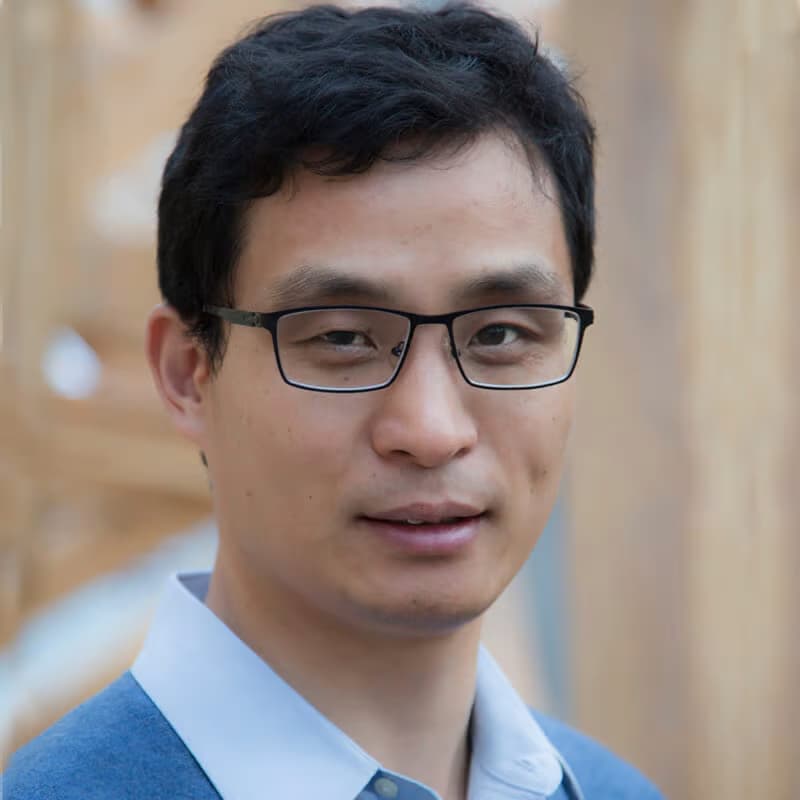
Are you curious about the world we live in? Looking for inspiration and a fresh perspective on the world of forestry? Meet Walter Yan, a MSc student at UBC Forestry & Environmental Stewardship, who is using his love of asking questions to explore the secrets of the forest ecosystem. In this interview, Walter shares his educational background, current research, and favorite experiences at UBC Forestry & Environmental Stewardship. He also offers valuable advice to students interested in pursuing a career in forestry. Don’t miss this opportunity to learn from Walter’s insights and experiences. Read on for the full interview below!
Introduce yourself!
“My name is Walter Yan and I am an MSc student working with professor Gregory Paradis and professor Qingshi Tu in the FRESH lab and SBR group in the Faculty of Forestry & Environmental Stewardship. I love asking different kinds of questions about this magical, lovely and charming world, and I really enjoy finding answers to them. I am also passionate about learning interesting and new topics to challenge and improve myself! These are two of the main reasons I am drawn to research, and I plan to continue working hard in academia as a result. So, currently I am also pursuing a Ph.D. position in the world’s top research labs or groups as well. Outside my research, I enjoy sports, such as powerlifting, bodybuilding and basketball. I also have a lifelong passion for reading and writing poems and prose in Chinese, with the hope that I can publish some of them and be a part-time writer one day.”
Can you tell us about your educational background and how you first became interested in Forestry?
“Last year, I got my first Bachelor of Science in Forestry here at UBC, and my second Bachelor of Science in Ecology Degree from the Fujian Agriculture and Forestry University. During my study over the past four years, I learned a lot about forest ecology and forest resources management. These programs helped me to better understand the forest, the biggest terrestrial ecosystem in the world, and how we can co-exist with it. This fascinating and complex ecosystem is what drove me to pursue an MSc program – to delve deeper into its secrets. Until now, this program has helped me gain a deep understanding of the global climate change emergency and how important the role forest sector plays in climate change mitigation as a critical nature-based solution.
I still remember my spring field trip to the Malcom Knapp Research Forest. I was walking in the forest after the heavy rain. The air was so fresh, the birds just started singing, and the cool breeze was hugging me softly. I saw the sunshine fall from the sky and down to the moist ground covered with ferns and moss. The light was surrounded by trees – those ancient giants who have been standing quietly there for hundreds of years. This was the first time I fell in love with forestry.”
Can you give us an overview of the research that you are currently working on? Where do you hope to see this work in the next few years? What are some of your favorite things you’ve learned from your research so far?
“My research topic is using mathematical programming to build an innovative computational modeling framework to simulate and optimize the climate change mitigation potential of the B.C. forest sector. I am confident that we are going to publish two papers (hopefully three) based on this project in the next two years. I am also working on other projects about timber supply and forest carbon modeling, and aim to publish more papers in this area as well. Personally, I am very passionate about remote sensing, machine learning and deep learning, as well as their applications in the forest sector, climate change mitigation, and biodiversity research. I believe these research areas have a bright future. Thus, I spend most of my spare time studying this field now.
My favorite thing I have learned from my research is definitely mathematical programming. Python is my favorite programming language, and I used a lot of R during my undergrad as well. Learning other languages such as SQL, Java, and C++ is also interesting, especially when comparing them and finding their pros and cons! I also love learning how to use and combine different software for my modeling work, such as Patchworks, CBM-CFS3, ArcGIS Pro, ENVI, openLCA, and Brightway2.”
What have been some of your favorite experiences during your time so far at UBC Forestry & Environmental Stewardship?
“My favorite experience so far is being the graduate teaching assistant for FRST 422 (Mathematical Modelling in Forest Resource Analysis) and FRST 423 (Forest Management Planning). I really like imparting knowledge and skills I have to my students, as well as helping them figure out various puzzles. Teaching the class can also help me better understand the knowledge I have, shape my skills, learn a lot of new information and finally improve myself. I will definitely continue doing that in different classes in the future! My second favorite experience is standing on the stage and speaking to the public about my research. It excites me a lot when I present the research I have done in front of people from a variety of fields. I try to control the stage rather than let it control me. Giving a successful public presentation really makes me feel proud of myself. I also enjoy the deep talks about my project’s details with many different people who reach out to me after my presentation.”
What advice would you give to students who are interested in pursuing a career in forestry?
“Go to the forest and study in it! Stay humble and patient to learn from it since it is the best teacher on Earth ever!
Forestry is a very “practical” industry and really needs field work and gets your boots dirty!
Remember to buy the best rain gear you can since it is a worthwhile investment! I used to survive a rainstorm in the forest and I deeply know how terrible it is under bad weather.
Doing research or finding a job? Try both of them to explore your potential and what really interests you. It’s never late to start finding your future career path!
Always be prepared for the opportunities coming and never be afraid when you see or “smell” it!”
UBC’s Faculty of Forestry & Environmental Stewardship is thrilled to announce that the Climate Change Health Effects, Adaptation and ResiLience (HEAL) network has had its grant renewed for another year. Co-led by Dr. Lorien Nesbitt, Department of Forest Resources Management and Dr. Chris Carlsten, Division of Respiratory Medicine/Department of Medicine, the interdisciplinary group is one of 40 UBC research excellence clusters that received funding under the university’s Research Excellence Clusters Initiative.
Over the past year, the HEAL network has invested in relationship-building with local partners, including grassroots organizations, local, regional, and provincial governments, and other researchers. This includes organizing a stakeholder workshop to identify priority areas for research, establishing a network of graduate students working on issues related to climate change, health, and urban greenness, and building a community of practice within and outside of academia to design their research from the ground up.
“In our first year, we set the ground work for collaborative relationships within the cluster and partner organizations. In our second year we are looking forward to taking the next steps of co-developing projects and initiatives to support communities at risk from extreme weather events associated with climate change.“
Photo Credit: Sophie Nitoslawski
With the renewal of HEAL’s grant, the group can continue to address the societal and cultural problems related to climate change and its effects on health through its interdisciplinary research. Guided by 3 key themes, the group will focus on building on their relational foundations and continue their conversations with individuals and organizations outside of their group to advance research that responds to the needs of those experiencing climate change and managing its effects within the community.
“Our focus is on using a research to action approach, meaning we aim to co-develop projects in partnerships with relevant stakeholders. In our first year stakeholder organizations (such as government) were in a transition period from COVID-19 with limited capacity for other activities. However, organizations have allocated resources to climate change and health and are well positioned to work collaboratively in this area. We are looking forward to deepening these relationships in our second year.“
About UBC’s Research Excellence Clusters
UBC’s Vice-President, Research & Innovation and the Provost & Vice-President Academic established the Grants for Catalyzing Research Clusters competition as a way to catalyze research initiatives and enable clusters to have a greater impact than would be possible otherwise.
The Faculty of Forestry & Environmental Stewardship is seeking undergraduate student leaders to help welcome new students as part of Imagine Day 2023! This a fun and rewarding volunteer position that plays a crucial role in the delivery of UBC Orientations for students joining the Faculty of Forestry & Environmental Stewardship in September 2023.
Please see the position description for more details, including important dates. Students can apply for the position by filling out the application form here.
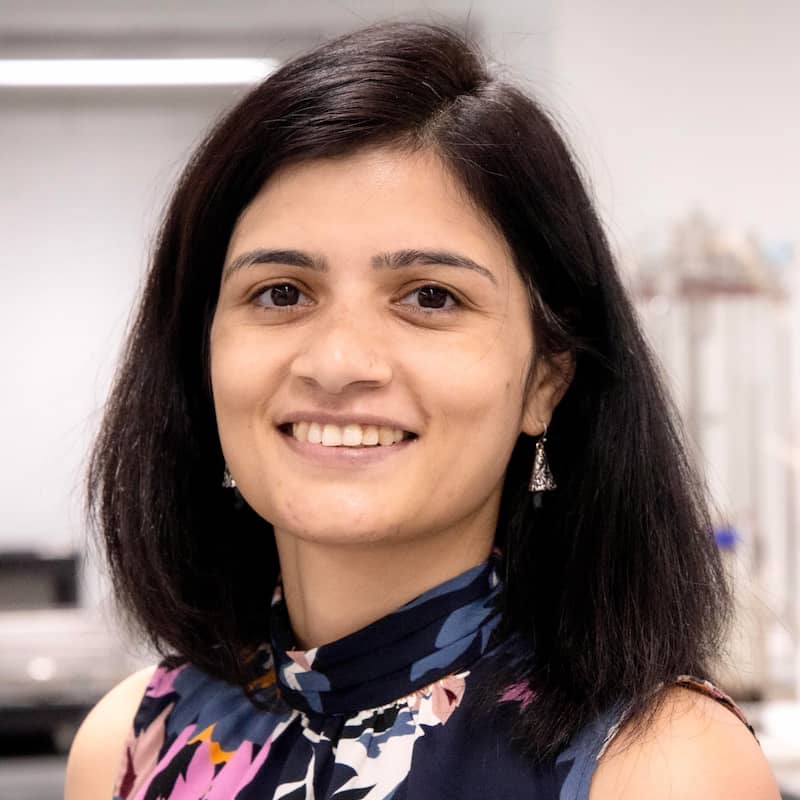
Jaya Joshi is an Assistant Professor in the Department of Wood Science at UBC. Her research focuses on improving the yield and nutritional values of crops, guided by the aim of successful implementation of carbon farming by 2050. Metabolic engineering of microbes with tailor-made catalysts that could convert biomass-derived feedstocks into fuels, valuable commodities, or pharmaceutical products will pave the way for sustainable chemistry.
Tell us about yourself!
I define myself as a synthetic biologist. I grew up in India, where I did my masters in plant biochemistry. Recently, I finished a postdoctoral fellowship with Dr. Andrew Hanson at the University of Florida. After that, I moved to Dr. Vincent Martin’s lab at the Centre for Structural and Functional Genomics in Montreal. During my time there, I explored the enormous power of bio foundries in the field of synthetic biology.
Throughout the last few years, I have worked with a number of different companies and organizations, including Agriculture and Agri Food Canada, to look at how to help people in terms of hunger and in respect to yield and nutrition. Thirty percent of the world’s food is going to waste, so I really focus on finding ways to reduce that percentage by looking into ways to use that waste efficiently.
What drew you to your work?
I was very interested in the climate change crisis and what’s happening with malnutrition. With people around the world dying with empty stomachs, I wanted to do what I could to contribute to saving the world. I have a three-year-old son and I worry about the world we are leaving behind, so I want to be a part of the solution which I felt like I could do here at UBC.
What attracted you to working at UBC?
People here in the Faculty of Forestry & Environmental Stewardship are very collaborative, everyone works together to think outside of the box. I’m looking forward to jumping in to be a part of the climate change solution along with my fellow faculty members. One of the biggest attractions for me was when I saw the crisis here in British Columbia in 2021. Seeing the floods and the forest fires, and the impacts of climate change on the food industry. I felt that this is the place where I can start and grow my theory of reduced waste and produce something out of it. I saw a good cluster here and they were looking for a synthetic biologist who can work on the biotechnology. They wanted to take forward is how to use the feedstock, so this was a perfect place for me to start.
In addition to your research, what are you looking forward to working on in the Faculty of Forestry & Environmental Stewardship?
I am very much an advocate of women in science, I want to create space for other women to come forward and say, I want to study science. I’m passionate and I’m happy that there are a lot of women scientists here, especially in this department. I come from a very small town of India, which were girls’ education was not a big deal. Working in STEM, there is still a stigma in a lot of countries, and I have seen it firsthand. My teaching will focus on developing a programming course, with women in mind. Programming is dominated by men, so this will offer platforms for women to learn in a more welcoming setting.
Junior Forestry Technician at Coastal Natural Resource Management Ltd. in North Vancouver, BC
I currently work as a Junior Forestry Technician for Coastal Natural Resource Management. Coastal is a rapidly growing consulting company out of North Vancouver, with clients across the province. I am working on a forestry development project around Pitt Lake, BC. My primary day-to-day roles include timber reconnaissance, road development, forestry engineering, and cut block layout. It has been extremely memorable getting to work a forestry consulting job where I am able to travel across British Columbia and experience working in unique and beautiful landscapes. Forestry Co-op has helped me to set goals and learning objectives for myself which has helped hold me accountable for my career development and ongoing learning.
Field Services Technician at City of Burlington in Burlington, ON
During my first co-op term, I have been working as a Field Services Technician with the City of Burlington, which is located on the northwestern end of Lake Ontario in Ontario, Canada.
My main work term project is to inspect replacement trees, which are required for tree permit holders to plant as part of the permit condition to remove or injure trees that are not exempt. I communicate with landowners who are required to plant the replacement trees and inspect the replanted trees or provide them an extension with a fee as the permit will expire in one year. The main purpose of the inspections was to ensure the replacement tree requirements, which include tree size, species, location, and condition, are met. Another task I am assigned to is to intake tree permit applications so they are available for the forest protection officers to review. This includes communicating with applicants to attain the required information and documentation and answering inquiries related to the permit process. During this work term, I have gained valuable experience and knowledge in municipal urban forestry, about the by-laws, and dealing with the permit process and how different departments other than forestry are also involved. I have enjoyed learning how the forest protection department is involved in diverse permit processes to ensure they can protect significant trees and maintain and even increase the urban tree canopy in the long term, and I hope I can carry on what I have learned and apply it in my future career to make an impact by protecting and enhancing the urban forests.
Being a part of Parks Canada’s Learn-to Camp Public Outreach and Education team is such an eye-opening experience, as I was able to get hands-on experience in interacting with the public and applying conservation through communication. Through Learn-to Camp, I was able to inform the public regarding outdoor safety and preparation, creating a safer and more informed community, one person at a time. Our overnight programs allow even the most inexperienced campers to immerse themselves in the world of camping, in a safe and informative way. This experience allowed me to meet and interact with people of various backgrounds, shaping me into a more adaptive, inclusive, and open-minded individual.