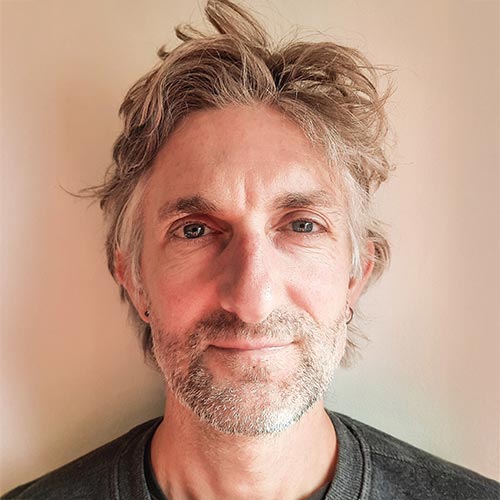
Zelalem leads an interdisciplinary research group working across agricultural, forest, and urban ecosystems, focusing on ecosystem productivity, sustainability, and resilience in the face of global change. His group actively collaborates with experts in soil science, plant science, plant pathology, plant breeding, computer science, statistics, and other disciplines. Their research integrates wet lab and field research with computational and data-driven approaches.
Research Areas
Plant and Soil Microbiome – Investigating microbial assembly processes and the role of plant genotype, management practices and environmental factors in shaping microbial communities and function. Using a One Health research approach, we also explore microbiomes across organisms (e.g insects) across agricultural, forest, and urban ecosystems.
Synthetic Microbial Communities – Designing and testing microbial consortia to enhance plant and soil health and productivity. Our goal is through model consortia to uncover key molecular principles and explore their application in sustainable agriculture and ecosystem restoration.
Plant and Soil Health – Examining biological and environmental factors that influence plant and soil resilience, including microbial communities, nutrient dynamics, and drought stress.
Genomic Tools and Ecological Modeling – Developing genomic and computational tools to support climate-resilient plant breeding programs, conservation strategies, and species distribution modeling. Our work integrates large-scale genomics, biodiversity, trait, and environmental databases to improve decision-making in agriculture and natural resource management.
Non-Wood Forest Products & Sustainable Forest Management – Investigating wild edible mushrooms (ectomycorrhizal fungi) and indigenous knowledge to inform culturally sensitive and ecologically sustainable forest management practices. We examine the impact of land use change, climate change and invasive species on non-wood forest products.
Our group employs ecological concepts, genetics, genomics, microbiology, bioinformatics, GIS and remote sensing, computer programming, and statistical and computational approaches. We welcome motivated students from diverse backgrounds interested in these research areas.
Education
BEd. in Biology (Major) and Chemistry (Minor), Bahir Dar University, Ethiopia
MSc. in Biological Sciences (Botanical Sciences), Addis Ababa University, Ethiopia
MSc. in Mediterranean Forestry and Natural Resources Management, University of Lleida, Spain
MSc. in Forest and Environmental Sciences, University of Tuscia, Italy
PhD in Plant Science, University of Saskatchewan, Canada
Post Doctoral Fellow, University of Saskatchewan, Canada
PRP Research Scientist, Agriculture and Agri Food Canada
Awards & Honors
2020 University of Saskatchewan Doctoral Dissertation Award Nominee
2019/2020 University of Saskatchewan Plant Science Outstanding PhD Student
2020 Teacher-Scholar Doctoral Fellow, University of Saskatchewan
2016-2020 Saskatchewan Wheat Development Commission Graduate Scholarship
2016 Singapore International Graduate Award (SINGA)
2012-2014 Erasmus Mundus European Master’s Scholarship
Materials made from the building blocks of wood are an expanding area of research at UBC Forestry & Environmental Stewardship. Whether fueling jet engines, offering alternatives to concrete and textiles or replacing plastics, the versatility of bio-based materials has opened the door to their possible application in a broad array of industries. In this issue, we explore a few examples of the potential of these bio-based disruptors, particularly in the global bid towards more sustainable and fully biodegradable products.
With a research background in remote sensing, wildlife management, and spatial data modeling, I now focus on education and pedagogy in geomatics. As a lecturer, I specialize in universal design for learning, accessibility, and inclusive teaching practices. My goal is to provide students with a holistic understanding of the intersections between geospatial data, conservation, and climate change. I am passionate about teaching and committed to fostering a safe, supportive, and engaging learning environment.
UBC Forestry & Environmental Stewardship wishes to congratulate Dr.Lori Daniels and Marina Melanidis on being awarded the prestigious King Charles III Coronation Medal!
The Medal, administered by the Chancellery of Honours at Rideau Hall, commemorates individuals who have “made a significant contribution to Canada or to a particular province, territory, region or community of Canada, or have made an outstanding achievement abroad that brings credit to Canada”.
As the inaugural Koerner Chair in Wildfire Coexistence, and with her award-winning teaching, leading-edge research, and dedication to knowledge mobilization, Lori has worked tirelessly to keep our forests healthy and our communities safe.
Marina Melanidis
Marina (BSc ’18, MSc ’22) is an exceptional young scholar and advocate who has launched two very successful youth-led NGOs (Youth4Nature and Climate Guides) focusing on nature-based solutions and climate action, given youth a voice on the international stage at several high-level conferences and conventions, and is currently enrolled in a PhD program at Cambridge.
Dr. Coupland’s role within the MGEM community is multifaceted. She is responsible for coordinating the day-to-day activities of the program and providing dedicated support to both students and the MGEM teaching team. She has been connected to UBC Faculty of Forestry & Environmental Stewardship professional master’s programs since 2014 when she was a student in the Master of Sustainable Forest Management program, a sister program to MGEM.
Her research focuses on the application and development of novel classification schemes for forests, with an emphasis on quantifying non-timber forest values. Specifically, she has worked on quantifying the educational values in urban forests for forestry education, using UBC as a case study. This research utilized both quantitative and qualitative methods and included a LiDAR canopy analysis of every tree on the UBC campus.
Selected Publications
OpenClose
Polinko, A. D., & Coupland, K. (2021). Paradigm shifts in forestry and forest research: a bibliometric analysis.Canadian Journal of Forest Research, 51(2), 154-162.
Coupland, K., Magalhães, J., & Griess, V. C. (2022). Connecting Forestry Learning Objectives to Urban Forest Types.Journal of Forestry, 120(3), 256-270.
Congratulations to the 2024-2025 recipients of the UBC Faculty of Forestry & Environmental Stewardship Indigenous and Community Engagement Research Fund (ICERF) for their outstanding contributions in the Collaborative Research with Indigenous Communities stream.
Taz Gharajehdaghpour | PhD, FRM – Supervisor: Cole Burton Josefina Cortés | PhD, FRM – Supervisor: Lorien Nesbitt Morris Prosser | MSc, FRM – Supervisor: William Nikolakis Gabriel Schepens | PhD, FRM – Supervisor: William Nikolakis Sarah Sra – MSc, FCS – Supervisor: Terry Sunderland
About ICERF
ICERF provides funding for graduate students to build new partnerships with Indigenous communities and community organizations, and fulfill responsibilities relating to community-defined outcomes for existing partnerships and projects.
This event is free and will be held in person only.
Seminar Abstract
This seminar delves into the pressing need for equity in urban greening across Canada and around the world, moving beyond traditional metrics like the Tree Equity Score to address systemic challenges and empower communities. While metrics are valuable for identifying disparities in canopy cover and vulnerability to climate change, they must be complemented by deeper engagement with local contexts and lived experiences.
The Urban Natures Lab, led by Lorien Nesbitt, is currently focused on understanding and enhancing recognitional justice in urban greening, valuing the diverse experiences and contributions of under-resourced and vulnerable communities. This seminar showcases the results of participatory methods, such as photovoice and walking interviews, that amplify underrepresented voices and foster the co-creation of equitable solutions for green, healthy cities. By building networks of care through community engagement, co-creative workshops, and grassroots collaboration, the research bridges policy and practice to align urban greening with broader social and ecological needs. The presentation calls for reimagining urban forests as spaces of care, resilience, and justice, centering humility, inclusivity, and co-learning.
Speaker
Dr. Lorien Nesbitt is an Assistant Professor of Urban Forestry and Environmental Justice in the Department of Forest Resources Management at the University of British Columbia. An internationally recognized scholar, Dr. Nesbitt has collaborated with communities and organizations across the globe to co-create more livable, sustainable, and equitable cities. At UBC, Dr. Nesbitt leads the Urban Natures Lab, which focuses on advancing environmental justice through urban greening and planning. The lab’s research addresses key topics such as green gentrification, recognition justice in urban forest stewardship, and supporting planetary health in the face of the climate crisis. Their work is highly collaborative, regularly partnering with cities, regional governments, and community-based organizations to co-create impactful, transdisciplinary research.
Dr. Nesbitt has a strong record of scholarly leadership. She currently co-leads the HEAL Research Excellence Cluster at UBC and is a core member of the UBC Centre for Climate Justice. She also serves on the Steering Committee of the ECCC initiative to build a Pan-Canadian, Interdisciplinary Urban Research Network and on the editorial boards of Urban Forestry & Urban Greening and Frontiers in Sustainable Cities.
Dillon Consulting Limited is looking for qualified post-secondary students to assist in the delivery of the 2025 City of Surrey Salmon Habitat Restoration Program (SHaRP). Please find attached job postings for the three available Team Leader positions including:
· Watershed Enhancement Team Leader (six positions);
· Community Education Team Leader (one position); and
· Media and Public Relations Team Leader (one position).
We have 4-month (May to August) and 7-month (May to November) interim positions available for our 2025 season.
Experienced and interested individuals are invited to submit a cover letter and resume as one file to sharpapplications@gmail.com by Monday February 10, 2025 at 11:59pm PST. Applicants for the Media and Public Relations Team Leader position are encouraged to attach examples of relevant media creations.
Join us for a fun evening with urban forestry profs, students, and professionals. Meet with the key BUF partners, learn about job opportunities, and meet new friends! Food and drink will be provided.
UBC Faculty of Forestry & Environmental Stewardship accelerated Professional Master’s degrees offer the opportunity to deepen your technical skills, hone your leadership abilities and expand your professional networks.
Led by world-renowned faculty members and experienced industry professionals, our programs are developed to give students the core foundation in rapidly developing fields – such as climate adaptation, forest carbon management and geomatics – to advance in their careers.
Join us on January 16, and learn directly from program directors, coordinators and advising staff in our exclusive panel discussion, and find out which program is right for you.
Master of Geomatics for Environmental Management
Over 9-months, the Master of Geomatics for Environmental Management (MGEM) provides essential training in the use and application of geospatial tools used to plan, develop, manage, and evaluate programs to protect and regulate natural habitats and renewable natural resources.
Dr. Coops is one of the MGEM faculty mentors and teaches introductory and advanced remote sensing courses. His focus is the use of remote sensing technology to assess forest resources, both for conservation and production applications. He is specifically interested in advanced forest inventory techniques using high spatial resolution optical remote sensing imagery and LIDAR, use of remote sensing for the ecosystem and carbon accumulation modelling for biodiversity, production and greenhouse calculations, and detection of damaging agents in forests using spectral forest condition mapping.
Dr. Coupland is the MGEM program coordinator. She plays a key role in the MGEM community, coordinating the program’s daily activities and supporting students and faculty. Connected to UBC Forestry & Environmental Stewardship since 2014 as a graduate of the Master of Sustainable Forest Management program, her research focuses on developing novel forest classification schemes, emphasizing non-timber values. Notably, she has quantified educational values in urban forests at UBC through innovative methods, including a LiDAR canopy analysis of every tree on campus.
Master of International Forestry
The Master of International Forestry (MIF) is an intensive, 12-month program based on a mix of experiential learning and coursework that prepares students to explore, negotiate, and implement solutions to the complex challenges facing the world’s forests, and the people that depend upon them.
Dr. Sunderland is a professor in the department of Forest and Conservation Sciences focusing on the biological and human dimensions of the sustainable management and utilization of tropical forests. He was previously a Senior/Principal Scientist at the Centre for International Forestry Research (CIFOR), Indonesia, where he coordinated CIFOR’s work on forests and food security, biodiversity conservation, and integrated landscape management.
Master of Sustainable Forest Management
Master of Sustainable Forest Management (MSFM) is a a comprehensive 9-month program designed to prepare students for careers in professional forest land management. The program is suited for individuals who are naturally curious, enjoy outdoor work, and have a strong passion for environmental stewardship. It’s designed for those interested in pursuing careers as professional forest land managers in North America and beyond.
Hélène is the MSFM Co-Director and manager of Malcolm Knapp Research forest. She is a dedicated lifelong learner with over 20 years of experience as an ecologist, Registered Professional Forester (RPF), and post-secondary instructor. Originally from Manitoba, she began her forestry career as a tree planter in BC, later earning a Master’s in Forest Sciences from UBC. Before joining the UBC Research Forest, she taught for 7 years at BCIT. Hélène is passionate about silviculture, forest health, plant identification, and community-based forestry, and loves getting people outdoors to explore nature.
Dr. Byrne is the MSFM program coordinator. He is a professional forester with a background in natural disturbance modelling and extensive practice working with practitioners to implement research – specifically in the fields of harvesting and silviculture system modelling, adapting to the impacts of climate change and leveraging technologies in the forest sector. He enjoys sharing these passions and embraces continuous improvement teaching for the benefit of students beginning their careers in forestry.
Master of Urban Forestry Leadership
The Master of Urban Forestry Leadership (MUFL) is a comprehensive program offering an interdisciplinary perspective on urban forestry, with a focus on strategic management, decision-making, and creativity. Students can choose a 13-month full-time program on UBC’s Point Grey campus or a 25-month part-time online program, accessible globally for those who wish to study while working.
As the program director for the MUFL program, Dr. Barron brings an expansive background in working with interdisciplinary teams to explore the various aspects of urban green space contributions to climate adaptation and human well-being. She is a member of the Green Infrastructure Research Group at the University of Melbourne and the Collaborative for Advanced Landscape Planning at UBC.