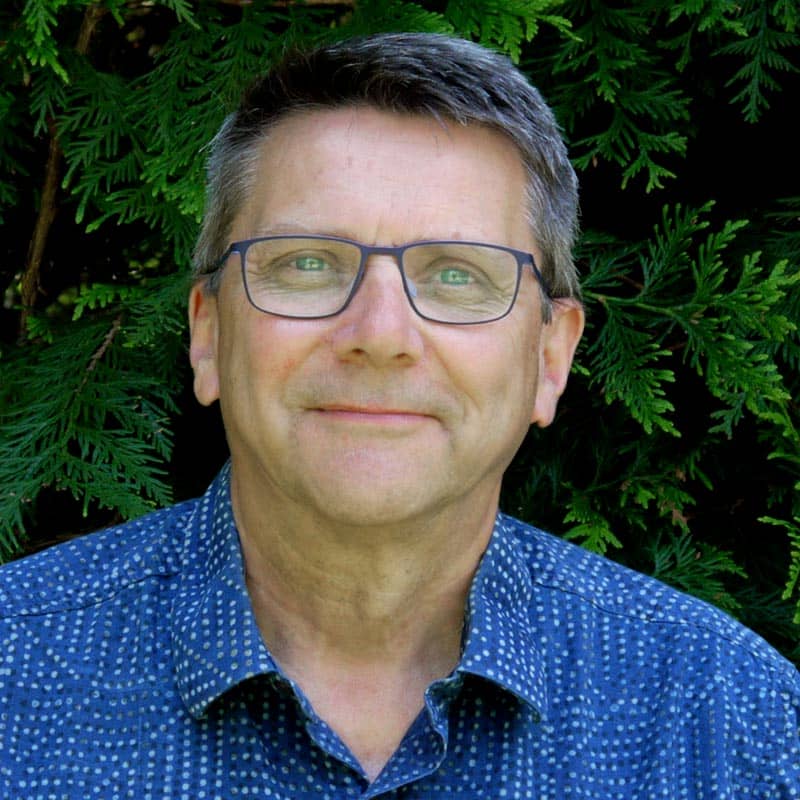
For many students, the path after graduation is anything but linear. For one recent UBC Forestry & Environmental Stewardship graduate, Chanel Yee (BUF’23), the journey has been about exploration, connection, and finding a deeper purpose in her work. From studying Urban Forestry at UBC to working on wildfire mitigation as an Urban and Community Forestry Resource Assistant for the U.S. Forest Service in Hawaiʻi, her story is one of passion, discovery, and a growing sense of responsibility for both the land and the communities that call it home.
Chanel acknowledges that her university experience played a critical role in shaping her career trajectory.
“I got to see what forestry looked like in different contexts,” she said. “Even though I didn’t realize it at the time, those experiences helped me understand the kind of work that would be most fulfilling to me.”
In this Q&A, Chanel shares her experience, from choosing UBC Forestry & Environmental Stewardship as a high school student to being led back home after graduating through opportunities created during her time here.
What initially drew you to UBC Forestry & Environmental Stewardship?
Both of my sisters attended Canadian universities, so my parents always encouraged me to consider schools in Canada. The affordability of Canadian universities compared to U.S. schools was a big factor. My mom is from Toronto, so my parents were supportive of me looking at both U.S. and Canadian schools, but they wanted me to know that Canadian universities were also great options.
Beyond that, I knew I wanted to leave Hawaiʻi for university. I was looking for a change in scenery and a chance to step out of my comfort zone. As much as I love home, I wanted to experience something new.
What made you choose UBC Forestry & Environmental Stewardship and Vancouver over other Canadian universities?
I knew I wanted to study something related to environmental sciences, particularly because of my concerns about climate change and its impact on Hawaiʻi. But as a high school student, I wasn’t sure exactly what that meant in terms of specific degree programs.
When I looked at universities, I mostly found general environmental science programs. UBC stood out because it had an entire Faculty of Forestry & Environmental Stewardship with multiple specialized programs within environmental sciences. That was really appealing because it gave me options to explore different areas of interest rather than being limited to one broad program.
The interdisciplinary course content was also a big draw for me. My degree allowed me to take courses both inside and outside of the Faculty of Forestry & Environmental Stewardship, and even within forestry, the courses were so diverse. It was really cool to study the same system from multiple perspectives. I also appreciated the faculty’s intimate and accessible environment. It wasn’t intimidating, and I felt comfortable learning new things within a close-knit academic community.
How did you decide to study Urban Forestry?
At the time, I loved cities—I thought they were so exciting! I remember visiting New York and thinking Times Square was the dream. It’s funny because now I find that environment a little overwhelming, but back then, I was fascinated by cities and how they functioned.
Growing up in Hawaiʻi, I lived on the outskirts of Honolulu, right by the ocean. There’s not a stark divide between downtown and nature—one moment you’re in the city, and the next, you’re at the beach. That made me aware of how cities interact with natural environments and how they are still vulnerable to climate change.
I was drawn to urban forestry because it explored how cities can be high-functioning while still incorporating vegetation and green spaces. The idea of “urban forestry” seemed like a juxtaposition at first, but that’s what intrigued me. I also liked how interdisciplinary the program was—it allowed me to explore different career paths while staying focused on environmental issues.
Did your love for cities influence your decision to study in Vancouver?
Absolutely. Vancouver is known as a “green city,” and that was very attractive to me. Even though I’ve since learned more about the nuances of urban sustainability, compared to other cities, Vancouver is relatively green and has a strong reputation for sustainability. The idea of studying at a university within such a forward-thinking city made UBC even more appealing.
Knowing how close the campus was to the city was really attractive. Other schools I looked at that I was super interested in their programs were in the middle of nowhere, so that was really hard. Location played a huge role in where I ended up going. I knew I didn’t want to be landlocked, and having the ocean there was really helpful. Knowing what life outside of UBC could look like, having places like Whistler, Squamish and Richmond so close in addition to the city life was instrumental in my decision.
What challenges did you face in transitioning to life in Canada, and how did you adapt?
The most obvious challenge was the weather. Hawaiʻi doesn’t have daylight savings, and it doesn’t rain as much as Vancouver. It was tough adjusting to the darker, rainier months. My mom sent me vitamin D supplements and a therapy lamp, which I honestly didn’t even know existed before!
What really helped was focusing on socializing and making friends. I also made an effort to engage with the city beyond academics—going to night markets, food markets, and other events. That helped me not only distract myself from homesickness but also start seeing Vancouver as a home away from home.
What about academic challenges—was there anything particularly difficult about transitioning from a U.S. high school to a Canadian university?
For the most part, the structure wasn’t too different. My high school used a semester system, so that part was familiar. One small thing that stood out was the grading system—UBC uses percentages instead of a GPA scale, which was new to me. However, the Student Service Centre had a grade conversion tool, so that was easy to adjust to.
The biggest academic challenge was the size of the lecture halls. In high school, my classes had a maximum of 20 students, so transitioning to huge university lectures was intimidating. I had to push myself to attend office hours and seek help when needed since it wasn’t as easy to get one-on-one interaction with professors in large classes.
What advice would you give to other U.S. students considering UBC Forestry & Environmental Stewardship?
Don’t be afraid of the transition—it’s a big change, but it’s also an exciting one. I believe there is so much value in leaving your comfort zone.
I really found my home away from home at UBC Forestry & Environmental Stewardship, but it wasn’t all glamorous. For example, I decided to extend my degree because I felt really swamped with the coursework. But every challenge that I had was essential to get me to where I am now. By extending my degree, I got to work; I got to make these relationships and have more space for different opportunities. I would encourage everyone to lean on the resources within the faculty because they really supported me throughout my degree and helped me get to where I am now.
If you’re passionate about environmental sciences and want options beyond a general degree, UBC Forestry & Environmental Stewardship is a great place to explore those interests. And if you’re nervous about leaving home, just remember that you’ll find ways to make a new home wherever you go, whether it’s through new friendships, exploring the city, or immersing yourself in what UBC has to offer.
Can you walk us through your career journey since graduating from UBC? How did you land your current role, and what was the transition like?
One of my professors at UBC once told us that at some point, we’d have to choose options that open the most doors. At the time, I didn’t think I had many options, but looking back, I can see how my experiences at UBC led to where I am now.
While I was a student, I worked as a curriculum coordinator for the Bachelor of Urban Forestry program, which allowed me to connect with faculty like Dr. Susan Day. That connection led to a research assistant role in her lab, working with a PhD student who had been my TA. Later, Dr. Stephen Sheppard introduced me to an internship with the District of Oak Bay.
Then, the PhD student I was assisting told me about a research fellowship opportunity with the State of Hawaiʻi’s Urban and Community Forestry Program and encouraged me to apply. I got the fellowship and was able to conduct research while still working as her assistant. Through that fellowship, I was connected with a mentor from the U.S. Forest Service, who later helped create a position for me to continue my research project.
Now, I work as an Urban and Community Forestry Resource Assistant for the U.S. Forest Service, where I focus on the intersection of urban expansion and wildfire risk in Hawaiʻi. Most of my work is a continuation of my research fellowship, but I also support the region’s urban and community forestry program by attending partner events and creating resources.
What aspects of your UBC Forestry & Environmental Stewardship education, aside from jobs and internships, helped prepare you for your career?
The positions I held came from the relationships I built with faculty through their courses. Beyond that, I participated in the tri-mentorship program, which connected me with a parks manager from the City of Surrey and gave me insight into urban forestry careers.
Coursework also played a huge role. One particularly influential course was abiotic disturbances, which sparked my interest in wildfire science. My urban forestry capstone course was also crucial because it allowed me to explore the intersection of wildfire and urban planning. That experience laid the foundation for my research fellowship and, ultimately, my current role. The capstone was stressful, but it was worth it!
Was it your goal to return to Hawaiʻi so soon after graduating? What has it meant to you to start your career back home?
When I left for UBC, I always intended to return home, but I didn’t think it would happen so quickly. I wanted to live abroad for a while, but this opportunity was too important to pass up.
Returning home has been both a privilege and a responsibility. I was reminded of a conversation with a close friend from urban forestry who once asked me, “Isn’t that the goal—to take what you’ve learned and bring it back to your community?” That really resonated with me.
Since coming back, I’ve had the opportunity to share what I learned at UBC while also gaining a new perspective on my home. I’ve realized there’s so much more for me to learn about Hawaiʻi, and I don’t have to leave to continue learning. There is incredible strength in combining different knowledge systems, and I feel honoured to be part of that process.
What’s next for you?
I’m currently exploring Master’s programs to continue my learning. I want to stay here in Hawaiʻi because I feel like I have a responsibility to care for and give back to this land. When I came back after my undergrad, people were so excited for me to share what I learned so we could combine our knowledge.
After graduating from the world-leading university and faculty that is UBC Forestry & Environmental Stewardship, I came back after my undergrad and people were so excited for me to share what I learned so we could combine our knowledge. I’m honoured to be doing this work and am excited to continue it.
Chanel was recently accepted with a full-ride scholarship to the Natural Resources and Environmental Management program at the University of Hawaiʻi at Mānoa and will be pursuing her Masters of Environmental Management starting this Fall.