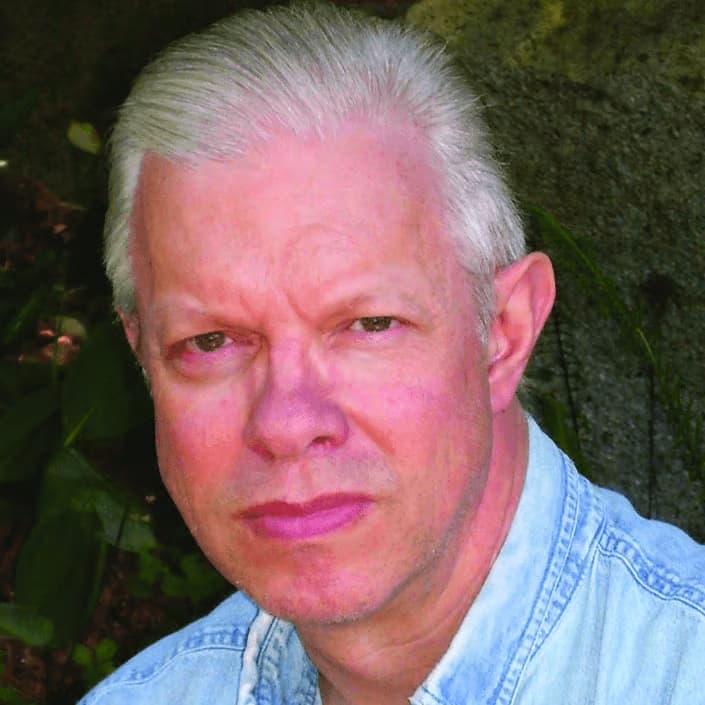
I am a veterinarian and ecologist applying One Health principles to wildlife conservation challenges.
Projects
Ecological and anthropogenic factors influencing wildlife health and disease
Role of domestic animals in the transfer of disease between humans and wildlife
Conservation ecology of bats in British Columbia
Publications
Wilson AG, Wilson S, Marra PP, Lapen DR (2026) Outdoor roaming of owned cats elevates risk of zoonotic pathogen exposure: A global synthesis. PLoS Pathogens 22(4): e1014160. [doi.org/10.1371/journal.ppat.1014160]
Wilson, S., Wilson, A. G., & Gamboa-Rengifo, S. L. (2026). Landscape heterogeneity supports bat diversity: Importance of wetlands and intermediate forest cover in coastal British Columbia. Biological Conservation, 313, 111567.
Byerly, P. A., Kearns, A. M., Welch, A., Ochirbat, M. E., Marra, P. P., Wilson, A., … & Fleischer, R. C. (2024). Museum genomics provide insight into the extinction of a specialist North American warbler species. Scientific Reports, 14(1), 17047.
Wilson AG, Lapen DR, Provencher JF, Wilson S. The role of species ecology in predicting Toxoplasma gondii prevalence in wild and domesticated mammals globally. PLoS Pathog. 2024 Jan 10;20(1):e1011908 [doi: 10.1371/journal.ppat.1011908]
Wilson AG, Fehlner-Gardiner C, Wilson S, Pierce KN, McGregor GF, Gonález C, Luszcz TMJ (2022) Assessing the extent and public health impact of bat predation by domestic animals using data from a rabies passive surveillance program. PLOS Global Public Health 2(5): e0000357 [doi.org/10.1371/journal.pgph.0000357]
De Groot KL, Wilson AG, McKibbin R, Hudson SA, Dohms KM, Norris AR, Huang AC, Whitehorne IBJ, Fort KT, Roy C, Bourque J, Wilson S (2022) Bird protection treatments reduce bird-window collision risk at low-rise buildings within a Pacific coastal protected area. PeerJ 10:e13142
Wilson AG, Wilson SD, Lapen DR (2021) Human density influences the prevalence of a generalist parasite in mammalian wildlife. Proceedings of the Royal Society B 288: 20211724. [doi.org/10.1098/rspb.2021.1724]
Wilson AG, Mitchell GW, Lapen DR, Provencher JF, Wilson SD (2020) Interaction of diet and habitat predicts Toxoplasma gondii infection rates in wild birds at a global scale. Global Ecology and Biogeography 29 (7): 1189-1198 [doi.org/10.1111/geb.13096]
Sherwood L, Wilson AG, Cluny S, Roche S, Luszcz TMJ (2019) Perceptions of veterinarians in British Columbia on cat management strategies to reduce cat overpopulation and impacts on wildlife populations. Anthrozoös: 32(5): 613-629
Greenberg R, Cammen KM, Wilson AG, Olsen BJ, Ballentine B, Rotzel NC, Fleischer RC (2016) Geographic population structure and subspecific boundaries in a tidal marsh sparrow. Conservation Genetics 17: 603–613
Wilson AG, Chan Y, Taylor SS, Arcese P (2015) Genetic divergence of an avian endemic on the Californian Channel Islands. PLoS One 10(8): e0134471
Hobson KA, Wilson AG, Van Wilgenburg S, Bayne E (2013). An estimate of nest loss in Canada due to industrial forestry operations. Avian Conservation and Ecology 8(2): 5
Wilson S, Anderson EM, Wilson AG, Bertram DF, Arcese P (2013) Citizen science reveals an extensive shift in the winter distribution of migratory western grebes. PLoS One 8(6): e65408.
Wilson AG, Marra P, Fleischer RC (2012) Temporal patterns of genetic diversity in the rarest songbird in North America. BMC Ecology 12:8
Wilson S, Collister D, Wilson AG (2011) Community composition and annual survival of lowland tropical forest birds on the Osa Peninsula, CR. Ornitologia Neotropical 22: 421 – 436
Wilson AG, Arcese P, Chan Y, Patten M (2011)Micro-spatial genetic structure in song sparrows (Melospiza melodia). Conservation Genetics 12: 213 – 222
Spiering PA, Gunther MS, Somers MJ, Wildt DE, Walters M, Wilson AG, Maldonado JE (2011) Inbreeding, heterozygosity and fitness in a reintroduced population of endangered African wild dogs (Lycaon pictus). Conservation Genetics 12: 401 – 412
Wilson AG, Arcese P, Keller L, Pruett C, Winker K, Patten M, Chan Y (2009) The contribution of island populations to in situ genetic conservation. Conservation Genetics 10: 419 – 430
Wilson AG, Arcese P (2008) Factors influencing natal dispersal in an avian island metapopulation. Journal of Avian Biology 39: 341 – 347
Pruett CL, Arcese P, Chan YL, Wilson AG, Patten MA, Keller LF, Winker K (2008) Concordant and discordant signals between genetic data and described subspecies of Pacific coast song sparrows. The Condor 110: 359 – 364
Pruett CL, Arcese P, Chan YL, Wilson AG, Patten MA, Keller LF, Winker K (2008) The effects of contemporary processes in maintaining the genetic structure of western song sparrows (Melospiza melodia). Heredity 101: 67 – 74
Wilson S, Norris DR, Wilson AG, Arcese P (2007) Breeding experience and population density affect the ability of a songbird to respond to future climate variation. Proceedings of the Royal Society 274: 2539–2545
Wilson S, Hobson KA, Collister DM, Wilson AG (2008) Spring migratory stopover of Swainson’s Thrush along the pacific coast of southwest Costa Rica. Wilson Journal of Ornithology 120: 74–84
Wilson S, Hobson KA, Collister DM, Wilson AG (2008) Breeding destinations and spring migration patterns of Swainson’s Thrush at a Costa Rican stopover site. The Auk 125: 95–104
Wilson AG, van der Kamp B, Ritland C (2005) Opportunities for geitonogamy in the clonal herb Maianthemum dilatatum. Canadian Journal of Botany 83: 1082–1087
Wilson AG, van der Kamp B, Ritland C (2005) Clonal and spatial genetic structure in Maianthemum dilatatum. Canadian Journal of Botany 83: 1126–1132
To guide reforestation, Miriam’s research discovers and models the adaptive capacity of keystone tree species in Canada’s forests. This research quantifies climate change impacts on forests and tree populations using a variety of tools – from quantitative genetics analyses to species distribution modelling, genomics and tree-ring science. As a Researcher in Quantitative Forest Genetics with the Canadian Forest Service, she works with partners at UBC Forestry & Environmental Stewardship and BC Ministry of Forests.
Dr. Wanli Wu is a Senior Ecologist working for Parks Canada Agency. He is responsible for conducting ecological monitoring and assessment, reviewing the state of parks reports and consulting on environmental impact assessments in Canadian national parks. Over the course of his career, Dr. Wu has worked in many national parks and historic sites located in various regions of Canada, the United States of America and China, including the Arctic, the Great Central Plains of North America, Southwestern Deserts, The Western Pacific Coastal Region and the Atlantic Coastal Mountains, the Inner Mongolian grassland and forests mountain regions, etc.
Transitioning into university can be overwhelming. The Land One program, offered by the Faculty of Forestry & Environmental Stewardship and Faculty of Land and Food Systems, is a different and immersive way of experiencing your first year at UBC. The cohort option eases your transition to university and builds a strong connection to your home faculty through the relationships you’ll develop with your peers and instructors.
Considering Land One? Continue reading to learn the program’s benefits from current UBC Forestry & Environmental Stewardship student, Ronan Sheppard!
Q: Introduce yourself, tell us a little bit about you!
My name is Ronan, I’m 19 years old, from Alberta, and I have a deep passion for the environment! I came to UBC to study in the Faculty of Forestry & Environmental Stewardship as I wanted to have a career that could benefit the environment.
Q: Why did you choose the Land One program?
I chose the Land One program because it looked like a great opportunity to create connections with other students and provide a better transition from high school into university with the small class sizes and field trips!
Q: What have you gained from the Land One program?
I have gained many close connections with other students as well as many fun experiences such as a field trip to the Malcolm Knapp Research Forest with the Land One cohort.
Q: How has the program prepared you for the next steps in your academic career?
The program has prepared me for the next steps of my academic career through guest lectures that gave me insight into the later years of university as well as all the unique career paths within Forestry as well as Land and Food Systems.
Q: What are some of your favourite parts of the Land One experience?
My favourite part of the Land One experience would have to be the small classes. They’re like learning with a big group of friends, and the small class experience really improved my learning!
Q: What was the application process like?
The application process took me about an hour and involved me explaining a bit about myself and why I was interested in the program. Overall it was exciting as it was one of the first steps I took in my university journey after being accepted!
Q: Do you have any advice for students who might be interested in this program or are unsure about the transition into university?
My advice would be to try to meet and talk to as many people as you can. Take the opportunity to do Jump Start if possible, as it allowed me to meet so many people and gave me a very relaxed introduction to university life.
Q: What are your future academic plans following the Land One program?
My future academic plans include applying to the co-op program, as well as potentially applying to study abroad as I want to see what work in my field will be like, and also travel while learning!
Interested in Land One?
Incoming students are encouraged to attend the information sessions on May 9 for more information!
Hisham Zerriffi is a Professor in Forest Resources Management at the University of British Columbia (UBC). He was previously an Assistant Professor and the Ivan Head South/North Research Chair in the Liu Institute for Global Issues at UBC. Dr. Zerriffi’s research is at the intersection of technology, energy and the environment, with a particular focus on rural areas of the developing world. Much of his research focuses on institutional factors impacting the diffusion of new technology, determinants and patterns of household energy choice and welfare implications of rural energy use. Prior to joining the UBC Faculty, Dr. Zerriffi was a Postdoctoral Fellow with the Program on Energy and Sustainable Development, Stanford University. Dr. Zerriffi holds a Ph.D. from Carnegie Mellon University in Engineering and Public Policy.
I am interested in how communities assemble and dis-assemble with global change. I draw on theory from temporal community ecology with perspectives from population and ecosystem ecology, evolutionary biology, and climatology. Though I tend to address fundamental questions with hypotheses informed by theory and models my research generally has strong applied angles. In particular much of my work to date has examined the causes and consequences of plant invasions and the effects of climate change on the temporal assembly of plant communities.
Dr. Felix Wiesner is an expert in fire safety engineering, with a focus on the fire performance of timber buildings and infrastructure. He has extensive experience in large-scale compartment fire tests to assess the fire dynamics in engineered timber buildings and their structural response. His research interests also consider the role of fire safety within the context of durability and service life of wood products.