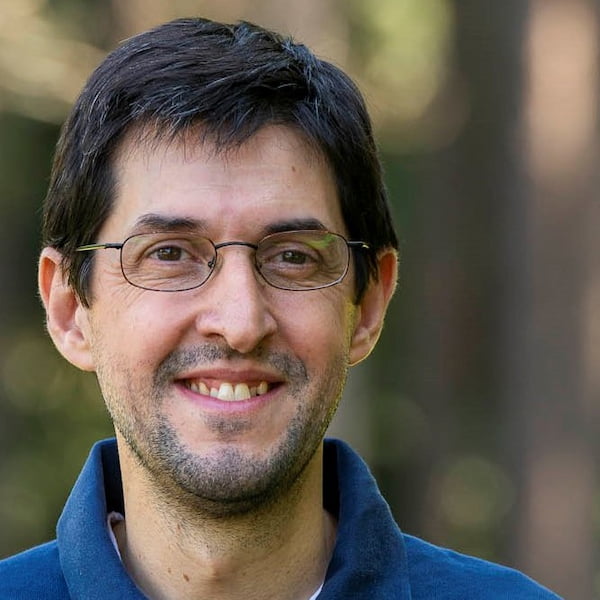
Dr. Eduardo Pablo Cappa holds a PhD (2007) in agricultural sciences from the School of Agronomy, University of Buenos Aires, Argentina. He is a quantitative forest geneticist and his main research areas are mixed linear models, statistical methods, and quantitative genetics and genomics for evaluation of forest trees.
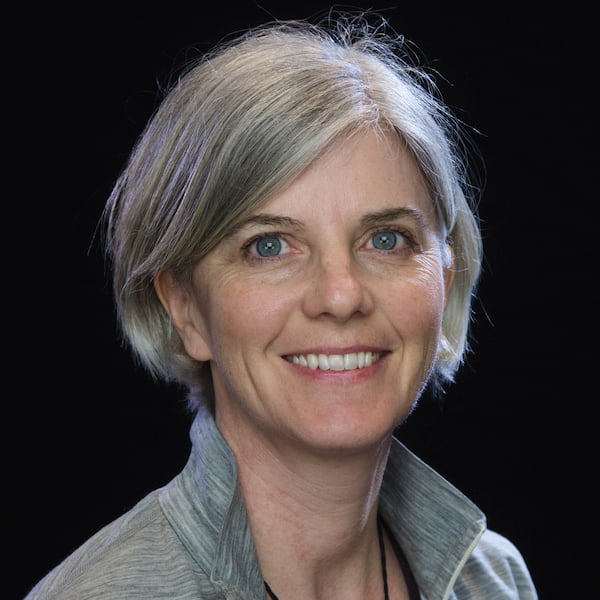
I am a molecular ecologist working as a Research Scientist at the Hakai Institute. My research focus is on ecological, environmental, and ancient genomics. I am passionate about science and education and I have worked in the field of ecological genetics and wildlife conservation for over 15 years.
I work with partners in academia, government, and non-governmental organizations in Canada and the United States to understand how environmental factors, including human influences, shape ecosystems and the evolutionary trajectory of wildlife. My primary interest is in applying genomics tools, in combination with traditional ecological approaches and community knowledge, to answer questions that will help inform and shape conservation policy.
Researchers at the University of British Columbia’s Faculty of Forestry & Environmental Stewardship have made an extraordinary discovery: a new super-black material that absorbs almost all light, named Nxylon. This accidental breakthrough holds promising applications in fields such as fine jewelry, solar cells, and precision optical devices.
UBC Forestry & Environmental Stewardship researchers have created a new super-black material that absorbs almost all light. From left, Dengcheng Feng, Kenny Cheng, Dr. Philip Evans and Sara Xu
The Accidental Breakthrough
Dr. Philip Evans and PhD student Kenny Cheng initially aimed to make wood more water-repellent using high-energy plasma, mimicking the lotus leaf effect. However, when they applied this technique to the cut ends of wood cells, the surfaces turned extremely black.
Collaborations with Texas A&M University’s astronomy and physics department confirmed that this new material reflected less than one percent of visible light, absorbing almost all the light that struck it.
Rather than overlooking this unexpected result, the UBC team pivoted their research focus to developing super-black materials, contributing a novel approach to the ongoing search for the darkest materials on Earth.
What Makes Nxylon Unique
“Ultra-black or super-black material can absorb more than 99 percent of the light that strikes it – significantly more than normal black paint, which absorbs about 97.5 percent of light,” explained Dr. Evans, a professor in the Faculty of Forestry & Environmental Stewardship and BC Leadership Chair in Advanced Forest Products Manufacturing Technology.
Super-black materials have significant demand in astronomy, where ultra-black coatings on devices help reduce stray light and improve image clarity. These materials also have the potential to enhance the efficiency of solar cells and are used in art pieces, luxury consumer items like watches, and in coating solar cells.
The researchers have developed prototype commercial products using Nxylon, initially focusing on watches and jewelry, with plans to explore other commercial applications in the future.
The UBC Forestry & Environmental Stewardship-developed super-black wood inherently prevents light from escaping rather than depending on black pigments.
The Birth of Nxylon
The team named their discovery Nxylon (niks-uh-lon), after Nyx, the Greek goddess of the night, and xylon, the Greek word for wood.
Unlike most super-black materials that rely on coatings or veneers, Nxylon remains black even when coated with an alloy (such as gold-vanadium) due to its structure, which inherently prevents light from escaping rather than depending on black pigments.
Plasma etching creates a low-density surface with large gaps between the wood’s pores, forming a network of hollow fibers and tapered columns. These tiny structures, combined with the wood’s natural composition, absorb and trap light, giving the material its super-black appearance.
“Nxylon’s composition combines the benefits of natural materials with advanced structural features, making it lightweight, stiff, and durable,” adds Dr. Evans. The UBC team envisions Nxylon potentially replacing expensive and rare black woods like ebony and rosewood and being used in jewelry pieces where the black gemstone onyx would typically be used.
Made from basswood, a tree widely found in North America and valued for hand carving, boxes, shutters, and musical instruments, Nxylon can also utilize other types of wood.
The team of researchers at UBC Forestry & Environmental Stewardship have developed prototype watches and jewelry using the new super-black wood.
Revitalizing Forestry
Dr. Evans and his colleagues plan to launch a start-up, Nxylon Corporation of Canada, to develop practical applications in collaboration with jewelers, artists, and tech product designers. They also plan to test other low-to-medium density hardwoods for plasma modification to produce larger super-black wood samples suitable for non-reflective ceiling and wall tiles.
“Nxylon can be made from sustainable and renewable materials widely found in B.C. and North America, leading to new applications for wood. The wood industry in B.C. is often seen as a sunset industry focused on commodity products—our research demonstrates its untapped potential,” said Dr. Evans.
Other researchers who contributed to this work include Vickie Ma, Dengcheng Feng, and Sara Xu.
My name is Tara Atleo, haḥuuła, and I come from the Ahousaht First Nation, house of ƛaqišpiił. The Ahousaht haḥuułii (territories) are on the west coast of Vancouver Island and we speak a dialect of the nuučaan̓uł (Nuu-chah-nulth) language.
Prior to joining the Faculty of Forestry & Environmental Stewardship, I was working with the BC Ministry of Lands, Water and Resource Stewardship on the land use planning and stewardship initiatives teams, and as a practitioner and consultant on sustainable development and resource management initiatives in Indigenous territories. I consider myself a stewardship economist and am interested in a more comprehensive approach to economic considerations on the land base and how they can empower Indigenous law and governance.
What drew you to your work?
During my undergraduate degree I worked on an ecotourism community development project in my home community. This allowed me to live in my community and build sustainable and meaningful employment opportunities for others while helping to steward the territories. The business courses I was taking were helpful for this work, but there were consistent gaps between what I was learning at university and the application I was experiencing in the territories.
My interest was piqued when working through my first few economics courses; I felt like there was an opportunity for the economics I was learning to serve what we were working on in the territories, but it needed an enhanced approach that spoke to a cultural mandate and to our Indigenous laws. This interest has guided me through my academic and professional pursuits and is the foundation of what I plan to build on while at UBC.
What do you hope to achieve through your work at UBC?
I believe that to appropriately explore the importance and intricacies of Indigenous-led stewardship it is critical to have that applied on-the-ground practitioner approach, paired with the theoretical understanding necessary to conduct foundational change. Through my work at UBC, I hope to explore and legitimize the empowerment of Indigenous law and governance in economic considerations for land-based decision-making in a way that directly supports communities’ work within their territories.
What attracted you to UBC/UBC Forestry & Environmental Stewardship?
It is a privilege to work and learn on the beautiful territories of the xʷməθkʷəy̓əm Musqeam people. The partnerships and deep connection to the lands and waters can be felt through this campus and through the significant and innovative work being done here. Within the Faculty of Forestry & Environmental Stewardship specifically, people speak about their research and collaborations with infectious passion and it’s clear that there is a culture of supporting people to explore and create tangible and thoughtful change.
What are you most looking forward to in the Faculty of Forestry & Environmental Stewardship?
I’m most looking forward to connecting with all of the high-calibre fine folks within the Faculty of Forestry & Environmental Stewardship and getting started!
As the world gears up for the Paris 2024 Summer Olympics, we at UBC Forestry & Environmental Stewardship remember our significant role in the Vancouver 2010 Olympic Games.
In October 2009, the Ministry of Forests and the Vancouver 2010 Olympics Organizing Committee (VANOC) approached our Centre for Advanced Wood Processing (CAWP) with a unique challenge. They needed us to fabricate and process the wooden pieces required to build 23 Olympic podiums and 100 medal trays.
The journey to creating the iconic Olympic podiums and medal trays was a testament to the dedication, innovation, and collaboration of our faculty.
The Design
An early prototype of the Olympic Podium in the Forest Sciences Centre. The podiums’ design, shaped like Vancouver Island, furthered their representation of British Columbia.
Our cutting-edge machinery and expertise made us the ideal choice for this complex project.
The late Leo Obstbaum designed the podiums to tell the unique story of British Columbia’s mountains and coasts. Each podium was built from one of 18 different wood types, harvested and donated by communities, First Nations, companies and individuals from across B.C. Fourteen were built from wood donated by community forests, two from family-run woodlots, two from cities, six from businesses, and five from First Nations.
Communities as small as the Cheslatta Carrier Nation, with a population of 325 at the time, came together to contribute timber for this enormous project. At that time, B.C.’s forests were severely impacted by the mountain pine beetle infestation. Certain podiums featured the unique blue stain caused by the beetles, illustrating the story of B.C.’s forests.
The podiums ranged from 480cm to 1525 cm in length, 170 to 500 cm in depth and 30 to 60 cm in height. The lightest podium, built of Western Red Cedar, weighed approximately 200 kilograms. Each podium was assembled from more than 200 wooden pieces.
Jason Chiu, current Managing Director of the CAWP, cheering on Team Canada in 2010.
Leung recalls that some of the future podium pieces were still standing while they were processing others.
“I am immensely proud to have been a part of this incredible project, as the 2010 Winter Olympics were undoubtedly a highlight for Vancouver,” Leung said. “This project allowed us to showcase the cutting-edge machinery and innovative design in the woodworking industry.”
The project was a major undertaking for the CAWP team of less than ten people, but their determination and hours of work made the massive effort possible.
Jason Chiu, current managing director of the CAWP recalls that team members worked through Christmas day, and some stayed working past midnight during production.
Most Canadians remember exactly where they were when Sidney Crosby scored the famous ‘Golden Goal.’ Leung was here at CAWP, fabricating pieces needed for the Paralympic podiums. The TV where he watched the Golden Goal still sits here as a piece of history, 14 years later.
The Lucky Loonie
The CAWP team incorporated Canada’s “Lucky Loonie” into the podium for the Ice Hockey Gold Medal celebrations.
The entire nation celebrated as Canada’s ice hockey teams brought home the gold medals. However, few people knew about the lucky charm that might have made the difference.
In 2002, Canada’s Men’s and Women’s Ice Hockey teams brought home the gold from the Salt Lake City Olympic Games. At these games, a legendary Canadian tradition began with a lucky loonie placed under the ice. The CAWP team decided to continue this tradition, placing a loonie in the podium created for the gold medal game.
A Testament of Innovation
Our contribution to the Vancouver 2010 Winter Olympics remains a proud chapter in our history.
The podiums serve as a remarkable testament to the dedication and innovation at CAWP and UBC Forestry & Environmental Stewardship. The team’s unwavering commitment was evident as they worked through holidays and long hours to ensure the project’s success.
The inclusion of Canada’s “Lucky Loonie” added a unique and symbolic element to their work. This behind-the-scenes dedication exemplifies the hard work and passion essential to the success of the Olympic Games. It leaves a lasting legacy and sets a high standard for future events.
Centre for Advanced Wood Processing
The Centre for Advanced Wood Processing (CAWP) is Canada’s national centre for education, training and technical assistance for the wood products manufacturing industry. CAWP offers a wide range of training courses, professional e-learning programs, in-plant training, product development, and manufacturing improvement services. CAWP conducts and coordinates applied research and development while supporting the award-winning B.Sc. in Natural Resources, Wood Products major and its cooperative education program.
UBC Forestry & Environmental Stewardship would like to congratulate Marina Melanidis on being awarded UBC’s Young Alumni Award.
“This UBC-wide award is highly competitive and prestigious, and we couldn’t be any prouder. This is a truly phenomenal and well-deserved achievement.” – Shannon Hagerman, Associate Dean, Graduate and Postdoctoral Studies and Rob Kozak, Dean
About the UBC Young Alumni Award
The Alumni UBC Achievement Awards to be celebrated on November 19, 2024, will honour eight inspiring UBC community members. One of these, the Young Alumni Award, recognizes a young UBC alum (35 or under) whose outstanding achievements and leadership in their career or community service inspire others.
About Marina Melanidis
Marina Melanidis at COP26
Ms. Marina Melanidis is a climate justice activist who has led youth delegations at conferences such as COP 25 and 26. Her research has focused on managing climate change and biodiversity loss using holistic, nature-based approaches. Marina completed a BSc in Natural Resources Conservation and a MSc from UBC Forestry & Environmental Stewardship. Her award-winning MSc thesis, titled Big Ideas with Big Potential Impacts: Narratives and Perceptions of Nature-Based Solutions Across Scales of Governance, explores these themes.
Marina is the Founder of Youth4Nature, an international non-profit organization created by youth, for youth. This organization educates, equips, and empowers young people to become leaders in systemic solutions for nature and climate crises, integrating traditional and scientific knowledge and emphasizing intergenerational justice.
Melanidis has been recognized as a Canadian Climate Champion, Top 25 Environmentalist Under 25, and Top 30 Sustainable Leader Under 30.
Starting in September 2024, Marina will be pursuing a PhD in Geography at the University of Cambridge. Her research will build on her experiences fundraising for grassroots and youth-led biodiversity conservation projects with Youth4Nature. She will explore the narratives and power dynamics within biodiversity conservation philanthropy, aiming to identify funding methods that promote just and effective conservation practices.
Undergrad research assistant is required in a research project at UBC Farm. The goal is to determine the effectiveness of a copper additive in reducing GHG emissions from slurry manure during storage on dairy farms. The experiment which will involve measuring emissions weekly from tanks treated with different additive levels. The assistant will learn how to use a portable gas analysis system. Initially the assistant will help in setting up the experiment which will involve installing a set of plastic storage tanks at UBC Farm, constructing a platform and protective cover for the tanks, filling the tanks with slurry manure and testing the gas analysis system. There will be an opportunity to continue assisting in monitoring emissions during this fall and winter. The assistant will be working with Drs. Andy Black and Sean Smukler. Starting date is August 1, 2024 or soon after. Please email enquiries, application and CV to Dr. Andy Black, andrew.black@ubc.ca.
I have been working as a summer student at Lil’wat Forestry Ventures. So far, I have done tree planting, various types of surveying, and will serve as a wildfire firefighter for the remaining weeks of this work term.
Working with LFV has given me the chance to step into the real forestry work environment, to see how Indigenous people combine traditional and modern methods to manage the forest and run a company.
This allowed me to apply my school knowledge in real-life situations, learn new skills, and meet many new people.
Throughout this experience, I have tried many new things, continually challenged myself, and discovered more about my potential.
Monika did her undergraduate degree at the University of Washington, where she worked on fungal endophytes. She obtained her PhD at the University of California at Berkeley, studying cell-to-cell communication in fungi. Her recent work examines the impact of forest fires on the soil microbiome and she is developing an experimental system for testing hypotheses about how fire-adapted fungi lay the foundation for post-fire recovery.
Tell us about yourself and your background.
I am a fungal biologist passionate about understanding the biological mechanisms that drive ecological processes. In retrospect, I’ve always been a biologist, but it took me a while to realize and embrace it. I grew up just south of San Francisco, spending summers exploring lakes in Arkansas with my cousins. My first passion was food and I initially pursued a culinary career, ultimately becoming the executive chef of a small catering company in Seattle. To this day I remain passionate about locally-sourced cuisines, but my desire to know a seemingly infinite number of details about every ingredient was my first hint that I should consider a career in science. When I’m not in the lab or the kitchen, I can be found dancing and/or doing something outside (gardening, foraging, hiking, cycling, climbing, skating, paddling, floating, camping, or just enjoying a good sci-fi novel in my hammock.)
What drew you to your work?
As a young working-class adult I cultivated a passion for both gardening and mushroom hunting. My passion for gardening was rooted in the vibrant soil microbiome, and I quickly developed a long list of questions about how fungi support plant growth and what are they doing in the environment? I read everything I could get my hands on about fungal ecology and biology, but my list of unanswered questions only grew longer. I started hanging out with my local Mycological Society to learn from grad students, professors, and other experts. This crystalized two things for me: (1) there are simply a lot of really cool unanswered questions in Kingdom Fungi, and if I need those answers, I’ll have to do the work myself, and (2) the people who are passionate about fungi are a wonderful community of fun-guys (I also adore a good pun)!
What do you hope to achieve through your work at UBC?
I aim to develop a detailed framework for understanding the relationship between fungi and fire. From genes to ecosystems, individual adaptations to community interactions, and what does it all mean in the context of fundamental fungal biology and ecosystem ecology given the current trajectory of climate change? I’m also excited to train the next generation of fungal biologists while building and strengthening the broader mycology community, both on- and off-campus.
What attracted you to UBC and UBC Forestry & Environmental Stewardship?
I’ve long admired the fungal and environmental research coming out of UBC. Forestry especially has a really incredible research community representing a broad diversity of approaches and perspectives, that I’m thrilled to now be a part of. My research is inherently interdisciplinary, and I’m excited to collaborate with my new colleagues at UBC. Beyond UBC – British Columbia is an ideal place to study both fungi and fire.
What are you most looking forward to in the Faculty of Forestry & Environmental Stewardship?
Doing awesome science with a bunch of rad people in a stunningly gorgeous place! I’m excited to learn from my colleagues and work together as a community so that we may all deepen our understanding of the natural world. My research thus far has been fairly fundamental, so I’m enthusiastic about working with the Forestry community to find avenues where my research could be applied for a direct positive impact.
Monika is a mycologist who is passionate about understanding the biological mechanisms that drive ecological processes. Our lab seeks to understand what it means to be a fire-adapted fungus, and the role(s) that these fungi play during post-fire recovery. Fire-loving fungi are highly active within days following fire, including the model organism, Neurospora crassa. To build a holistic framework of the fungal role in post-fire recovery – we work across scales, using a breadth of techniques including classical genetics, cell biology, genomics, directed laboratory experiments with synthetic communities, and field surveys.