Forestry Research Assistant – Canadian Forest Service
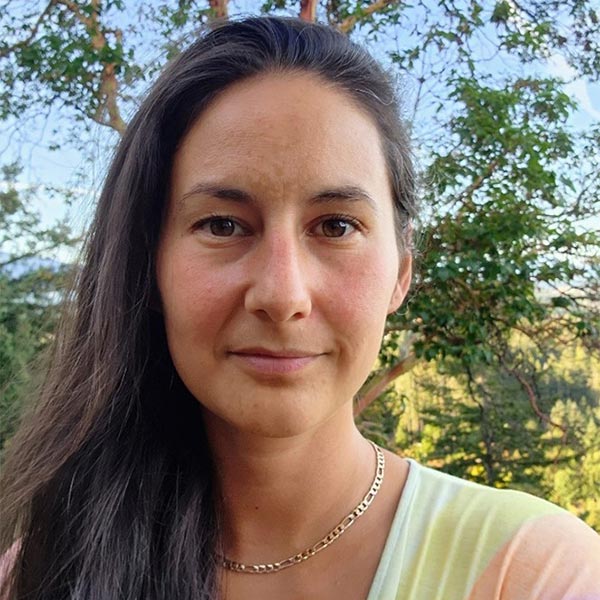
I have been working as a Co-op Forestry intern at the Northern Forestry Centre as a part of the wood fiber characterization team. So far, I’ve worked on multiple projects preparing spruce, pine and aspen wood samples for analyzing and growing fungi. Mainly, I’ve been looking into biofuels—burnt wood and what we can extract and utilize it for along with fungi, pests and other characteristics associated with the severity of burns.
This Co-op term has taught me many skills including data entry, labelling, how to grind and cut wood samples, create and pour media as well as inoculate fungi.
Here’s a look at UBC Forestry & Environmental Stewardship in the media this month
Documentary sparks conversation about Indigenous-led wildfire resilience Forestry PhD student Kelsey Copes-Gerbitz’s research on tree ring data is referenced in a panel discussion hosted in Williams Lake on Indigenous-led wildfire resilience. The Hamilton Spectator
Western Canada Faces Unprecedented Wildfire Seasons Amid Ongoing Drought Conditions Forestry professor Lori Daniels provides expert insight on the wildfire season, highlighting high-pressure heat domes and ongoing drought conditions. Net News Ledger
Expert shares Malaysian forest therapy at congress in Sweden Professor Guangyu Wang comments on how the practice of forest therapy can both preserve and promote Malaysian culture to the world. Borneo Post Online
Biomass power grows in Japan despite new understanding of climate risks Forestry professor Dr. Suzanne Simard spoke about the unsustainable forestry practices behind the production of B.C. wood pellets. Mongabay
How much did pine beetles stoke conditions for the Jasper wildfire? Forestry professor Dr. Lori Daniels said dead trees impacted by mountain pine beetles contributed to the intensity of the fire in Jasper. Global News, Global National
What can we expect from the rest of wildfire season? Forestry postdoctoral researcher Dr. Kira Hoffman discussed this year’s wildfire outlook. CBC The Early Edition
Racoons could be smarter than we thought Dr. Sarah Benson-Amram (forestry, zoology) co-authored a study which presented 39 raccoons with different puzzle boxes and found about 20 per cent managed to solve the locks to get to food. CKNW Jill Bennett Show
Can a lake become a person in law? A B.C. First Nation wants to find out UBC forestry scientists, members of the Sumas First Nation and other partners co-authored a study which recommended allowing B.C.’s Sumas Prairie to revert to a lake. APTN National News, UBC News coverage
Unveiling the Future: Bioproducts Institute Collaborates with Apple on Groundbreaking White Paper The Bioproducts Institute (BPI) at UBC Forestry & Environmental Stewardship and UBC Applied Science has collaborated with Apple to publish a comprehensive white paper exploring the future of sustainable materials and bioproducts. Canadian Forest Industries, Treefrog Creative, Paper Advance
Evacuations in Jasper and what’s next for wildfire season Dr. Lori Daniels, a forestry professor who leads the Centre for Wildfire Coexistence, discussed this year’s wildfire forecasts and explained how wildfires start in Canada. The Globe and Mail (subscription), CBC Kids News, UBC News coverage
B.C.’s southwest coast is unique – and some of us barely know it Forestry professor Dr. Peter Arcese was quoted in an op-ed about a fragile bio-region of concern encompassing B.C.’s temperate southwest coast. Postmedia via Vancouver Sun, Prince George Post, Windsor Star, MSN
As wildfire season looms, these residents aren’t waiting for government help Forestry fire ecologist and former wildland firefighter Kira Hoffman highlights the importance of empowering locals to meet the challenges of the intensifying wildfire season. The Christian Science Monitor
Scientists researching wasps that may protect B.C. berries Forestry professor Dr. Alan Carroll said ronin and samba wasps, known to kill invasive pests, may be a valuable alternative to pesticides. CBC News via Yahoo
What is Kelowna doing to mitigate the impacts of ‘urban heat islands’? Forestry professor Dr. Melissa McHale discussed urban heat islands, when cities feel hotter than the surrounding environment. Castanet
Water has flowed from Vancouver taps for 100 years. What about the next century? Forestry professor emeritus Dr. John Richardson said Metro Vancouver residents have to be more cautious when using water as the region’s water supply is finite. Postmedia via Vancouver Sun, The Province, Prince George Post
The environmental impact of spill in Abbotsford’s Stoney Creek Forestry professor Dr. John Richardson discussed the environmental impacts of the foam spill in Abbotsford’s Stoney Creek. CBC On The Coast
Local group advocates for greater tree canopy Forestry professor emeritus Dr. Stephen Sheppard and professor Dr. Lorien Nesbitt discussed the importance of trees in a city. Tri-Cities Dispatch
Vancouver homeowner plagued by aphid infestation pleads for help but city says they are just a nuisance Douglas Justice (UBC Botanical Garden) and Dr. Allan Caroll (forestry) commented on aphid infestation in Vancouver. Postmedia via Vancouver Sun, The Province, Prince George Post
Deer eradication on Sidney Island Forestry professor Dr. Tara Martin said the black-tailed deer of B.C.’s Southern Gulf Islands will always need to be managed as they are invasive. Sierra Magazine
Why planting 100,000 trees in Vancouver isn’t as easy as it sounds Forestry professor Dr. Lorien Nesbitt said cities tend to plant more male trees as they do not have the resources to clean up fruits and nuts from the streets. CBC Vancouver
B.C.’s drought: Forests at risk from drought, but climate change isn’t the only culprit Forestry professor Dr. Younes Alila said climate change is not the sole driver of drought. Drought can also be exacerbated by land use, forest-management decisions and urbanization. Times Colonist, Business in Vancouver
As the world burns, can we learn to live with wildfire health risks? Forestry PhD candidate and instructor Jen Baron said the lack of prescribed burning has caused fuel to accumulate, resulting in bigger than usual fires. Mongabay, Eco-Business, South Africa Today
Dr. Tara Atleo, haḥuuła, is a stewardship economics researcher and Indigenous sustainable development practitioner from the Ahousaht First Nation, house of ƛaqišpiił.
Tara is passionately committed to the principles of stewardship, dedicating her work to exploring innovative approaches to upholding and advancing Indigenous law and governance. Her focus in this area is the intersection of economic considerations as elements of sustainable development and natural resource management.
Tara has played and continues to play pivotal roles in innovative initiatives that strive to provide economic opportunities and environmental stewardship under the guidance of Indigenous law and governance. Grounded in her community roots, Tara uses her perspective to challenge and expand economic thought and tools to create opportunities for communities that advance efforts towards intergenerational equity.
Dr. Kwang Ho Kim is dedicated to developing sustainable biorefinery processes that maximize the conversion of biomass carbon into value-added products. His research aims to advance environmentally friendly and economically viable technologies for the bioeconomy.
Research areas include:
Green solvent-based biorefinery processes
Mechanochemical biomass conversion
(Thermochemical) Biomass-to-biofuels pathways
Lignin valorization (Deconstruction and Reconstruction)
Urban foresters managing green spaces in our communities respond to public demand for this vital infrastructure in settings under increased pressure from the effects of climate change and population growth. Vancouver’s iconic Stanley Park recently captured headlines following plans to remove looper moth-killed trees from the forest. Water scarcity and extreme heat are adding layers of complexity to urban landscape management. What can urban foresters tell us about this valuable community resource, along with present and emerging best practices in the field? What role do residents play in decisions surrounding living infrastructure in their neighbourhoods? Join us for an engaging expert panel discussion to answer these questions and more, including audience-generated queries.
Moderator
Dr. Richard Hamelin — Professor and Department Head, Forest Conservation Sciences, Faculty of Forestry & Environmental Stewardship, University of British Columbia
Dr. Richard Hamelin is a professor at UBC Forestry & Environmental Stewardship and is Head of the Department of Forest and Conservation Sciences. His over 30 years of experience in forest health research includes publishing nearly 200 peer-reviewed scientific papers covering forest pathology, forest health, mycology, entomology and genomics, training 60 graduate students, post-doctoral fellows and research staff. Richard’s work aims to leverage genomics to design better pest and pathogen detection and monitoring methods to protect forests from these threats.
Speakers
Bruce Blackwell, BSF’84, MSF’89, RPF, RPBio. — Principal of B.A. Blackwell & Associates Ltd.
Bruce has over 36 years of experience as a Professional Forester and Biologist. He founded B.A. Blackwell and Associates in 1988, which specializes in integrated forestry and environmental consulting, before completing his master’s degree at UBC Forestry & Environmental Stewardship. His extensive experience encompasses fire and forest ecology, silviculture, vegetation management, wildland/urban interface planning, forest management policy, and more. Bruce has contributed to strategic planning for Vancouver’s urban forests and the restoration of Stanley Park.
Joe McLeod, BSF’01 — ISA Certified Arborist, Associate Director, Urban Forestry / Specialty Parks at City of Vancouver
Since graduating from UBC Forestry & Environmental Stewardship, Joe has amassed over 20 years of professional expertise in silviculture, arboriculture, wildlife habitat enhancement, woodlot management planning, and landscape architecture. He is now a landscape architect, arborist, and urban forestry manager, with a focus on risk management, at the City of Vancouver. In this role, Joe oversees decision-making related to sustainable urban forest management balancing priorities such as risk management, ecological restoration, political commitments, and implementation of bylaws and policies.
THIS PROGRAM IS MADE POSSIBLE BY THE PRESENTING PARTNERS OF FORWARD: THE CAMPAIGN FOR UBC
Written by: Tony Xiutong Jiang, fourth-year Urban Forestry student
In my culture, there is a saying: “Reading thousands of books should be accompanied by travelling thousands of miles.” This encourages scholars to not only learn from books but also to gain knowledge and experience from the real world. The CONS 454 South Africa field trip was the perfect opportunity for me to go for those “thousands of miles” to immerse in South African nature, culture, conservation, and research.
Over nearly a month, we enjoyed the beauty of the local ecosystem, engaged directly with conservation issues, and learned from those on the frontline, providing us with a new perspective on the complexities of the savanna ecosystem.
This hands-on experience, combined with our involvement in research projects enriched our understanding of ecological research and the intricate balance required for effective conservation. Our group also experienced the vibrant community in South Africa while staying with local families, interacting with NGOs like the Black Mambas, or just speaking to all the lovely individuals who supported our journey along the way.
Conservation in Action
One of the most eye-opening aspects of the trip was definitely going on game drives to try our luck to watch animals, as well as to witness wildlife conservation efforts up close. Sometimes, we would wake up at 5 am, shaking off the fatigue from the previous day’s adventures to go on early drives.
The excitement of catching the sunrise and witnessing the animals at their active time easily outweighed the chill of the morning air. Bundled up in our sleeping bags, we would snuggle into the game drive vehicle to face the cold winter wind in the park.
Our efforts were rewarded as we spotted the “Big Five” (a historical term referring to the five most difficult animals in South Africa to hunt on foot): lions, leopards, elephants, rhinos, and buffalo. Though we only captured rhinos on our camera traps, the thrill of the search still made it unforgettable.
We also had the unique opportunity to visit the Black Mambas, the famous all-female, unarmed anti-poaching unit. Their dedication and courage in protecting wildlife species, despite the challenges they face, was both inspiring and humbling.
Practicing Research Methodologies
Another cool aspect of this trip is that we were participating in research such as setting up camera traps to monitor wildlife behaviours and conducting field surveys for NASA GEDI imaging.
Compared to BC’s coniferous forest, the savanna ecosystem presented challenges for satellite imaging because of its relatively flat vegetation structure. To address these challenges, we were tasked to gather on-site data, aiding in the validation of GEDI imaging data. This practice of field surveys was particularly useful for me because we would conduct similar surveys in my major, Urban Forestry, and the skills were transferable.
Visiting research bases and interacting with leading scientists enriched our understanding of ecological research and its practical applications. In conversation with the researchers, we were amazed that the savanna ecosystem attracted worldwide scientists to study, and it was a land full of potential in knowledge and wisdom from nature and community. We practiced our research skills by exploring the camera trap data to answer our own hypothesis regarding animal behaviours and interviewing local community members through a photovoice method to discuss climate resilience.
Cultural Immersion
Staying in local homestays offered us an authentic experience of rural South African daily life. We immersed ourselves in their routines, cutting firewood, sweeping floors, and making pap, a traditional local food.
Much of our time and energy was joyfully spent playing games, singing, and dancing with the local children.
As we travelled, we saw various political campaign posters leading up to the election and encountered communities, both urban and rural, gaining insight into the post-apartheid social dynamics through the explanations of Dr. David Bunn.
Throughout our journey, we felt warmly welcomed by the amazing people we met, including the supportive and lovely individuals who facilitated our trip.
Conservation Realities and Moving Forward
I find the intricate interconnectedness of the savanna ecosystem and human participation interesting. Through lectures on catena sequences, we understood how each component of the ecosystem, whether biotic or abiotic, is intricately linked, forming a complex web of interactions in an area of as little as one slope. Witnessing this dynamic interplay in the field showed the complexity of conservation efforts; altering one element invariably impacts others, creating a cascade of changes that make conservation both challenging and fascinating.
Every component, from small insects like termites to large mammals like elephants, plays a crucial role in maintaining balance, and of course, humans are an integral part of this equation. Our actions influence and are influenced by the ecosystem, a realization that was pivotal in understanding the challenges and opportunities in conservation. From our lectures on water resources in the context of the HaMakuya region and fire management in Kruger National Park, we learned about the delicate balance required to maintain water availability in the savanna, and how local politics and other social dynamics impact water availability.
Fire is a natural part of the ecosystem, and the National Park is still trying to find the best practices and human intervention to prevent destructive wildfires while promoting regeneration and biodiversity. These lessons highlighted the importance of a holistic approach to conservation, where understanding and managing one element requires considering its impacts on the entire ecosystem.
Opportunities and Potential
Our South Africa field course was a trip of discovery, filled with cultural insights, research curiosity, and conservation lessons. Despite the unknowns and challenges, the field of conservation in Kruger National Park presents opportunities and potential.
As humans, we are an integral part of nature, and it is our responsibility to play a positive role in managing and preserving our ecosystems. Being immersed in the savanna, local communities, and wildlife habitats has inspired me to continue exploring the delicate balance between human activity and conservation.
Learn more about UBC Forestry & Environmental Stewardship undergraduate programs and field school here.
Simon’s notable career with UBC Forestry & Environmental Stewardship shines for his passionate approach to his work in the role of teaching the next generation of foresters. Simon taught WOOD 280 (Wood Anatomy and Identification) for 34 years and WOOD 120 (Introduction to Wood Products and Global Trade) for half of that time. He also taught a variety of other courses in the old Wood Science and Industry program, and the newer Wood Products Processing program, along with the fundamentals of wood properties and wood products for students in most other programs in the Faculty. Simon was appointed as the first Program Director of the Wood Products Processing program in 1996 and served almost continuously in the role until shortly before his retirement. In 1997, Simon became the youngest recipient of the Forestry UBC Killam Teaching Prize, and was awarded a 3M National Teaching Fellowship — Canada’s most prestigious recognition of excellence in educational leadership and teaching at the post-secondary level — in 2013.
What drew you to wood anatomy and products?
This is a long story. I was originally interested in horticulture. My parents had a very large vegetable garden where I spent lots of time helping out when I was younger. When I was in my final years at high school, considering what university program to take, my parents wanted me to apply to Oxford University. Oxford offered no programs in horticulture but they did in forestry. Although I decided Oxford was not for me, I had become more interested in forestry, and then during the university interview process in the UK at the time, I came across the wood science program at Bangor University. Something about that program clicked almost instantly with me. The ability to apply a range of traditional sciences to one beautiful material greatly appealed to me.
Why did you want to work with UBC Forestry & Environmental Stewardship?
After my undergraduate program at Bangor, I wanted to spread my wings a little. I had the opportunities to join either UBC or the University of Toronto for my master’s program. The deciding factor was I knew cricket (the sport dominated my summers in the UK) was played in Vancouver but I was not sure about Toronto – hence, I chose UBC!
When did you start working with UBC Forestry & Environmental Stewardship and in what role?
I first came to UBC for my master’s program in September 1983. I thought I would be in Vancouver for perhaps two years! I completed my masters in 1986 and my PhD also at UBC in 1989. Right after that, I was fortunate to be taken onto faculty as an Assistant Professor in September 1989.
What is your fondest memory as a UBC Forestry & Environmental Stewardship prof?
I don’t think I have one particularly fondest memory because I have greatly enjoyed the vast majority of my time at UBC. I think the moments which have brought me most pleasure are those times when a student “gets” a concept I have been covering in class, and I can tell it is going to stick with them in the future. It was those “ah ha” moments which drove me to continually work to improve my teaching.
What is one research project/outcome that was as notable feather in your cap and why?
Lab or field research has never been my “thing” – I have always been drawn much more to the teaching and educational leadership aspects of our academic lives. To some extent, my role as Program Director of the Woof Products Processing program was essentially action research in educational leadership. As the program was being rolled out, the role both created a need for me to develop my educational leadership skills but also presented many opportunities for me to broaden my professional development in the relevant areas. My moment of greatest pride was being awarded a 3M National Teaching Fellowship in 2013. At the time, there were only 14 previous recipients at UBC in the 27 years the NTF program had been running. To me, the NTF reflected both my individual successes but also, more importantly, those of the Wood Products Processing program.
How did you stay sane when your scheduled became overly busy?
I have always been able to maintain a pretty healthy life/work balance (I think it starts by putting “life” first in that phrase). Once Linda and I had our two children, they reinforced for me there are plenty of very important things in life away from the UBC campus. I’d always been involved in plenty of sports in my younger days and as our boys grew up, I then lived my sporting life vicariously by coaching some of their various sports teams (yes, they let a Brit coach a bunch of Canadian kids playing ball hockey!).
What book do you turn to for work/life lessons?
For relaxation, my favourites would be any of the John le Carré novels and the five books in the trilogy of the Hitchhikers Guide to the Galaxy.
What characteristic do you think you’re most known for among your students?
I think the word which appeared most often in my teaching evaluations was “passion”. For some reason, something about wood simply hit a chord in my psyche and I have always both been genuinely passionate about the material but also in my desire to try to ignite some of that passion in the students I have taught. Also, I think my students have probably thought while I had high expectations of their learning in my classes I also had a very strong fairness streak in my assessments of their learning.
What do you look forward to most in retirement?
There is nothing I have been leaving to do until I retired. If something means that much to me, I have been doing it already! I will simply have more time to spend on the things I already enjoy doing, without the calls of work distracting me. I suppose the one thing in particular I will have more time to spend on is teaching myself to play the saxophone. It has always been an instrument I wanted to play (ask some of my friends from my grad student days) and now I have no excuse not to practice daily.
UBC Forestry & Environmental Stewardship congratulates Salar Ghotb on receiving the David Martell Graduate Student Paper Prize at the Canadian Operational Research Society (CORS) Annual Conference, held in London, Ontario from June 3 to June 5, 2024.
About Salar’s Research
Dr. Salar Ghotb is a PhD student in the Department of Wood Science. His thesis is on the “Optimization of log logistics at the operational level considering sorting decisions and synchronization requirements.”
About the Canadian Operational Research Society
The Canadian Operational Research Society (CORS) is the leading Canadian professional society for operational researchers. Established in 1958, CORS brings together OR professionals with annual conferences held across Canada, special interest groups, traveling speaker programs, and student support. CORS sponsors the INFOR journal, an ISI-listed journal focusing on operations research, operations management, analytics, and information systems and also publishes the CORS Bulletin, a newsletter of the Society and related activities. CORS also represents the Canadian OR community in the International Federation of Operational Research Societies (IFORS).
About 10th David Martell Student Paper Prize in Forestry
This award recognizes outstanding scientific contributions on the theory, methodology and/or practice of OR in forestry by an undergraduate, a graduate student or a postdoctoral. The competition is for the best student paper submitted, published or accepted for publication in a peer-reviewed journal in the two years before the year of the competition. The award was named in honour of Professor Martell for his outstanding contributions to the development and application of OR in forestry in Canada and beyond as well as for his many contributions to the COR Society.
A longstanding history of giving to world-class forestry research, education and community outreach
After the Second World War forced Paul and Edwina Heller to leave their home in Warsaw, Poland, in 1941, they found a new one in Vancouver, BC.
The family thrived, with Paul revamping what became the highly successful Pacific Pine and Company lumber business with his brother, Sam. Paul had graduated with an engineering degree from the Fitzwilliam College, University of Cambridge, England, and found this skill set was well-suited to the millions of acres of forest covering BC.
“Being an engineer, my father used the forestry experience he gained in Poland to optimize Pacific Pine’s sawmill production, upgrading its functionality and techniques, and making great changes to the operation of the mill,” says Dr. Irene Bettinger, one of Paul and Edwina’s two daughters.
In the late 1980s, the Hellers established the Paul Heller Fellowship in Forestry to commemorate Paul’s 75th birthday, beginning a longstanding tradition of giving to UBC Forestry & Environmental Stewardship. After the passing of Edwina in 2012 at age 97 and Paul a year later at age 101, the Edwina and Paul Heller Memorial Fund and the Fellowship at UBC Forestry & Environmental Stewardship were established.
As the trustee of her parents’ estate, Irene utilizes Heller funds to support the changing world of wood science.
“The funds are directed to UBC Faculty of Forestry & Environmental Stewardship Wood Sciences Department in support of education and research that are responding to evolving needs in the forestry profession and broader community,” states Irene. “Engineering was my father’s lifeblood. He enjoyed the intellectual thought process of working towards more innovative ways to make changes to production and management; and, I believe he would have reveled in how UBC Forestry & Environmental Stewardship students and faculty are developing novel approaches and processes.”
Support that is moving wood science forward
A distinguishing feature of the Heller Fund is its flexibility. Department of Wood Science faculty members Prof. Scott Renneckar, Asst. Prof. Cristiano Loss and Assoc. Prof. Julie Cool have the flexibility to direct Heller funding to hard-to-fill financial gaps, such as field work, Spring 2024 | Branchlines 26 miscellaneous equipment needs, conference attendance and student recruitment and retention.
“The Heller Fund is open for the professor to use as they see fit to advance their specific area of research,” says Emma Tully, Asst. Dean of Development, Alumni and External Relations. “I guess you could call this ‘trustbased philanthropy’, where the donor trusts the organization to make the best use of their support to the stated field for maximum impact.”
For example, Heller funding supported UBC Forestry & Environmental Stewardship Asst. Prof. Julie Cool’s research into sawmill optimization, enabling the research team to purchase essential equipment and conduct data analysis.
“Heller funds supported the paid work of two UBC Forestry & Environmental Stewardship graduate students who analyzed existing data on the sawing process and collected new data from sensors during the cutting process,” notes Julie. “This data could further advance the optimization and control of sawmilling processes to maximize log utilization, increase product value and decrease production costs associated with such things as maintenance and energy consumption to ensure a sustainable forest industry.”
Scott directed Heller funds to costs associated with open-access rights to his publications, as well as to international conference attendance for UBC Forestry & Environmental Stewardship students assisting with his research and the wages of some of his research associates. Funds also made possible “collaborations with scientists from other faculties, such as Microbiology, which has opened doors to the exploration of new research areas,” says Scott, who is a Canada Research Chair in Advanced Renewable Materials.
Muzaffer Karaaslan, a research associate working in Scott’s lab, was able to participate in Natural Sciences and Engineering Research Council of Canada-supported research projects thanks to the additional support from the Heller Fund. This included an innovative collaboration with Domtar, a sustainable paper company, into the production of carbon aerogels from lignin for energy storage applications.
“This experience enhanced my research skills, problem-solving abilities and interdisciplinary collaboration,” states Muzaffer. “It also provided relevant experience and a strong professional network to prepare me for success as I continue to pursue academic or industry contributions that push the boundaries of knowledge, solve complex problems and translate research findings into practical solutions that benefit society.”
Building student success
Rojini Kathiravel
The Heller Fellowship has also ventured outside the world of wood science to support other labs at UBC Forestry & Environmental Stewardship, including graduate students in the labs of UBC Forestry & Environmental Stewardship Asst. Prof. Haibo Feng and Dominik Roeser, Assoc. Dean, Research Forests & Community Outreach. This support relieves some of the financial burden on bright young minds, such as Master of Science in Forestry students Rojini Kathiravel and Zexi Liu (BSF’23).
After completing her degree at UBC Forestry & Environmental Stewardship, Rojini is aiming for a career in the engineering industry. Under the direction of Haibo, Rojini’s graduate research has focused on engineering and construction, including timber structures and sustainable timber modelling.
Zexi Liu
Zexi has conducted research with Assoc. Prof. Dominik Roeser in the Forest Action Lab, which supports sustainable forest management through innovation, research and development initiatives. Zexi worked on a research paper on the use of very-high-resolution imagery to calculate the slash pile burning occurrence rate in the province, and is currently validating the quantity measurements and assessing the quality of forest biomass with advanced technologies for his master’s thesis.
“My goal is to optimize forest biomass utilisation in BC by considering the ecological, economic and social interaction,” says Zexi. “The Heller scholarship helps me to better concentrate on my studies.”
“The generosity of the Heller family has inspired me to help others and give back to the community,” adds Rojini. “I hope one day that I will be able to help students achieve their goals just as they have helped me.”
To learn more about how you can give to UBC Forestry & Environmental Stewardship, contact Emma Tully, Asst. Dean of Development and External Relations, at emma.tully@ubc.ca or 604.822.8716.
This article was originally published in the Spring 2024 issue of Branchlines Magazine. View the full issue here.
Resource Technologist Co-op – BC Ministry of Forests
This summer, I’m delighted to return to my position as a Resource Technologist with the Ministry of Forests in Merritt, BC. Building on the valuable experience and enjoyment I found last year, I’ve eagerly chosen to continue contributing to the impactful work of the Wildfire Risk Reduction (WRR) program. This type of work requires good project management and collaboration skills as you often engage with several groups including First Nations communities. Contracting is another important piece that I have helping out with.
In addition to WRR, I have been more involved in the silviculture side of things. For example, I am currently working to develop a local spatial geodatabase that tracks polygons in areas of interest that have been laid out or planted. I am thankful for the courses I took at UBC that helped me develop my GIS abilities as I regularly use ArcMap or ArcGIS pro for creating maps among other things. I have also gone out and conducted free growing assessments which evaluate the success of reforestation efforts after an area has been logged.
Additionally, I continue to play a role in the Forest and Range Evaluation program (FREP), assessing sites for values such as water quality and stand retention. This program supports our commitment to evaluating the effectiveness of forestry practices under the Forest and Range Practices Act (FRPA), reinforcing our dedication to sustainable forest management practices.
Returning to this role allows me to further develop professionally while reinforcing my dedication to environmental stewardship and community engagement. I look forward to another productive summer, collaborating with a passionate team and making meaningful contributions to forest management initiatives.