UBC FES US Student Hub

Connect with UBC FES

Get personalized guidance regarding admissions, courses, and careers.

Why Study at UBC Forestry & Environmental Stewardship?

UBC Forestry & Environmental Stewardship (FES) prepares you to be a leader ready to tackle the environmental challenges of our time. Whether you’re passionate about climate change, biodiversity and conservation, renewable resources, urban ecology, or green technology, UBC FES gives you the opportunity to go further and build a sustainable future.

With internationally respected programs, hands-on learning, and career pathways that extend across Canada and the United States, UBC offers the rare combination of world-class education, exceptional value, and an extraordinary quality of life. Study at a Global Top-40 university in Vancouver, Canada, one of the world’s most livable cities, while enjoying an incredible Pacific Northwest experience just minutes from the U.S. border.

Interdisciplinary learning, practical skills, hands-on experiences.

Explore three degree programs that offer practical, experiential, and interdisciplinary education to prepare students to address pressing environmental challenges and shape a sustainable, resilient future. Choose between the Bachelor of Urban Forestry (BUF), the Bachelor of Indigenous Land Stewardship (BILS), or one of six majors in the Bachelor of Science in Natural Resources (BSNR).

In addition to preparing you for a wide range of careers, our degree programs also provide pathways to professional accreditation. With careful academic planning, you can become accredited as a Registered Professional Biologist (RPBio), or be certified as a professional forester in both Canada and the US. Additionally, specific BSNR majors will also allow you to pursue your Professional Engineer (P.Eng) designation.

You can also complement your UBC FES degree in a number of ways. Choose a Minor in Commerce to prepare for entry into the business world. Or pursue two different Dual Degree programs, earning a Bachelor of Education or a Master of Management from UBC Sauder in only 4.5 years.

Program Finder

Not sure where to start?

Take this quick quiz to discover which UBC FES program best matches your values, learning style, ethics, and career aspirations.

Get Matched to Your FES Program

What can you do with your UBC FES degree?

Our students emerge as highly competitive, versatile professionals equipped to operate around the world in federal, state, municipal, corporate, and non-profit sectors. Whether your goal is managing sensitive habitats along the West Coast, designing climate-resilient cities in California, or developing cutting-edge biomaterials, a degree from UBC FES will get you there.

Explore hundreds of potential career pathways

Icon depicting Earth as sustainability, climate and environmental management

Sustainability, Climate & Environmental Management

Roles focused on sustainability strategies, carbon management, environmental performance, and resource stewardship.


Icon depicting energy as a lightning bolt

Energy & Bioeconomy

Roles related to renewable energy systems, emissions reduction, bio-based industries, and energy transitions.


Icon depicting an Erlenmeyer flask as research, science and innovation

Research, Science & Innovation

Research-focused positions advancing scientific knowledge, product innovation, and technological development.


Icon depicting helical strand of DNA as biological sciences and technology

Biological Sciences & Biotechnology

Roles involving living systems, microbiology, biochemistry, genetics, and applied biological research.


Sustainability, Climate & Environmental Management

Roles focused on sustainability strategies, carbon management, environmental performance, and resource stewardship.

  • Sustainability Manager
  • Environmental Analyst
  • Climate Change Technical Specialist
  • Carbon Assessment Specialist
  • Environmental Coordinator
  • Environmental Planning and Consulting
  • Environmental Education
  • Environmental Law

Energy & Bioeconomy

Roles related to renewable energy systems, emissions reduction, bio-based industries, and energy transitions.

  • Energy Engineer
  • Community Energy Specialist
  • Emissions Engineer
  • Climate Change Technical Specialist
  • Technology Development Advisor
  • Plant Operator (bioeconomy/industrial facilities)

Research, Science & Innovation

Research-focused positions advancing scientific knowledge, product innovation, and technological development.

  • Research and Design Manager
  • Biologist
  • Research and Development
  • Innovation Analyst
  • Product Development
  • Technology Development Advisor
  • Quality Control Supervisor

Biological Sciences & Biotechnology

Roles involving living systems, microbiology, biochemistry, genetics, and applied biological research.

  • Microbiologist
  • Biochemist
  • Forest Geneticist
  • Pathologist
  • Entomologist
  • Biologist
  • Registered Professional Biologist (RPBio)

Make your dollar go further.

An elite international undergraduate education doesn’t have to carry a prohibitive financial burden. American students enjoy an advantageous exchange rate with Canada, where $1 USD converts to approximately $1.30 CAD.

The result? American students get an automatic, high-impact discount on UBC tuition. As an international student at UBC FES, American students will save thousands annually compared to paying non-discounted out-of-state tuition at popular universities across the United States. Furthermore, eligible U.S. students can seamlessly utilize standard U.S. Direct Loan pathways to finance their studies at UBC.

Use the comparison tool below to see how much you could save in annual tuition by choosing UBC.

University of British Columbia

B.Sc. Natural Resources (Conservation) / BUF

Annual International Tuition

$37,150 USD

($53,082 CAD)

Select a school above to view the financial comparison*.
UBC Saves ~$7.3k – $8.9k /yr

University of Oregon

B.Sc. Environmental Studies Track

Annual Out-of-State Tuition

$44,500 – $46,077

UBC Saves ~$8.9k – $12.6k /yr

University of Colorado Boulder

B.A. Environmental Studies / B.S. Earth Science

Annual Out-of-State Tuition

$46,058 – $49,798

UBC Saves ~$7.3k /yr

University of Washington (Seattle)

B.S. Env Science & Resource Management

Annual Out-of-State Tuition

$44,460

UBC Matches Cost (+410 Higher Rank)

Oregon State University

B.S. Natural Resources (College of Forestry)

Annual Out-of-State Tuition

$39,975 USD

UBC Saves ~$21.8k – $26.8k /yr

University of Michigan (Ann Arbor)

B.S. in Environment (SEAS / PitE Track)

Annual Out-of-State Tuition

$59,000 – $63,960

UBC Saves ~$26,350 /yr

New York University (NYU)

Private Environmental Studies Tracks

Annual Tuition

$63,500 USD

UBC Saves ~$36,110 /yr

University of Southern California

B.S. in Env. Science & Health / B.A. in Earth Sciences

Annual Tuition

$73,260 USD

UBC Saves ~$35,874 /yr

Boston University

B.A. in Earth & Env. Sciences

Annual Tuition

$73,024 USD

*Fees are subject to change and are based on estimates for comparable undergraduate programs and should be used only for comparison purposes. For the most up to date details on UBC tuition fees, click here.

World-class faculty, global impact.

Increasingly, U.S. high school students are being locked out of domestic universities in their home states due capacity constraints and a highly competitive application process. You don’t have to settle for second-choice, out-of-state options. The University of British Columbia systematically outranks many popular public and private institution in the US.

By choosing UBC FES, you enter a powerhouse institution ranked #45 in the world by QS World University Rankings. Here, your degree holds international weight and relevance, connecting you directly with world-class research facilities, global environmental institutions, and premier corporate and public networks.

Use the comparison tool below to see how UBC stacks up against the competition.

Select to Compare

Institution Name
QS Global Rank
Vs. UBC

University of British Columbia

Public University

#45 Globally
Add universities to compare.

University of Washington

U.S. Public University

#94 Globally
UBC is 49 places higher

Boston University

U.S. Private University

#100 Globally
UBC is 55 places higher

University of Southern California

U.S. Private University

#146 Globally
UBC is 101 places higher

University of Arizona

U.S. Public University

#287 Globally
UBC is 242 places higher

University of Colorado Boulder

U.S. Public University

#299 Globally
UBC is 254 places higher

Northeastern University

U.S. Private University

#398 Globally
UBC is 353 places higher

Oregon State University

U.S. Public University

#450+ Globally
UBC is over 405 places higher

Loyola Marymount University

U.S. Private University

#500+ Globally
UBC is over 455 places higher

University of Oregon

U.S. Public University

#751-760 Globally
UBC is over 705 places higher

Liveability and lifestyle, in the iconic Pacific Northwest.

Vancouver is consistently ranked as one of the world’s most livable cities. Located in the Pacific Northwest, here you’ll find a vibrant outdoor playground of world-famous mountains, beaches, and parks. With excellent infrastructure and public transportation, you’ll be able to experience everything this majestic and stunning part of the world has to offer.

See how Vancouver fares in the 2026 Economist’s Global Liveability Index

EIU Liveability Index 2026

Global Liveability Rank

9th

Out of 173 Cities Worldwide

Stability

95/100

Healthcare

96/100

Culture & Env.t

97/100

Education

100/100

Infrastructure

93/100

Choosing an international education doesn’t have to mean being far from home. In fact, UBC is practically in your backyard. Drive to Vancouver from Seattle in only 3 hours. Or hop on a 1-hour, non-stop flight from Portland. Enjoy direct connections to Vancouver from major California hubs like San Francisco, Los Angeles and San Diego. Coming to UBC means you get elite academic credentials while staying close to home.

Use the map below to explore connections to Vancouver from all 50 states.

★ Vancouver

Select a state

Click on any US state to view travel connections to Vancouver*.

🚗 From Washington:

Under a 3-hour drive from downtown Seattle, or ~1 hour direct flight from SEA.

✈️ From Oregon:

Fast 1 hr 15 min non-stop flight from Portland (PDX).

✈️ From California:

2.5 – 3 hour direct flights daily from SFO, LAX, and SAN.

✈️ From Nevada:

Easy 2.5 hour direct flight from Las Vegas (LAS).

✈️ From Arizona:

3 hour direct flight from Phoenix (PHX).

✈️ From Utah:

2.5 hour direct flight from Salt Lake City (SLC).

✈️ From Colorado:

3 hour direct flight from Denver (DEN ➔ YVR).

✈️ From Texas:

4 – 4.5 hour direct flights from Dallas (DFW) and Houston (IAH).

✈️ From Illinois:

4.5 hour direct flight from Chicago (ORD).

✈️ From Minnesota:

3.5 hour direct flight from Minneapolis (MSP).

✈️ From Michigan:

4.5 hour direct flight from Detroit (DTW).

✈️ From New York:

5.5 hour direct flights from JFK and Newark (EWR).

✈️ From Massachusetts:

5.5 hour direct flights from Boston (BOS).

✈️ From Georgia:

5.5 hour direct flight from Atlanta (ATL).

✈️ From Florida:

6 hour direct flights from Miami (MIA) and Orlando (MCO).

✈️ From Hawai’i:

~6 hour direct flights from Honolulu (HNL) and Maui (OGG).

✈️ From Alaska:

3.5 hour direct flights from Anchorage (ANC).

✈️ From Virginia / DC:

5.5 hour direct flights from Washington Dulles (IAD).

✈️ From

Convenient 1-stop connecting flights to Vancouver International Airport (YVR) are readily available through major US hubs.

*Data on connection and flight times are estimates only. Availability of routes will vary based on seasonal demand and available airlines.

The American Student Experience at UBC

Customize your education to go further.

UBC FES doesn’t just prepare students to solve the most pressing ecological challenges in high-demand sectors. We provide a deeply integrated ecosystem designed to support and develop your education to make sure you graduate with job-ready skills.

Explore ways to enhance your UBC FES degree

Learn more about how UBC FES prepares you for an exciting and fulfilling career by visiting our Career Hub.

Earn professional designations on both sides of the border

Many of our undergraduate programs and majors provide pathways to professional designations. You can become accredited as a Registered Professional Forester (RPF) with the Canadian Forestry Accreditation Board (CFAB). You will also meet the requirements to apply as a Certified Forester in the U.S. with the Society of American Foresters (SAF), giving you industry recognition on both sides of the border.

With careful degree planning, you may also be able to obtain your designation as a Registered Professional Biologist (RPBio). Additionally, specific majors under the BSNR will put you on the accreditation track for a Professional Engineer (P.Eng) designation.

A dedicated student services team ready to support you every step of the way.

No appointments, no wait times. UBC FES prides itself on the fast, dedicated, and personalized support our students receive from our passionate student services team. Unlike other schools and faculties at UBC, students rarely need appointments to see our academic advisors. Drop in either virtually or in-person to talk degree planning, course registration, career prep, or to get extra support wherever you need it.

Meet your UBC FES advisors
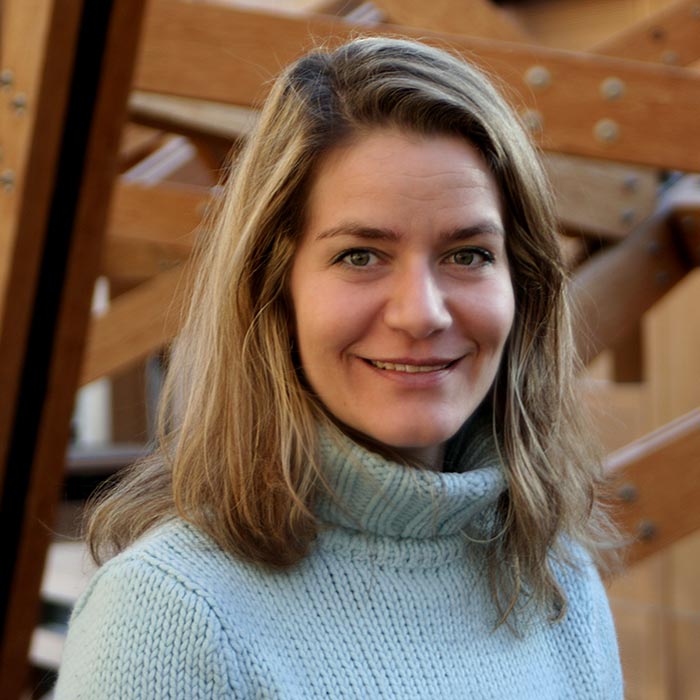
Chiara Longhi, Director of UBC FES Student Services

Chiara Longhi

Director, Student Services

Ana Curcin, Associate Director of UBC FES Student Services

Ana Curcin

Associate Director, Student Services

Janna Kellett, Senior Academic Advisor, UBC FES Student Services

Janna Kellett

Senior Academic Advisor

Michelle Suderman, Associate Academic Advisor and Co-op Coordinator, UBC FES Student Services

Michelle Suderman

Associate Academic Advisor / Co-op Coordinator

Chiara Longhi

Director, Student Services

FSC 2613 +1 604-822-9187 chiara.longhi@ubc.ca

Chiara is responsible for providing leadership and strategic direction for the Forestry Undergraduate Student Services team. Her goal is to help create a positive experience for all Forestry undergraduate students and to support student success, academic and otherwise.

She acts as an advocate for students who require special assistance and provide information about the university’s academic policies and resources. If you are facing a medical, emotional, or personal situation that you think may negatively impact your academic performance, please contact Chiara as quickly as possible to discuss your options.

Chiara is also involved with recruitment, admissions, student orientations and events, scholarships, course scheduling, student adjudication and appeals, and general student advising. Chiara holds an M.A. in Cultural Geography from the University of Pisa, Italy.

Ana Curcin

Associate Director, Student Services

FSC 2617 +1 604-827-5195 ana.curcin@ubc.ca

Ana’s primary role is that of an advisor for new and returning domestic and international undergraduate students within the Faculty of Forestry & Environmental Stewardship. She also works as a student recruiter for the Faculty and as someone who can assist with student exchanges.

Ana is there to provide information on academic policies, campus resources, and address any questions or concerns students may have. She is committed to provide a positive and welcoming student services environment that all students can take advantage of and which will help them achieve their academic goals.

Ana holds a B.A. from UBC as well as an M.A. in Sociology from the University of Victoria.

Janna Kellett

Senior Academic Advisor

Office: FSC 2613 +1 604-827-3082 janna.kellett@ubc.ca

Janna’s primary role is also that of an advisor for new and returning domestic and international undergraduate students within the Faculty of Forestry & Environmental Stewardship. University can be a very challenging, yet rewarding experience and Janna’s role is to help guide students on how to successfully navigate their degree and time at UBC Forestry & Environmental Stewardship. She is there to provide information, resources, and academic planning. Janna can also help with any questions and concerns students may have. Her goal is to provide students with a welcoming, safe, and positive environment. Janna holds a B.A. from Simon Fraser University with a major in Psychology and a minor in Communications.

Michelle Suderman

Associate Academic Advisor / Co-op Coordinator

Office: FSC 2609A +1 604-827-5196 michelle.suderman@ubc.ca

Michelle works with students to help them navigate university life and pursue their academic, personal and career goals. She walks alongside students as they make sense of life’s challenges and develop as learners, professionals, and people. Michelle provides expert advice about coming to UBC Forestry & Environmental Stewardship, academic concessions, course planning, and life at UBC. She supports students who include co-op in their Forestry degree and prepares students for meaningful employment during and after university. Michelle holds a M.Ed. from the University of Alberta and an Ed.D. in Educational Leadership and Policy from The University of British Columbia.

Join a deeply connected, diverse and talented community of alumni.

Your connection to UBC FES doesn’t end when you graduate. Once you finish your degree, you’ll join a diverse community of UBC graduates from all walks of life. You’ll go out into the world to tackle global challenges, push forward research and innovation, and engage with organizations at all levels of industry.

See where our alumni are leading today

Frequently Asked Questions

No questions match your search. Please try a different keyword.
How do I apply to UBC Forestry & Environmental Stewardship as a U.S. student?

First visit the UBC Undergraduate Programs and Admissions page for information about admissions requirements and program options. Then learn more here about the steps you need to take to apply.

What are the admission requirements for American high school students?

Visit UBC Undergraduate Programs and Admissions for the general admissions requirements for U.S. students

What GPA do I need to be competitive for admission?

The required GPA to be competitive for admission is based on a number of factors and can change from year to year depending on the strength of other applicants. However, to be considered for admissions, U.S. students must meet UBC’s general requirements.

What high school courses are recommended for admission to Forestry and Environmental Stewardship programs?

In addition to the minimum requirements of one Pre-Calculus class and at least one year of Chemistry, Biology (Life Science) is also strongly recommended. For certain majors under the BSNR, at least one year of Physics is strongly recommended. Consider taking these courses in your junior and/or senior years of high school.

When do applications open and close?

Typically, applications open in early October every year and close in December. For exact dates and deadlines, visit UBC Undergraduate Programs and Admissions.

Can I transfer to UBC from a U.S. college or university?

Yes, you may be able to receive transfer credit for courses completed at a U.S. college or university, up to a maximum of 60 credits. Learn more about our pathways to UBC FES or connect with an advisor to discuss your options.

Which UBC Forestry & Environmental Stewardship program is right for me?

Choosing the right program can be a big challenge. Start by reflecting on your skills and interests. Use this worksheet to identify your values and help you determine career possibilities that might be a good fit. You may also wish to use our program finder to help you narrow down your options.

What is the difference between the Bachelor of Science in Natural Resources and the Bachelor of Urban Forestry?

The Bachelor of Science in Natural Resources is our largest undergraduate program. It spans six different majors and allows students to pursue a variety of degree options including specializations, a Minor in Commerce and Dual Degree programs. It is a highly interdisciplinary degree that provides students with the breadth of skills necessary for careers in natural resources management and beyond.

The Bachelor of Urban Forestry focuses on the management of urban green infrastructure, bridging the gap between science, policy, urban planning, and governance. Students are prepared for careers in green space management, urban planning, arboriculture, and consulting.

What can I do with a Bachelor of Indigenous Land Stewardship?

The Bachelor of Indigenous Land Stewardship (BILS) weaves Indigenous and Western knowledge systems, preparing graduates for a variety of career pathways including:

  • Indigenous, federal, provincial, and municipal roles
  • Land stewardship and natural resources management
  • Community/urban resource management
  • Private sector roles like consulting
  • MSc/PhD Researchers, Professors, RPFs, RPBios, etc.
  • How do I choose between different majors in the Bachelor of Science in Natural Resources?

    Visit the BSNR program page to learn more about each major. Also, in addition to helping you explore our degree programs, our program finder can also help match you to the major that best fits your interests and career goals.

    Can I combine environmental interests with business or management studies?

    Yes, because our degrees are designed with interdisciplinarity at their core, most of our undergraduate programs give you the option of adding a Minor in Commerce. In addition, you also have the option of completing a Master of Management through UBC’s Sauder School of Business at the same time as your UBC FES degree through our Dual Degree program.

    What if I want to work both outdoors and in urban environments?

    The Bachelor of Urban Forestry might be the perfect fit for you.

    How much does it cost for an American student to study at UBC?

    UBC calculates tuition fees on a per credit basis so the fees you pay every term will depend on courseload. However, assuming a full annual courseload of 10 courses (30 credits), tuition for UBC FES programs is $53,082 CAD or approximately $37,150 USD. Learn more about UBC undergraduate tuition fees.

    How does UBC tuition compare to out-of-state tuition at U.S. universities?

    When accounting for the favorable exchange rate with Canada, as an American student studying outside your home state, you will pay considerably less per year than many of UBC’s peer institutions in the U.S. Moreover, for universities like USC and NYU that charge resident and out-of-state students the same fee, annual tuition at UBC can be as much as 50% cheaper.

    What additional expenses should I budget for beyond tuition?

    In addition to tuition, you should also consider the cost of housing, as well as other expenses like groceries and entertainment. Use the first-year cost estimator to get a better idea of what your non-tuition costs will look like and to access additional resources like budget planning.

    Are scholarships available for U.S. students?

    UBC offers a numbler of scholarships and bursaries, some of which are specifically intended for international students. Learn more here.

    Can U.S. students receive FAFSA, U.S. federal student loans or other forms of financial aid at UBC?

    Yes, since UBC is a Title IV institution, eligible U.S. students are able to access federal financial aid programs for their studies at UBC. For detailed information, visit UBC’s page on funding for U.S. students.

    What careers can I pursue with a UBC Forestry & Environmental Stewardship degree?

    A UBC Forestry & Environmental Stewardship degree can lead to careers in environmental science, sustainability, conservation, natural resource management, urban forestry, climate change adaptation, and environmental consulting. Graduates also work as foresters, GIS and geomatics specialists, policy analysts, researchers, and sustainability professionals.

    Students interested in science and innovation can pursue opportunities in biotechnology, biomaterials, renewable products, sustainable manufacturing, and the forest bioeconomy, building on UBC FES’ strengths in areas such as nanocellulose, bio-based chemicals, and advanced wood products.

    Many graduates also continue to graduate or professional programs, or work with government agencies, industry, non-profits, and Indigenous organizations to address environmental and sustainability challenges.

    For information on career paths as well as career support and development resources, please visit our Career Hub.

    Can I work in the United States after earning a degree from UBC?

    Yes. UBC is internationally recognized, and many UBC Forestry & Environmental Stewardship graduates pursue careers in the United States across fields such as environmental science, sustainability, conservation, natural resource management, urban forestry, GIS, and renewable materials. UBC’s strong reputation, research opportunities, and experiential learning prepare graduates for employers in both Canada and the U.S.

    Demand for many UBC FES careers remains strong in the U.S. According to the U.S. Bureau of Labor Statistics, environmental scientists and specialists earn a median salary of US$80,060 per year, with approximately 8,500 job openings annually projected over the next decade.

    Many graduates also pursue U.S.-based graduate programs or employment with government agencies, consulting firms, non-profits, clean technology companies, and organizations focused on climate action and sustainability.

    How is a Canadian degree viewed by American employers?

    A Canadian degree from UBC is highly respected by American employers. As one of Canada’s leading research universities and a globally recognized institution, UBC is known for academic excellence, hands-on learning, and research innovation in areas such as environmental science, sustainability, forestry, conservation, climate change, and biotechnology.

    For U.S. employers hiring in environmental and sustainability fields, a UBC Forestry & Environmental Stewardship degree aligns well with careers for environmental scientists and related professionals. The U.S. Bureau of Labor Statistics notes continued demand for these roles, with thousands of openings projected annually.

    Which UBC FES programs lead to the strongest employment outcomes?

    All UBC Forestry & Environmental Stewardship programs are designed to prepare students for strong career outcomes. Programs in environmental science, natural resource management, conservation, urban forestry, geomatics, and the bioeconomy can all lead to in-demand careers, depending on your interests and goals.

    Through hands-on learning, field experience, research, and co-op opportunities, graduates develop the skills sought by employers in environmental consulting, sustainability, forestry, GIS, government, conservation, and renewable materials sectors.

    What professional designations are available to graduates?

    UBC Forestry & Environmental Stewardship graduates may be eligible to pursue a wide range of professional designations in forestry, environmental science, engineering, biology, arboriculture, and geomatics. These can include:

  • Registered Professional Forester (RPF)
  • Certified Forester (US designation)
  • Professional Engineer (P.Eng.)
  • Registered Professional Biologist (RPBio)
  • Many UBC FES programs are designed to help students meet academic requirements for these credentials through a combination of applied coursework, field experience, and professional practice. Depending on their specialization, graduates may pursue careers and designations in forestry, environmental management, conservation biology, urban forestry, ecosystem restoration, engineering, geomatics, sustainability, and natural resource management.

    How do professional certifications in Canada translate to U.S. careers?

    The underlying experience and education you receive through your professional certifications is recognized in the U.S. through equivalencies and reciprocity frameworks. For example, a P.Eng is directly equivalent to a Professional Engineer (PE) designation in the U.S. However, some states may have their own assessment requirements to become fully licensed. For an RPF, the direct equivalent in the U.S. is a Certified Forester (CF). However, depending on which BSNR major you choose, you can receive your Certified Forester designation from the U.S. Society of American Foresters (SAF) in addition to your RPF.

    How does the UBC FES co-op program work?

    The UBC FES Co-operative Education Program allows you to gain up to 20 months of work experience while you complete your degree. Our co-op coordinators work to establish partnerships with employers who want to hire students for 4, 8 or occasionally 12-month terms. During these work terms, co-op students generally take a break from their studies to work, returning where they left off once their work terms are over.

    What employers hire Forestry co-op students?

    The UBC FES Co-op Program works with hundreds of employers across a wide range of industries including environmental consulting, forestry operations, bioproduct and biomaterial innovation, conservation, and natural resource management. Co-op employers operate in private, government and non-profit sectors.

    Can international and U.S. students participate in co-op?

    Yes, all UBC FES students are eligible to participate in co-op. In fact, it is highly recommended for international and U.S. students to participate in co-op in order to gain Canadian work experience and build their professional networks.

    What kinds of field schools are available?

    UBC FES offers a variety of field schools like foundational fields schools that make up mandatory components of some of our majors. These often take place at our research forests located in British Columbia. In addition, students may wish to explore additional field experiences through field schools in places like Ecuador, Chile, and South Africa. Learn more about our field schools here.

    How much of my education will take place outdoors?

    This will depend largely on which major you choose. Some majors like Forest Sciences and Forest Management will require you to spend more time outdoors either through field schools or other forms of experiential learning. Others, like Bioeconomy Sciences and Technology are almost entirely lab and classroom-based and will require very little outdoor education.

    Can I participate in research as an undergraduate?

    Yes, you can. In fact, you are highly recommended to reach out to your professors and researchers to build connections and inquire about research opportunities. In some cases, you may be able to volunteer in their labs or research groups and learn from graduate students. Other labs may also wish to hire undergraduate students for short work terms as well. Some of our undergraduate students have even published research in peer reviewed journals!

    Are there opportunities to work in UBC’s research forests?

    Yes, depending on which program you choose, you might find yourself spending a lot of time in one or both of our research forests. Some common first-year classes will also provide opportunities to visit our research forests.

    Can I study abroad while enrolled in UBC Forestry?

    Yes, you can explore opportunities through UBC Go Global and live abroad while earning credit towards your UBC FES degree.

    What is student life like in UBC Forestry & Environmental Stewardship?

    Joining UBC FES means joining a close-knit and vibrant student community. Many undergraduate students from abroad are often surprised at how welcomed and at-home they feel at UBC FES. The FES Undergraduate Society (FUS) is a student-run organization that puts together annual events and programming and maintains student-exclusive spaces.

    How large are classes in the Faculty?

    Classes in UBC FES tend to be smaller than your average university class. As you progress through your degree, you’ll find that upper-year classes become more specialized and as a result, will be smaller. In fact, UBC FES students enjoy an instructor-to-student ratio of 1:17, one of the best at UBC!

    Will I receive personalized academic support?

    All UBC FES students have access to personalized, one-on-one academic support through FES Student Services. Your academic advisor can help you with degree planning, navigate course selection and registration, and provide career support and help you access UBC services designed to help you succeed.

    What support services are available to students?

    For a full list of support services, visit the FES Undergraduate Student Portal. Additionally, as a UBC student, you have access to UBC Student Services.

    What is the campus culture like?

    UBC’s campus culture features a distinct West Coast vibe. The campus is set within a self-contained “city-in-a-forest” bordered by the ocean and temperate rainforest. The vibe is international and multicultural, with a huge international student body and tons of local commuter students. UBC features lively hubs like the AMS Nest and while the campus is massive, students find close-knit communities through 350+ student clubs, strong faculty identities, and beloved traditions like Storm the Wall and Day of the Longboat. Learn more about UBC campus life here.

    What clubs and extracurricular opportunities are available?

    Visit UBC campus life for more information on student clubs, extracurricular activities, and more.

    How similar is Vancouver to cities in the U.S. Pacific Northwest?

    Vancouver shares very similar natural and cultural DNA with US Pacific Northwest cities like Seattle and Portland, defined by temperate rainforest geography, mild rainy winters, coffee and craft beer culture, progressive politics, and a love for outdoor recreation.

    What makes Vancouver a great place for environmental studies?

    Vancouver serves as a living laboratory for environmental studies, situated directly where coastal temperate rainforests, rugged mountain ranges, and dynamic marine ecosystems converge alongside progressive municipal green infrastructure and climate policy. In fact, UBC is ranked the 5th Most Sustainable University in the world by QS World University Rankings. Studying at UBC FES having access to world-class faculty research, dedicated research forests, cutting-edge bioeconomy and mass-timber labs, and direct engagement with Indigenous land stewardship models. Students get immediate, hands-on access to solving real-world climate, conservation, and resource challenges right outside the classroom.

    How easy is it to travel between Vancouver and the United States?

    Vancouver is a major North American transport hub. For U.S. students considering studying out of state, Vancouver is no harder to get to than traveling from the West Coast to the East, or vice versa. Vancouver is a short drive from Seattle, a 90-minute flight from Portland, a 2.5-hour flight from LA, and just 5.5 hours direct from New York.

    Is Vancouver safe for students?

    Yes. Vancouver is widely considered one of the safest cities in Canada for students and is home to thousands of domestic and international students each year. UBC’s Vancouver campus offers 24/7 safety services, campus security programs, and convenient public transportation, helping students feel safe while living and studying in Vancouver. As with any major city, students should take normal safety precautions, but most find Vancouver to be a welcoming, student-friendly, and safe place to study.

    What is the cost of living in Vancouver compared to major U.S. cities?

    Vancouver offers a high quality of life and a cost of living that is comparable to many major U.S. cities. While housing costs can be higher than in smaller U.S. communities, students often find Vancouver more affordable than cities such as San Francisco, New York, Seattle, and Los Angeles, especially when considering healthcare, public transit, and the favorable exchange rate for many U.S. students. UBC also provides a range of housing, dining, and student support options to help manage living expenses while studying in Vancouver.

    Can I enjoy both city life and nature while studying at UBC?

    Absolutely. One of the biggest advantages of studying at UBC Vancouver is having easy access to both a world-class city and some of Canada’s most spectacular natural environments. Students can explore beaches, forests, mountains, and outdoor recreation just minutes from campus, while downtown Vancouver offers vibrant neighbourhoods, cultural events, restaurants, shopping, and career opportunities. This unique combination of urban living and outdoor adventure makes Vancouver one of the best student cities in North America.

    How long does it take to complete a UBC FES undergraduate degree?

    Most UBC FES programs are designed to be completed in four years of full-time study. However, there is no rush. UBC FES students often choose to extend their studies to take advantage of experiential field schools, research opportunities, study abroad, and co-op work. Many UBC FES students may take up to an extra year to finish their degree.

    How do specializations and majors work?

    A major is your primary field of study and degree focus, while a specialization is a more concentrated area within that major. For example, students in Forest Sciences may pursue specialized studies in areas such as ecology, genetics, hydrology, or silviculture.

    UBC FES gives students the flexibility to explore their interests before choosing a focused academic path. In the Bachelor of Science in Natural Resources (BSNR), students complete a common first year and select their preferred major at the start of second year from six options: Bioeconomy Sciences and Technology, Conservation, Forest Management, Forest Operations, Forest Sciences, and Wood Products. In this context, the terms “major” and “specialization” are often used interchangeably.

    Bachelor of Urban Forestry (BUF) students follow a different pathway, choosing a minor in Urban Green Space Management or Landscape and Recreation Planning after second year. Academic advising is available throughout the process, and opportunities to change majors or specializations may be available depending on program requirements.

    Can I switch between majors?

    In most cases, you will be able to switch majors after declaring one in second year. However, entry into the major is not guaranteed and is based on academic performance and meeting prequisities for required courses.

    How can I build a degree plan around my career goals?

    First, familiarize yourself with the undergraduate programs UBC FES offers. You may also wish to use our program finder to find the program that best fits you. Next, visit the UBC FES Careers Hub to explore our career support and development resources. Afterwards, get in touch with our dedicated team of advisors, who can provide support to ensure your degree plan matches your career goals.

    Can I become a teacher with my UBC FES degree?

    Yes. UBC FES offers a unique Dual Degree in Education that allows eligible students to earn both a Bachelor of Science in Natural Resources (Conservation major) and a Bachelor of Education (High School Biological Sciences) in just five years. Students can apply beginning in their second year and benefit from an integrated program that combines environmental and natural resource studies with teacher education. This pathway is ideal for students interested in becoming secondary school science teachers (Grades 8-12) and pursuing careers in environmental, biological, or sustainability education. Upon graduation, students are on track to meet the requirements for teacher certification.

    Can a UBC Forestry degree prepare me for graduate school?

    Yes. UBC Forestry & Environmental Stewardship programs provide strong preparation for graduate school through research opportunities, field studies, data analysis, and interdisciplinary learning. Students develop the scientific, analytical, and communication skills needed to pursue master’s and PhD programs in forestry, environmental science, sustainability, conservation, urban planning, and related fields.

    To learn more, explore our graduate programs.

    What graduate programs do UBC Forestry students typically pursue?

    UBC Forestry & Environmental Stewardship graduates often pursue master’s and PhD programs in forestry, environmental science, sustainability, conservation, natural resource management, urban planning, geomatics, and related fields. Many students continue their studies at UBC or other leading universities, building on the research, analytical, and field-based skills developed during their undergraduate degree.

    Can I pursue medicine, pharmacy, biotechnology, or life sciences after graduation?

    Yes. A UBC Forestry & Environmental Stewardship degree can provide a strong foundation for professional and graduate programs in medicine, pharmacy, biotechnology, life sciences, and other health-related fields. Students develop skills in biology, ecology, research methods, data analysis, and scientific communication while completing coursework that may help meet prerequisite requirements for further study. Many graduates choose to continue into professional schools, research-based graduate programs, or careers in the life sciences sector.

    Can I continue directly into a master’s or PhD at UBC?

    Yes. UBC Forestry & Environmental Stewardship graduates can apply directly to master’s and, in some cases, PhD programs if they meet the academic and admission requirements. UBC’s undergraduate programs provide strong preparation through research experience, scientific training, and analytical coursework that can support admission to graduate studies in forestry, environmental science, sustainability, conservation, and related fields. UBC also offers a range of graduate programs within the Faculty of Forestry & Environmental Stewardship for students who wish to continue their studies.

    What research opportunities are available to undergraduate students?

    UBC Forestry & Environmental Stewardship students can gain hands-on research experience through faculty-led projects, research assistant positions, fieldwork, laboratory studies, and independent research opportunities. These experiences allow students to develop skills in data collection, analysis, scientific communication, and problem-solving while exploring topics such as forestry, environmental science, conservation, sustainability, and natural resource management. Research opportunities can also help students prepare for graduate school and research-focused careers.

    What environmental challenges are UBC researchers working on?

    UBC Forestry & Environmental Stewardship researchers are tackling some of today’s most urgent environmental challenges, including climate change adaptation, wildfire resilience, biodiversity conservation, forest health, sustainable resource management, urban forestry, and Indigenous-led environmental stewardship. Students can learn from and contribute to research conducted through leading initiatives such as the Centre for Wildlife Coexistence, the Tree Ring Lab, and the Urban Forests Research Hub.

    UBC FES is also a leader in the bioeconomy, biomaterials, and sustainable bioproducts. Researchers are advancing innovations in renewable materials, wood-based products, nanocellulose, sustainable manufacturing, and circular economy solutions that can reduce reliance on fossil-based materials and support a more sustainable future. These efforts complement research on forest health, climate adaptation, and ecosystem resilience.

    How do students contribute to climate solutions and sustainability innovation?

    UBC Forestry & Environmental Stewardship students contribute to climate solutions through hands-on learning, research, fieldwork, and industry partnerships focused on creating a more sustainable future. Students explore topics such as climate change adaptation, wildfire resilience, biodiversity conservation, sustainable forest management, and urban sustainability, while working alongside researchers who are addressing real-world environmental challenges.

    Students can also engage with cutting-edge innovation in the bioeconomy, biomaterials, and sustainable bioproducts. Faculty researchers are developing renewable wood-based materials, advanced biomaterials, and circular economy solutions that help reduce reliance on fossil-based products and support a low-carbon future. Through coursework, research opportunities, and experiential learning, students gain the skills to help drive sustainability innovation across environmental, scientific, and industrial sectors

    What research forests and field sites are available to students?

    UBC Forestry & Environmental Stewardship students have access to exceptional hands-on learning environments, including UBC’s Malcolm Knapp Research Forest in Maple Ridge and the Alex Fraser Research Forest near Williams Lake. These living laboratories support research, field courses, and experiential learning in areas such as forest ecology, sustainable forest management, climate change, biodiversity conservation, and wildfire resilience.

    Students also gain experience through a variety of field schools across British Columbia and beyond, working alongside faculty researchers in forests, urban environments, watersheds, and ecosystems that support research on climate adaptation, forest health, urban forestry, and natural resource management. These real-world learning opportunities help students build practical skills while contributing to solutions for environmental and sustainability challenges.

    Can students work alongside professors on research projects?

    Yes. UBC Forestry & Environmental Stewardship students have opportunities to work directly with professors and research teams through undergraduate research projects, research assistant positions, field studies, laboratory work, and independent research experiences. Students can contribute to research on topics such as climate change, wildfire resilience, biodiversity conservation, sustainable forest management, urban forestry, biomaterials, and the bioeconomy. These research experiences can strengthen resumes, support graduate school applications, and help students build professional networks in academia, industry, and government

    What opportunities exist in biotechnology, bioeconomy, and sustainable materials research?

    UBC Forestry & Environmental Stewardship is a global leader in biotechnology, the bioeconomy, and sustainable materials research. Undergraduate students can engage with research focused on renewable biomaterials, wood-based products, nanocellulose, bio-based chemicals, sustainable manufacturing, and circular economy solutions that help reduce reliance on fossil-based materials.

    Students have opportunities to learn from and work alongside internationally recognized researchers, including Dr. Feng Jiang, whose work advances nanocellulose and sustainable biomaterials; Dr. Kwang Ho Kim, whose research focuses on biorefining, bio-based chemicals, and the forest bioeconomy; and Dr. Scott Renneckar, whose research explores advanced wood products, renewable materials, and sustainable material innovation. Through laboratory research, industry collaborations, and experiential learning opportunities, students can contribute to developing next-generation products and technologies derived from renewable forest resources.