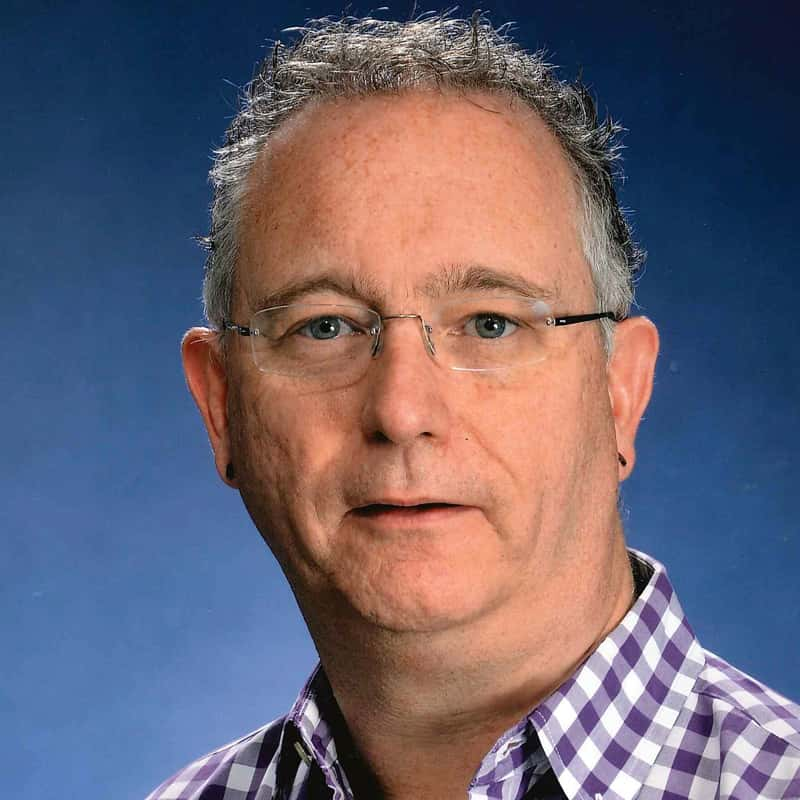
Assistant Forestry Technician at Strategic Natural Resource Consultants in Campbell River, BC
For my third co-op term, I have been working as an Assistant Forestry Technician for Strategic Natural Resource Consultants. My first month I worked on a contract with BC Hydro, inventorying the vegetation under power lines. More recently I have been working as a silviculture surveyor. I walk into cutblocks multiple years after they have been harvested and planted, then survey the health and arrangement of the trees that are regenerating in the cutblock. Applying skills I learned at UBC relating to tree and disease identification has helped prepare me for my tasks as a silviculture surveyor. Given that I work on Vancouver Island, I have already had the privilege of experiencing the challenging and beautiful terrain that defines coastal British Columbia. The opportunity to gain first hand experience of the operational side of forestry in B.C. through the co-op program has given me an understanding of the forestry industry that I would not have been able to receive if I did not get out of the classroom and into the field.
UBC Forestry & Environmental Stewardship warmly congratulates Dr. Nicholas Coops for being named the 2022 Canadian Institute of Forestry (CIF-IFC) Scientific Award Recipient.
The award honours individuals who have made innovative and outstanding achievements in forestry research in Canada. Award winners are recognized for developing new practices, processes, or techniques, or for demonstrating the practical applications of research in forestry.
Coops has been recognized for his research on the applications of remote sensing data in forestry. Award judges also recognized his extensive contributions to the scientific community and his position as Editor-in-Chief of the Canadian Journal of Remote Sensing for more than a decade.
Among his many Canadian and international scientific awards is the world’s most prestigious forestry honour, the Marcus Wallenberg Prize. In 2020, Coops and his colleagues Richard Wang of Oregon State University and Joseph Landsberg of the Commonwealth Scientific and Industrial Research Organization in Australia received the award for their satellite imagery work in addressing one of the most significant global challenges of our time – understanding forests’ response to climate change.
About CIF
Formed in 1908, the CIF-IFC is the national voice of forest practitioners and many others with an interest in forestry and forests. The Institute strives to provide national leadership, promote competence, and foster public awareness of Canadian and international forestry/forest issues.
UBC Forestry & Environmental Stewardship is excited to welcome Dr. Minghao Li, Associate Professor in Sustainable Timber-build Environment, to the Department of Wood Science. With an extensive research background in high-performance engineered wood products and connection systems, multi-story mass timber and timber-steel hybrid structures, Dr. Li joins our newly formed Wood Building Science and Technology Cluster to continue to advance innovative solutions to complex structural issues.
In our interview below, we join Dr. Li to learn more about what drew him to his work, his hopes for the future of sustainable buildings, and what he’s most excited about at UBC.
Tell us about yourself!
“My name is Dr. Minghao Li, and I’m joining as a new Associate Professor in the Department of Wood Science. I received my Bachelor’s and Master’s degrees in Civil and Structural Engineering at Tongji University, in China and my Ph.D. degree from UBC. From 2014 to 2022, I worked as a Lecturer, Senior Lecturer, Associate Professor and chaired the Structures Cluster in the Department of Civil and Natural Resources Engineering at the University of Canterbury in New Zealand.”
Can you give us an overview of your research? What drew you to this work?
“My research areas include multi-story and tall timber structures; engineered timber products and connections; and innovative seismic design technologies for mass timber and timber-hybrid structures. The global trend of building larger and taller structures with wood has imposed significant challenges for engineering design. Conventional timber building technologies are struggling to provide sound and reliable solutions to meet building code requirements. My work aims to expand the use of wood into larger building applications that used to be dominated by concrete or steel and develop innovative solutions for timber buildings that can achieve both cost efficiency and structural efficiency.”
What types of questions do you attempt to address in your research?
“Some typical research questions are: Can we develop innovative/better solutions to improve structural performance and reduce construction cost for timber buildings? Can we develop innovative seismic bracing systems that can not only protect lives but also reduce repair cost after a major event? How can we improve building resilience under natural hazards?”
What do you hope to see for the future of sustainable timber building solutions?
“We aim to develop a holistic solution for safe, resilient, affordable and sustainable timber buildings that meet all societal, economic and environmental expectations.”
What are some of your favourite examples of building structures that exemplify your research?
“There are a few buildings on UBC campus, such as the Earth Science Buildings and Brock Commons, that adopt innovative timber or timber hybrid technologies and my research aims to make contributions in those areas.”
What are you looking forward to most here at UBC?
“BC is leading the world in tall and mass timber building applications and innovations. UBC has also become a global leader delivering research and teaching excellence in the sustainable timber-built environment. I look forward to contributing to innovative timber solutions and helping establish a successful course-based master program that educates more qualified design professionals with mass timber expertise.”
Meet Chenming, a fourth-year B.Sc. Natural Resources Conservation Program student here at UBC Forestry & Environmental Stewardship! As a 2+2/3+2 Transfer Program student, we are so inspired by Chenming’s ambition and drive to build a greener future and tackle our most pressing climate issues. Read our interview with him below to learn more about what drew him to UBC Forestry & Environmental Stewardship, and his time so far.
Q: Introduce yourself!
“Hello everyone! My name is Chenming! I am a 2+3 transfer program student from Fujian Agricultural and Forestry University. Now I am a 4th-year student majoring in Natural Resources Conservation in the Faculty of Forestry & Environmental Stewardship.”
Q: What drew you to UBC Forestry & Environmental Stewardship and the Natural Resources Conservation program?
“Before coming to UBC Forestry & Environmental Stewardship, I studied ecology. I was attracted by UBC Forestry & Environmental Stewardship’s reputation for excellence in applied research. Natural Resources Conservation is an excellent program that allows you to take a wide array of courses, such as economy, international policy, energy, agricultural and Indigenous perspectives. These all help to build your understanding of the global perspectives in this field, and give you an international and colourful lens when examining and navigating the world. “
Q: What inspires you to do work related to natural resource conservation?
“At the beginning, I was just interested in the environment and nature and I felt like if I could study in the Natural Resources Conservation program I would have the foundation needed to dive deeper into topics related to forestry. Over these several years, I gradually learned that conservation is a really important part of the ecosystem. Animals need to be protected. Plants need to be protected. Water needs to be protected too. Everything in nature has different kinds of threats, including the impact of people as well. When these endangered species get to a dangerous level, someone needs to stand up and try their best to think about the ideas to solve the problem. That’s what I want to do in the future.”
Q: Can you share with us your experience in the 2+2/3+2 transfer program? What has been your favourite part of the program so far?
“The transfer program is an excellent program. We can experience university life in China, and also we can experience what going to university is like in Canada. Although this might give you a strong culture shock, this invaluable experience will produce many ideas and encourage you to reflect on issues deeply. When studying in China, except for studying the basic academic courses, we also needed to prepare for English tests, which was a big challenge for me at first. Forestry provides a useful orientation when we first got to UBC, which is really useful for our recognition of the differences between China and Canada. I really like that I can experience the two different education systems and enjoy learning about the cultural differences.”
Q: What are your unforgettable experiences so far on your UBC Forestry & Environmental Stewardship journey?
“My first Forestry Co-op experience at Langley Environmental Partners Society (LEPS) this past summer is my unforgettable experience so far. Theoretically, LEPS is my first job in my life. Also, working in LEPS is one of the best choices I’ve made in my life. It taught me a basic understanding of the environmental field and motivated me to imagine what I can change for the world’s climate in the future. Solving climate problems is a complex and long process. Through the public awareness campaigns I worked on this summer, such as door-to-door engagements and public announcements, it was just the beginning to make people aware of the seriousness of the climate crisis and a key way to collect survey data. The leaders who may be in government, companies, and beyond need to publish a series of measures and policies to encourage the public to work together to make progress. It was an unforgettable, unbelievable, and meaningful summer term for me. I am so proud of what I did this summer.”
Q: What course are you looking forward to most this upcoming school year?
“In this upcoming school year, I am looking forward to my course on the economics of the environment. I am so interested in the economy. In this course, I can explore the relationship between economics and environment.”
Q: Do you have any advice for incoming Forestry students?
“Study hard.
Try to experience different things: what you want to do and what you like to do.
UBC Forestry & Environmental Stewardship recently joined forces with the UBC Faculty of Applied Science and their UBC AeroDesign (UBCAD) team to provide space for and help design an aircraft model that featured balsa and Sitka spruce wood in one of its fixed wings.
Built for the annual spring SAE Aero Design competition held in the USA, a competition that brings in competitors from all over the world, the team’s Regular Class model featured a wooden spar – the main structural member of a fixed wing.
“The spar is the most important structural element of the wing in that it carries the weight of the wings, for example, while the aircraft is on the ground,” says Simon Jobst, a third-year mechanical engineering student and UBCAD Regular Class Airfoils co-lead.
Centre for Advanced Wood Processing Integral to Project
“It was so helpful having CAWP be a part of this project in such a big way,” says Jobst. “The team was given a chance to gain practical, hands-on learning toward a sustainable aerospace engineering solution that promotes preparation for future careers.”
Second-year biomedical engineering student and Regular Class Airfoils co-lead Thenushaa Balasingam was part of the team and was very impressed with what she learned at CAWP.
“I am incredibly grateful to have attended one of the tours provided by UBC CAWP. It was eye-opening to see the equipment used first-hand to fabricate the spar for our Regular Class aircraft,” says Balasingam.
She says further, “Truth be told, I would not have realized the incredible significance of wood processing and how much room for improvement UBCAD has in this field. We look forward to collaborating with UBC CAWP in 2023 so that our aircraft can excel at the competition.”
UBCAD’s 2023 Regular Class design mission is to design an aircraft that can lift as much weight, in the form of payload plates, as required while maximizing wingspan (up to 18 feet), adds Jobst. UBCAD receives further sponsorship from local BC forest companies including CarlWood Lumber Limited, which sponsors BC-grown Sitka spruce, and DWB Consulting Services Ltd., which holds Platinum sponsorship with the team.
About UBC AeroDesign
UBC AeroDesign (UBCAD) is a local undergraduate engineering student design team based at UBC’s Vancouver campus. Established in 1992, the team is operated by 50+ undergraduate students from six different engineering disciplines and 11 countries around the world.
Each year, UBCAD designs, manufactures, and tests multiple electric-powered, fixed-wing, remote-controlled aircraft to compete in the annual SAE Aero Design competition, specifically in the Regular and Advanced Class design categories.
To learn more about UBC AeroDesign or to support their projects, visit their website to access information on their past designs, social media, and more.
UBC Forestry & Environmental Stewardship wishes to congratulate Dr. Nicholas Coops who has been named a Fellow of the Royal Society of Canada (RSC).
Coops is considered a global leader in the application of remote sensing technology for the management and monitoring of forest ecosystems. He is an esteemed professor with the Department of Forest Resources Management and holds a Canada Research Chair Tier 1 in remote sensing.
Multi Scientific Award Recipient
Among his many Canadian and international scientific awards is the world’s most prestigious forestry honour, the Marcus Wallenberg Prize. In 2020, Coops and his colleagues Richard Wang of Oregon State University and Joseph Landsberg of the Commonwealth Scientific and Industrial Research Organization in Australia received the award for their satellite imagery work in addressing one of the most significant global challenges of our time – understanding forests’ response to climate change.
Prior to coming to UBC in 2004, Coops obtained his PhD from the Royal Melbourne Institute of Technology in Melbourne, Australia and then worked in government research labs for a decade. He is highly cited with many peer-reviewed publications attached to his name.
Coops is recognized alongside 12 other UBC faculty members named new Fellows and new Members of the College of New Scholars, Artists and Scientists.
About the Royal Society of Canada (RSC)
The fellowship of the RSC comprises over 2,500 Canadian scholars, artists, and scientists, peer-elected as the best in their field. They are distinguished individuals from all branches of learning who have made remarkable contributions to the arts, humanities and sciences, as well as Canadian public life.
The official inductee ceremony will take place in November 2022.
When UBC faculty of forestry researcher Dr. Lorien Nesbitt studied patterns of vegetation and green spaces in the United States a few years ago, she found widespread inequities. In many of the 10 metropolitan areas included in the study, comprising over 100 cities and towns, income and education were strongly correlated to the amount of access to green space.
Bari Hanus is a fourth-year student in the B.Sc. Natural Resources Conservation Program, majoring in Science and Management and is also a Forestry Co-op student. In our interview with her, she shares her story about why she chose this program and her experiences throughout her time at UBC Forestry & Environmental Stewardship.
Q: What drew you to UBC Forestry & Environmental Stewardship and the Natural Resources Conservation program?
“I was drawn to UBC forestry because of the unique programs that it offers.
“The Natural Resource Conservation Program has a broad focus on many environmental, and societal challenges.”
With an expansive focus on many issues, you are able to find your niche and explore certain issues and topics you are more interested in. Many of these programs have the opportunity to obtain professional designations, in addition to my degree. I wanted a program that I could see myself utilizing in the future and as we move towards a more sustainable future, and the Natural Resource Conservation program was a good fit for me.”
Q: Can you tell us a bit more about your Co-op experience so far at UBC Forestry & Environmental Stewardship? What has been your favourite part of Co-op so far?
“Throughout my co-op experience, I have really enjoyed being able to try out various types of jobs within the natural resource industry. I enjoy being able to gain practical field experience while working on my degree, and it has given me the opportunity to gain skills that will help me in my future career path and create connections within the industry. My favourite part of Co-op has been working as a forestry field technician for Coastal Natural Resource Management. I have really enjoyed the amazing learning opportunities and am grateful for the skills that I have learned through this experience.”
Q: What areas/topics of study are you most interested in right now? What inspires and motivates you?
“I’m really interested in learning more sustainable forestry practices. Being in the field and outdoors inspires me. Moreover, I’m also interested in pursuing Registered Professional Foresters (RPF) and Registered Professional Biologist (RPBio).”
Q: What is the most interesting/cool/favourite thing you’ve learned from your classes so far?
“My favourite thing I’ve learned from my classes is plant identification! It has become a very useful skill in the field. I have enjoyed studying forest plant biology-related courses – FRST 200 and FRST 201. I’ve also appreciated learning about climate change and its complex challenges.”
Q: What kind of impact do you hope to make in the future, with your background in Natural Resources Conservation?
“As a woman in STEM, I hope to make a positive impact and inspire more women to join the natural resource industry. According to the ABCFP’s 2021 annual report, 22.3% of people in the forestry profession are women, and I hope to be a part of the change that creates more opportunities and spaces for women to excel.”
Q: Do you have any advice for incoming Forestry students?
“Join the Co-op program! It’s a great way to gain practical work experience while continuing to work on your degree. Set goals for yourself and network with others however much you can. Ask lots of questions and take everything as a learning experience. Take advantage of the opportunities around you and that the Faculty of Forestry & Environmental Stewardship provides students with.”
Still, have questions? Check out our program page to read all about degree opportunities, career pathways, application details and more!
Congratulations to Sarah Smith-Tripp, 2022/23 recipient of the Gordon and Nora Bailey Fellowship in Sustainable Forestry!
About Sarah
Sarah considers herself an interdisciplinary ecosystem scientist with a passion for landscape management. Understanding the complexity of successful landscape management, Sarah has prioritized gaining a diverse research background, with research projects that include deep-ocean carbon sequestration and climate adaptations of herders in Mongolia. She is most interested in landscape responses after dramatic and catastrophic disturbances. As a result, her Ph.D. work investigates patterns of forest growth after disturbances such as fire and harvest. She specializes in remote-sensing techniques to assess forest structure using technologies like lidar (light detection and ranging), DAP (digital aerial photogrammetry) alongside satellite imagery. The overall aim of Sarah’s work is to provide forest managers with accessible and accurate tools to characterize growth after catastrophic disturbances in our novel and rapidly changing climate conditions. Applications of her research include monitoring and predicting future forest health – particularly the large areas affected by the 2017, 2018, and 2021 fire seasons.
About the Gordon and Nora Bailey Fellowship Award
Gordon and Nora Bailey Fellowship in Sustainable Forestry have been made available annually through an estate gift from Gordon Bailey (1930-2020) and Nora Bailey (1925-2017), for graduate students in the Faculty of Forestry & Environmental Stewardship whose studies focus on issues related to climate change mitigation and adaptation, such as sustainable forest management practices, wildfire prevention and carbon capture.
Originally from England, Gordon (M.F. 1964, Ph.D. 1970) and his wife Nora settled in British Columbia, where Gordon pursued his graduate degrees at UBC. He worked in the British Columbia forestry sector, both in government and the private sector, throughout his working life. As a student recipient of scholarship support, Gordon understood the impact of such support and left a gift in his will to support the next generation of researchers working to enhance the health and sustainability of our forests and address climate change issues.
Established in 2016, this prize was made available by ForesTrust, a registered charity of the Association of BC Forest Professionals (ABCFP). Each year, students enrolled in the Master of Sustainable Forest Management program who have demonstrated academic excellence and leadership skills through their studies will be selected for the prize.
Congratulations to the 2022 recipients of the ABCFP Sustainable Forestry Management Prize!
Nicole Smith
Renee Flipot
Barbara Happy-Narouz
MGEM Best in Class Award
Each year two graduating students in the Master of Geomatics for Environmental Management (MGEM) program will be selected for the MGEM Best in Class Awards. The recipients have demonstrated outstanding leadership and teamwork skills during their studies and show exceptional career promise in the field of Geomatics.
Congratulations to the 2021/22 recipients of the MGEM Best in Class Awards!
Olivia Waite
Kyle Melnik
MGEM GTA Award
The MGEM GTA Award recognizes outstanding contributions by graduate teaching assistants (GTA) from the Master of Geomatics for Environmental Management (MGEM) program. Each year one GTA who has demonstrated exceptional teaching excellence will be selected for the award.
Congratulations to Martin Queinnec, 2021/22 recipient of the MGEM GTA Award!
About Martin
GTA’s are essential to the MGEM program; without them, the program would cease to run. In a group of people who all do so much, Martin’s dedication stood out. He assisted students outside his mentorship group, never hesitating to share knowledge, advice and technical assistance. In term 1 Martin created and led an R-intensive session out at Loon Lake. This workshop set the foundation for Martin to play a crucial role in helping the students learn coding and R. Students have highlighted that without Martins’s help they would still be struggling with R and nowhere near as proficient. Martin has dedicated time and effort above and beyond what is expected of a TA and as a small repayment, we are delighted to award Martin the Best MGEM GTA award!