My research background is in animal behaviour, ecology and conservation. I have focused on sensory perception in Pacific salmon, and how environmental stressors such as dams and fisheries can affect sensory-mediated behaviours. I am also interested in the scholarship of teaching and learning, and I have studied how students’ learning environments can influence their understanding of science and the scientific process. I have taught on a range of topics relating to biology and ecology, as well as the role of science in society. In my teaching, I aim to incorporate experiential learning and evidence-based teaching practices to facilitate student learning.
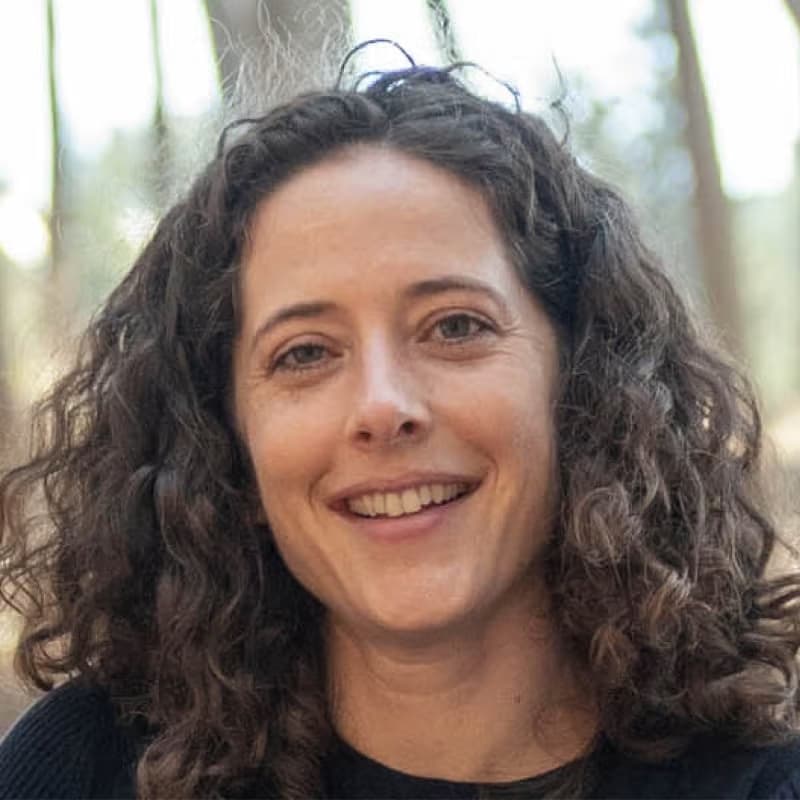
Throughout my career, I have used mammalian carnivores as a model system to test leading hypotheses to explain the evolution of intelligence and to elucidate the neurobiological mechanisms underlying key cognitive abilities. My current research program is focused on studying the behavior, ecology, and cognition of urban carnivores to understand how cognition is facilitating the adaptation of these species to urban environments. My research group is examining how performance on cognitive tasks is linked to diet, health, social behavior, and space use patterns of urban mesocarnivores such as raccoons, skunks, and coyotes. We are also collaborating with neuroscientists to investigate the connection between cognitive performance and neurobiological characteristics such as brain size and neuronal density in key areas of the brain.
We are also examining how individual variation in performance on cognitive tasks is related to animal personality, and how animals learn from each other and coordinate their behavior to solve complex challenges. We have conducted this research with Asian elephants and zebra finches.
In addition to my basic research investigating animal cognition and behavior, I am applying my research on urban carnivores to reduce human-wildlife conflict by clarifying how knowledge of animal cognition can be used to design more effective conflict-mitigation strategies. I am also incorporating modern technological advances into studies of wildlife to aid conservation and to propel field studies of wildlife forward.
Overall, my research program aims to answer fundamental questions about animal cognition and behavior while also applying my findings to improve outcomes for wildlife.
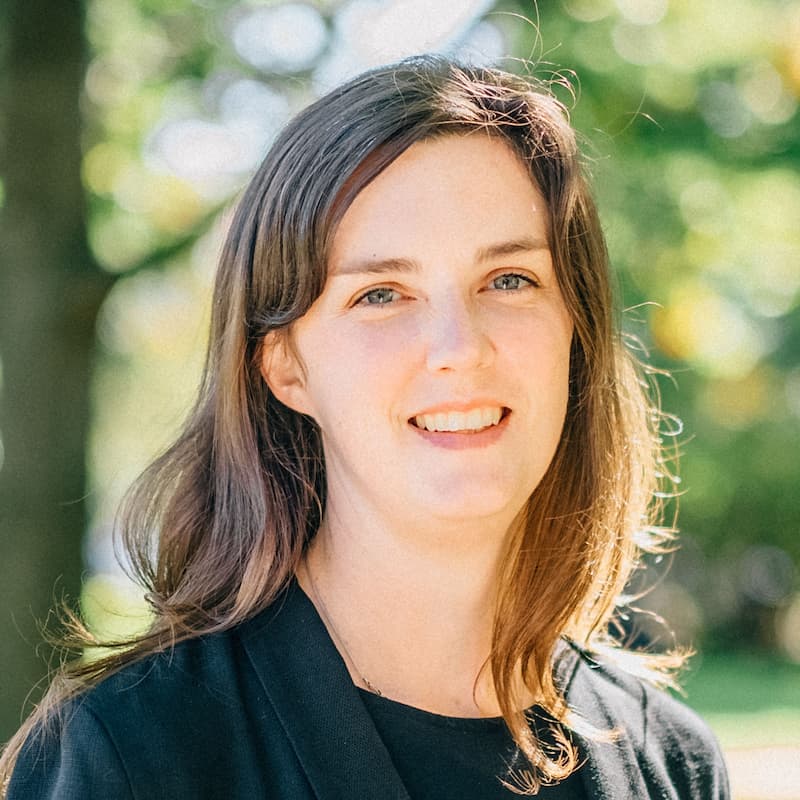
Sara Barron is the Program Director for the Master of Urban Forestry Leadership program at the University of British Columbia. Prior to this role, she was a lecturer at the University of Melbourne. Sara’s research interests bridge landscape architecture and urban forestry. Her dissertation explored the design and assessment of future urban forest scenarios in compact communities. She has expertise in large-scale sustainable community planning and climate change research projects and holds a Master of Landscape Architecture degree.
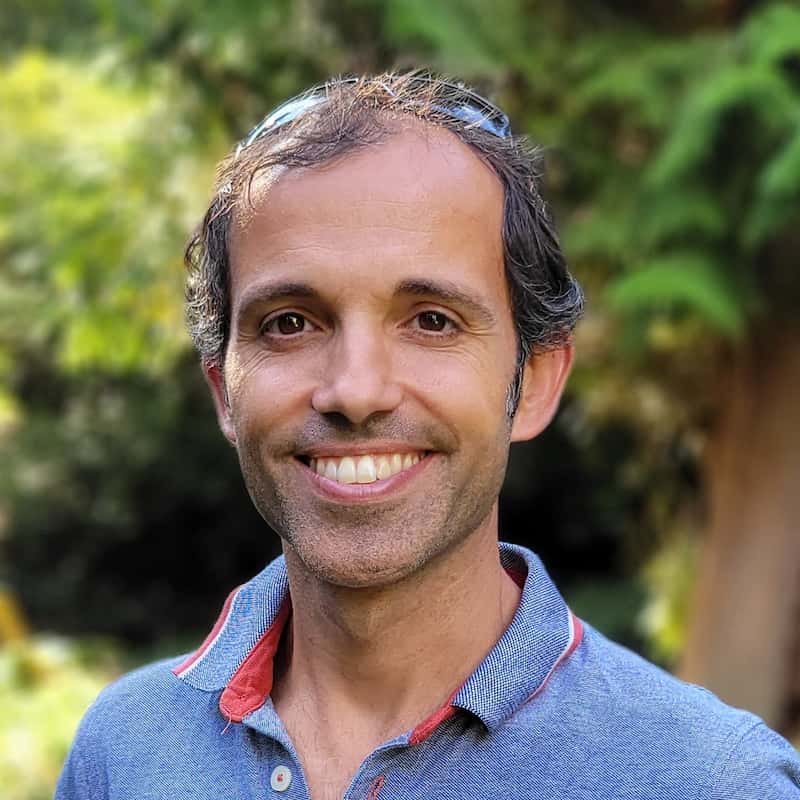
I am interested in refining novel silvicultural practices designed to guide the establishment and management of forests under global change. I use a combination of field measurements, remote-sensing data and modelling. Much of my work to date has examined long-term experiments to address current questions about how to achieve resilience of forest stands to extreme events, and balance trade-offs such as for timber production, biodiversity and other ecosystem attributes and services.
Biogeography of native plant and animal communities
Adaptive management and monitoring of rare species and ecosystems
Conservation area design
Projects
The population demography and genetics of island organisms
NSERC
Phenotypic and genetic differentiation of song sparrows
NSERC
Indirect effects of humans on plant and animal species invasions
NSERC
Biogeography of Garry Oak associated species
NSERC
Trend Detection and Cause of Population Decline in Fish-eating Birds
Environment and Climate Change Canada
Rapid evolution in Plectritis congesta
Awards
US National Science Foundation Young Investigator Award in Integrative Biology and Neuroscience 1994 Outstanding Undergraduate Advisor, University of Wisconsin-Madison 1998 Killam Research Fellow 1990 NSERC Discovery Accelerator Grant 2010
Dr. Sheri Andrews-Key is the Micro-Certificate Director in the Faculty of Forestry & Environmental Stewardship, CVA Program Lead, and a lecturer in Forest Resources Management at UBC. Sheri has a diverse and extensive background in various facets of the application of the science-management-policy interface in environmental and resource-based sectors and government across Canada. She has a special focus on climate change, vulnerability and risk assessment, development and implementation of adaptation and building the business case for adaptation for industry, government, private land owners, communities, and other stakeholders. Sheri is a leader in large-scale climate vulnerability assessments, with an applied approach to adaptation and development of the business case for adaptation in the forest sector in Canada.
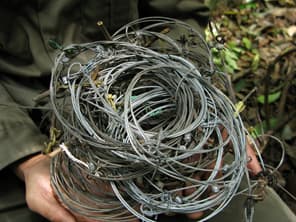
Wildlife conservation has a long and difficult association with colonialism. In Africa, many of its early methods derived from violent and exclusive settler-colonial land management practices designed to fortify protected areas against the interests of local African and working-class people.
We are thrilled to announce the launch of a major new Faculty of Forestry & Environmental Stewardship field school in Africa. Beginning in May 2023, this new program will take 18 students into the heart of the savanna biome to work with and learn from rural community members. It will offer insights into the innovative forms of community-based natural resource management emerging in South Africa.
Our goal will be to understand the new landscapes of conservation associated with post-apartheid South Africa, and in the process, to explore the wicked problems faced by the millions of people living in poverty on the edge of protected areas. Unlike most study-abroad programs in the region, this is not a tour. It combines some very adventurous travel with detailed field experience, data gathering, and meaningful, long-term partnerships with rural South African communities.
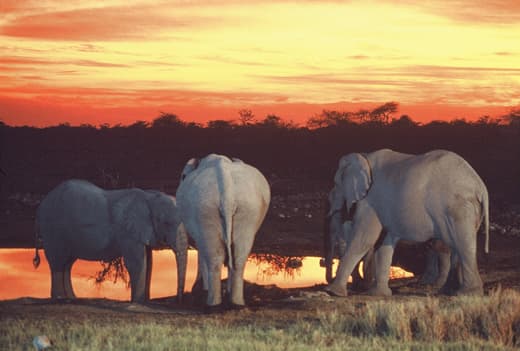
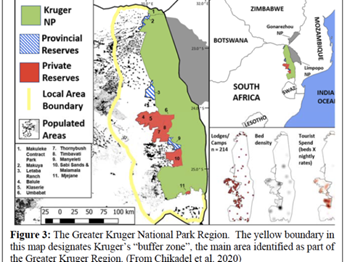
The main focus is on social-ecological issues facing the 2 million or so people living on the edge of one of the world’s great game reserves: the Kruger National Park. Flying in to a research base in the southern part of the Park, we’ll spend time interacting with community leaders in Kruger’s southern border villages, studying land use/land cover change and rewilding in the Greater Kruger National Park region, post-apartheid land restitution, rural resource harvesting, and human-wildlife conflict. Moving through Kruger itself, travelling in open safari vehicles, we’ll experience the reserve’s remarkable savanna species diversity. Working with South African National Parks scientists, we’ll examine current issues around elephant and lion management, and the racial and economic complexities surrounding rhino poaching.
The course offers an intimate and interactive experience of different models of “decolonized” conservation management: innovative adaptive management in a national park; work with unarmed anti-poaching teams of black women in private reserves; an emergent community-conservation project on land returned to tribal authorities in the post-apartheid land claims process; a community-managed ecotourism and research base; and a high-end safari tourism lodge. A highlight of the course will be a week of fieldwork in the villages of Hamakuya, on Kruger’s northern border and close to Zimbabwe. Staying in platform tents and rural huts, we’ll be privileged to work with an energetic young team of African environmentalists associated with the Tshulu Trust, helping to support their resource management and ecotourism program.
UBC Professors David Bunn and Melissa McHale will be leading this study abroad and field school program. Prior to their arrival at UBC in 2021, they had designed and managed major long-term field school experiences for institutions like the University of Chicago, Harvard, Arizona State, Northwestern, Colorado State, Duke, and Emory
Together they have considerable experience in the region, combining decades of work with local communities on the edge of Kruger, and having privileged research access to areas and facilities closed to tourists.
Snapshot 1: Field Day Mornings
The eerie whoop of a hyena wakes you at dawn, and you stagger to grab a mug of coffee and a rusk (South African versions of biscotti) before heading to one of two open safari vehicles [OSVs] to join your fellow UBC students.
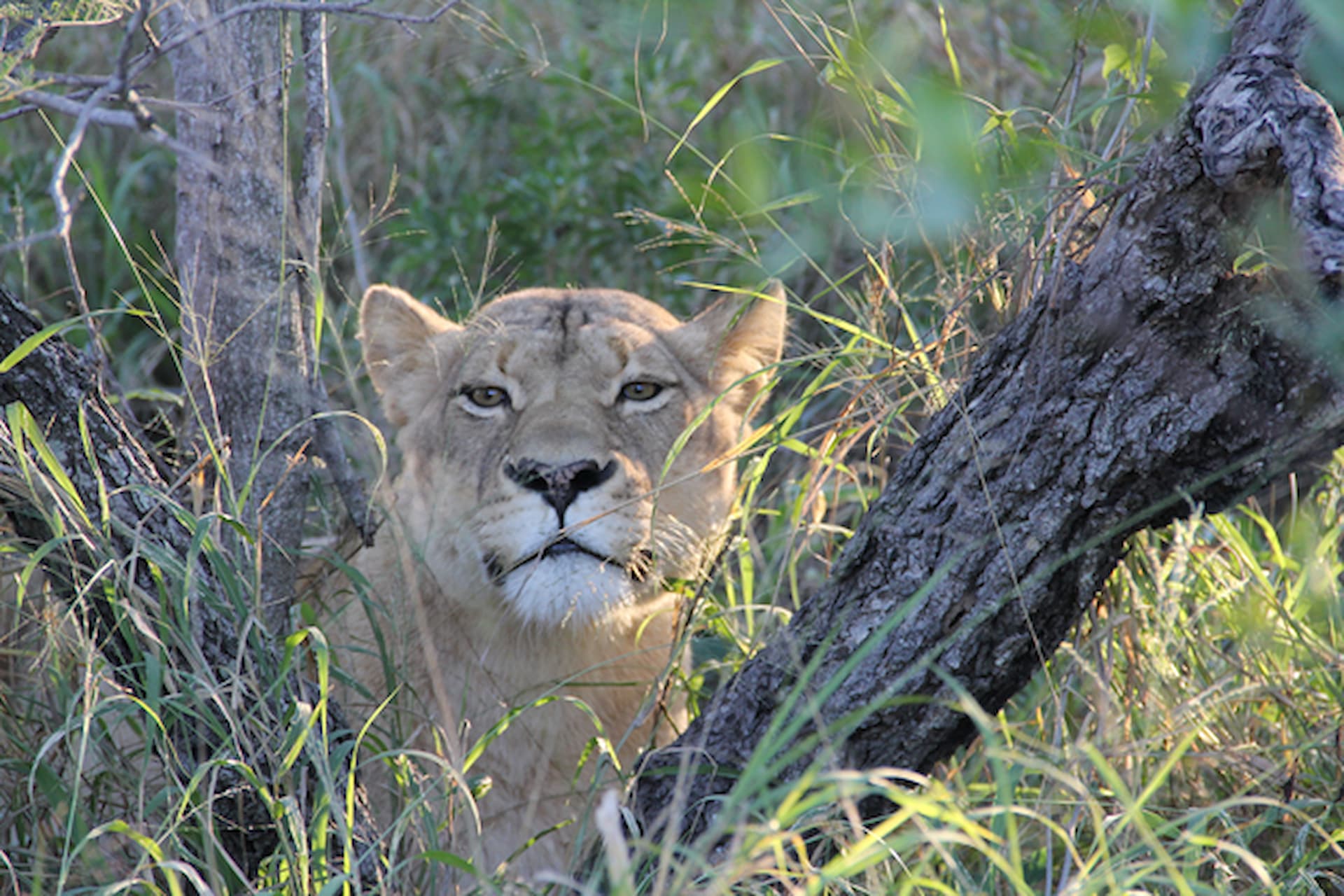
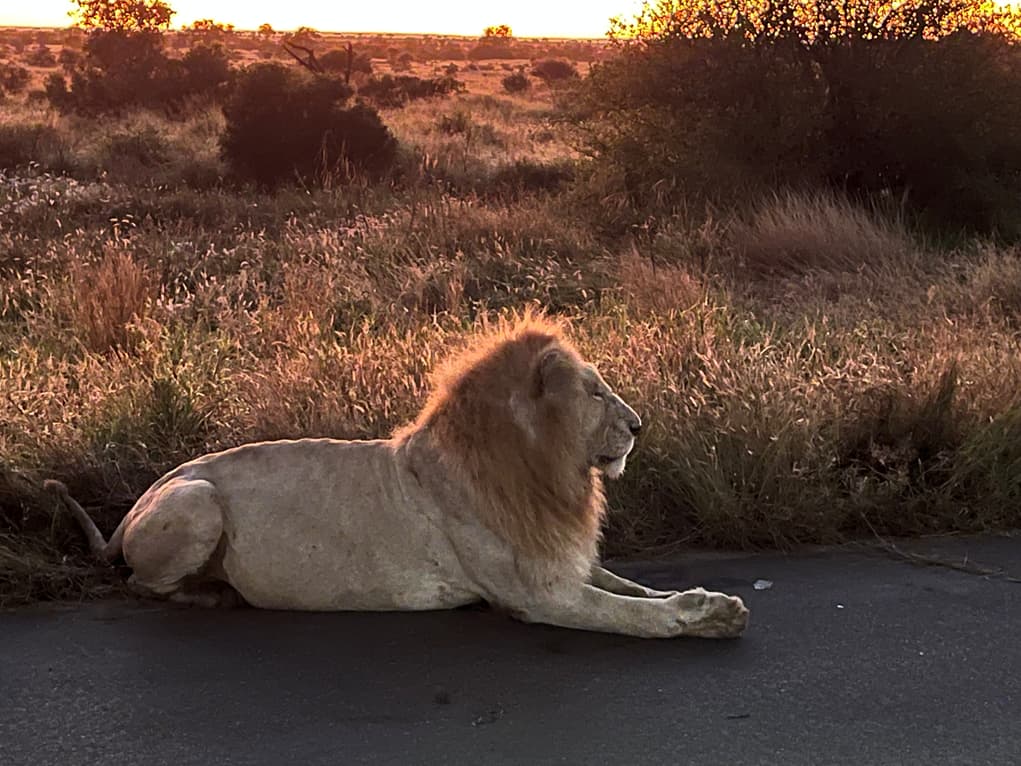
Thomas Ngobeni (the brilliant and jovial Shangaan field ranger) is driving that morning. He teases the group gently as he steers the large offroad vehicle towards the reddening horizon. Rounding a clump of sicklebush, on a sandy road not open to tourists, you see a skeletal Acacia nigrescens silhouetted against the sun, with white-backed vultures clustered on every branch. Vultures don’t really fly before the thermals start to rise around 10am, but they have chosen to roost overnight in this spot for a reason: through the dust, just ahead, you see three male lions resting on the road, utterly unconcerned about your approach. We know this coalition of brothers well. One of them is nicknamed Casper. He’s almost pure white (a recessive gene) and impressively large. Unfortunately, he and his comrades are sitting right next to the waterhole where we have planned to set up field cameras. We can’t get out of the vehicles for the moment, so we’ll move on to the next site.
One of the 3 brothers in the Sweni pride coalition. Biologists have named him “Casper” because of his pale coloration [Photo DB]
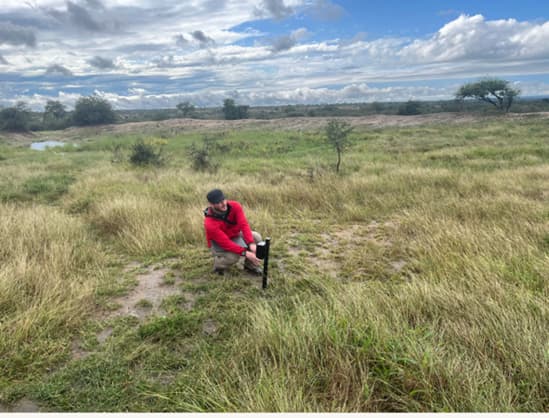
Two clicks (kilometers) on, we come to the waterhole we call Renosterkoppies (Rhino Hills). Our game guards alight from the vehicles, check their .458 rifles and the immediate surroundings, and gesture to you that it’s now safe to get down. We move quietly, and in single file towards the water, but of course all the animals have seen us and herds of impala are snorting their alarm calls, as zebra, wildebeest, and giraffe wheel away. At the waterhole edge, and in two teams, we’ll drive armoured field housing brackets into the ground and install and test the cameras, facing south and at knee height.
Maybe there will be time, too, to do a ground-truthing survey of vegetation. We know the exact GPS location of where the GEDI satellite on the International Space Station has taken its 25-meter waveform samples, and we can now go to one of those spots and, following a set of protocols, record plant and tree species, and canopy breadth and height. After that, we’ll backtrack to see if the lions are still there, and if they’ve moved on we’ll put up more cameras. Then it’s back to breakfast at 9.30 am at the research base, but maybe we’ll detour slightly to see that spot on the Nwaswitshaka river where we know a female leopard and cubs are hiding.
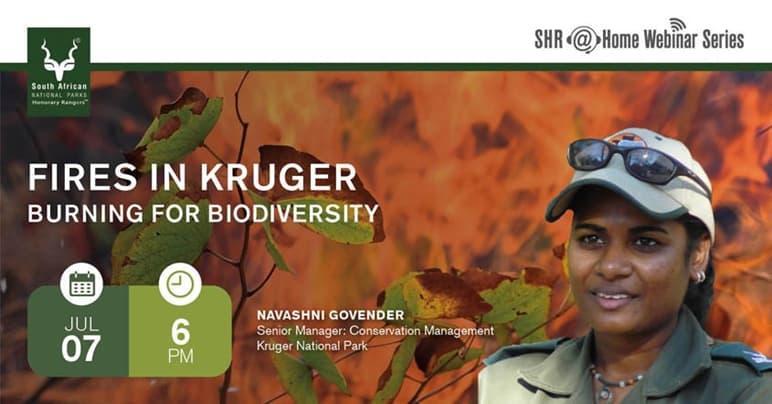
Breakfast is a pretty elaborate affair (vegan, Halaal, gluten-free alternatives available) served by our old friends, the team of Shangaan field caterers led by Shadreck Hlatshwayo. No time to tarry though: our first lecture of the day, on savanna ecology, will be from Dr. Navashni Govender, the world-renowned fire ecologist based in the Kruger National Park.
A recent advertisement for a talk by one of South Africa’s best known savanna scientists
Snapshot 2: Hamakuya Homestays
You are suddenly, it seems, the local village kids’ main entertainment. It’s late afternoon, and you, your three UBC fellow students, and a village translator your own age are all making your way back from collecting water at a hand pump station near the Mutale River.
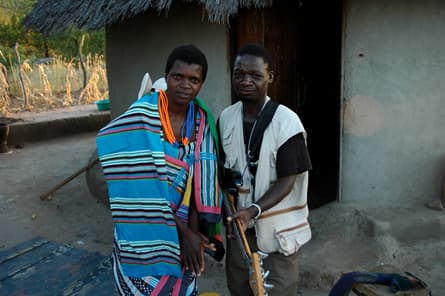
This is your second day in Tshianzwane village, and you are staying in a local homestead, hosted by Ruth R., a remarkable senior woman married to a sangoma (a traditional healer) named Obed, who is also a talented guitarist.
Ruth and Obed in front of the family hut. [Photo: David Bunn].
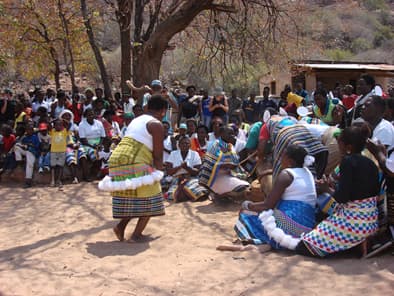
Installation of a chief, HaMakuya [Photo: Susan Harrop-Allen]
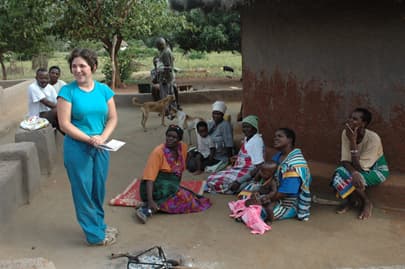
Your research task over the three-day homestay experience is to learn as much as you can, and with humility, about the metabolism of everyday life in a rural village. With the afternoon school ending, the local kids have followed you en masse down to the river. They have laughed uncontrollably at your clumsy attempt to balance a 20-liter water container on your head and stumble a few paces. This doesn’t seem to be a problem for Ruth, your homestay mother, who is striding ahead bearing a similar burden while also carrying an infant and a hoe. Yet the kids are friendly and enthusiastic: your lips are stained red from one of the delicious but unknown fruits from the bush they have offered you. They seem to know the names and uses of hundreds of indigenous plants, and they want to know about the plants you use from the wild in Vancouver, and about your cattle back at home.
Your host homestead consists of three adobe huts (one for the family, one for cooking, and one for guests), decorated with exquisite geometric patterns in ochre, black and red. The host family has decorated the inside walls of your hut with mwenda, the colourful sarong-like garments worn by local women, and there are intricately woven grass sleeping mats for you to lay out your sleeping pads and bags. As night approaches, however, you’ll help to prepare the simple evening meal, consisting of morogo (wild spinach), and a staple maize dish you’ll produce, with assistance, by pounding kernels in a tall, decorated wooden vessel. Before retiring for the night, there will be an opportunity to work on your research projects: talking to women about the quantities and type of fuelwood they collect on a daily basis; the typical food they harvest, including mopane caterpillars, a major protein source; and exchanging stories and images for your Photovoice project.
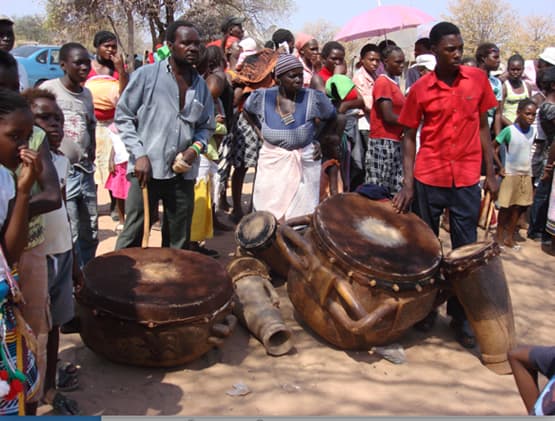
Around the fire, with background cowbells chiming the unsupervised return of the herds, there will almost always be music and dancing. Venda culture is famously musical, with many styles of formal and informal drumming, dancing, and mbira playing. These events are not orchestrated for you; instead, they are part of a complex kind of social engagement that incorporates guests. Once again, children, youths, and ironic elder women are at the heart of this joyous system. It can be wonderful and tiring at the same time, and you might very well want to strangle the rooster that wakes you at the next dawn.
As UBC’s Faculty of Forestry & Environmental Stewardship continues to expand its research and collaborations globally, professors Dr. David Bunn and Dr. Melissa McHale are paving the way for new forestry research initiatives in Africa. As part of a $750,000 grant from NASA, Dr. Bunn and Dr. McHale are working to develop an ecological forecasting system for South Africa’s Kruger National Park and the surrounding region.
Dr. Melissa McHale
The system will be used to support conservation efforts in the area by combining species distribution data collected from the field with land-use and land-cover change data from NASA earth observation satellites. The project, which involves collaborating with top African scientists, will help guide efforts to protect and restore wildlife migration pathways and habitat in the park and surrounding areas. Bunn and his team aim to connect fragmented zones in a way that supports the needs of rural communities previously marginalized by apartheid conservation.
Join us in exploring the groundbreaking research and collaborations of Dr. Bunn in Kruger National Park and beyond by reading their inspiring piece below.
[1] Xikomaniso is the word for “possibility” in xiTsonga, one of South Africa’s eleven official languages
“As a child growing up in South Africa, I spoke several local languages. Sadly, some of that competence has withered away, but I have enough remaining isiZulu, and xiTsonga to understand when trouble is on the horizon.
In January this year, our NASA-sponsored field team was struggling to set up a series of field cameras along a transect line out from a waterpoint in South Africa’s iconic Kruger National Park. It was only an hour or so after dawn, and already the savanna sun was blazing down. Part of a wider, very exciting field research experiment, camera arrays like these are designed to collect species and habitat data that can be compared with land-cover change data from NASA satellites.
But not that morning. The armed game guard next to me began to talk softly but animatedly to her colleague, and I heard the xiTsonga word Nyarhi repeated several times. Buffalo. We would have to move quickly back to the vehicles, and as this realisation dawned, the first aggressive males in a large buffalo herd began to crash through the thornveld just ahead of us.
Dr. McHale and I joined UBC very recently. Together, we have spent decades of our academic lives working in the savanna regions of north-eastern South Africa. We have had many close encounters with so-called “big five” animals, but have never really felt in any danger, because of the extraordinary fieldcraft skills and Indigenous knowledge of the rural communities we have worked with for decades.
While Melissa and I were of course honoured to be offered positions in one of the top three Forestry faculties in the world, a major factor in our choosing to be here was Forestry’s strength in comparative research in the global South. We are currently directing two NASA-funded projects (across locations in South Africa, Nigeria, and Ethiopia); however, our combined 30 years of experience in South Africa has centred not just on wildlife, but on collaborations with rural communities. For a time, I was the director of one of Africa’s leading rural research bases, and worked on post-apartheid land claims, the history of Mozambican refugees, and the rights of access of communities to resources in protected areas. The two of us have spent decades working with the 17 villages and tribal and municipal leaders in the HaMakuya region of northern South Africa, and villages and customary authorities in the Bushbuckridge region.
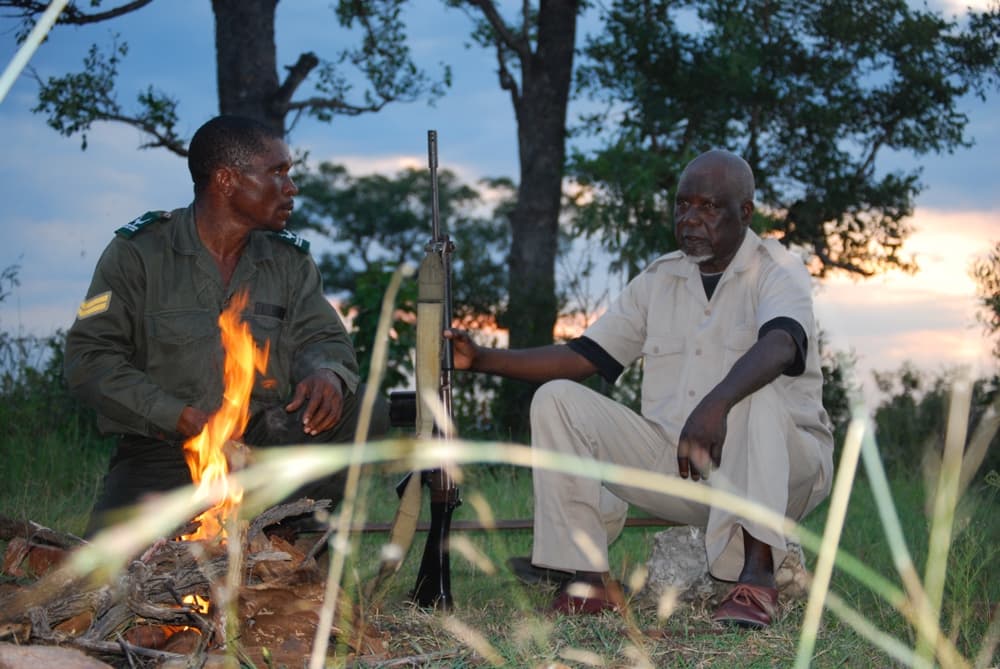
Installation of a chief: Hamakuya
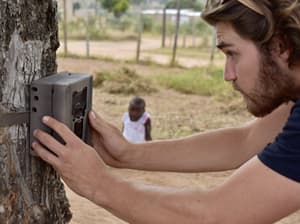
Installing NASA camera traps at a Kruger waterhole
In Melissa’s case, moreover, this has to significant long-term research on urban ecology in the global South, democratizing ecosystem services, and the growth of secondary cities in Africa.
Now at UBC, we are eagerly exploring connections with the many Forestry colleagues who have ongoing projects in Cameroon, the Democratic Republic of Congo, Tanzania, Mozambique, Malawi, Madagascar, and elsewhere. What is emerging, we think, is a new critical mass that will facilitate innovative work on rural livelihoods, conservation borderlands, land rights, political ecology, and indigenous knowledge systems, not just in Africa but in comparative work on cities and their rural hinterlands throughout the global South. This new impulse does not end at the doors of the Forest Sciences building: it extends to collaboration with other departments like Geography and Anthropology, UBC’s campus museums, and research collectives like IRES and iBIOS, amongst others.
A map of Kruger National Park and surrounding reserves and areas
One of our NASA projects aims to develop an “ecological forecasting” system for South Africa’s Kruger National Park and the surrounding region. This will enable scientists to better study and support conservation in and around Kruger, applying species distribution data collected from the field as well as land-use and land- cover change data from NASA earth observation satellites, including the new GEDI LiDAR system on the International Space Station. Three universities are collaborating with South African National Parks, tribal authorities, non-profits, and municipal conservation managers to produce predictive data systems that can easily be used on the ground for urgent and equitable conservation solutions.
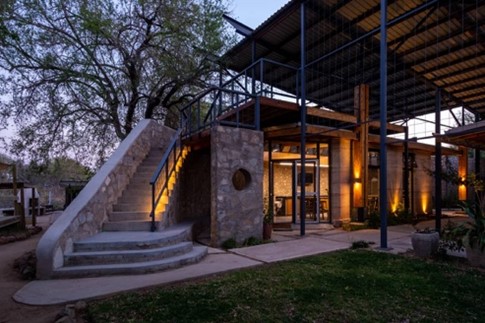
Skukuza Science Leadership Initiative research base
The park and surrounding areas, where Melissa and I lived and conducted research for years, encompasses a biodiversity hotspot. Covering more than 7,500 square miles, and part of a wider, 100,000-square-mile transnational conservation zone, Kruger is also one of Africa’s most diverse wildlife regions. Open savanna grasslands and mixed woodlands provide habitat for the “big five” African game species – elephants, lions, rhinoceroses, leopards, and Cape buffalo – along with many other rare species, including packs of the endangered African wild dog. As a study site, it is complex and very varied. It has seen massive changes since the end of apartheid in 1994, resulting in a mosaic of communal lands, private reserves, state protected areas, and game ranches. Our challenge now is to model effective ways of connecting these fragmented zones, but in a manner that supports the needs of rural communities previously marginalized by apartheid conservation.
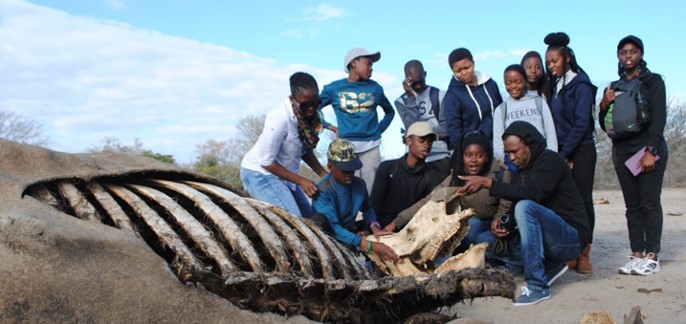
Our work in South Africa is part, too, of a larger vision for Forestry: leveraging long-term partnerships Melissa and I have built, we hope develop a permanent, rotating presence for Forestry students and field scientists working out of the well-equipped Skukuza Science Leadership Initiative field base in the Kruger National Park. UBC programs moving through there will also be able to forge long-lasting relationships with our community partners, including the Nsasani Trust and GreenMatters, with their environmental justice programs and field courses for young black women in science.
I don’t think this kind of critical mass could be achieved at any other university. With UBC Forestry & Environmental Stewardship as host, we hope to arrive at innovative solutions for Africa by building on our faculty’s world class expertise: in its advanced earth observation and GIS units, its benchmark partnerships with First Nation land stewards, its interdisciplinary research projects on biodiversity and rural livelihoods in Nepal, India, Indonesia, China, Vietnam, or Laos, or its international forestry connections in Ecuador, Madagascar, Peru and a host of other places and impressive programs.”
UBC Forestry & Environmental Stewardship wishes to congratulate Dr. Suzanne Simard for winning the Kew International Medal and the Lewis Thomas Prize! The Kew award is in recognition of her work exploring and sharing the complexity and wonder of trees and forests. The Lewis Thomas Prize recognizes her work in bridging the worlds of science and the humanities with her book Finding the Mother Tree: Discovering the Wisdom of the Forest.
“I am just thrilled, even overwhelmed, to be honored with these awards from such noted and globally recognized establishments,” says Suzanne. “The important work they are doing allows me to continue my journey as a scientist, teacher and author who hopes to help the whole world understand forests are made of relationships that create community, and its their connectedness that keeps them healthy and resilient. Working to solve mysteries of what makes forests tick, and how they are linked keeps me inspired to continually learn more.”
The Kew International Medal was presented to Professor Simard in a ceremony at London’s Royal Society on March 30, 2023, where she delivered a keynote lecture entitled ‘The importance of keeping community in forests’. She will be presented with the Lewis Thomas Prize at a special award ceremony in New York, April 17, 2023.